During the NAILS Roundtable Breakfast in Las Vegas, nail techs, salon owners, manufacturers, and educators took a frank look at the state of the industry and discussed the challenges facing nails today. Echoing concerns as old the industry, education and sanitation proved to be the hot topics.
So what does make a state progressive? We targeted 25 different areas, everything from licensing and continuing education, growth in licenses and salons, to community involvement, and the state’s inspector-to-salon ratio.
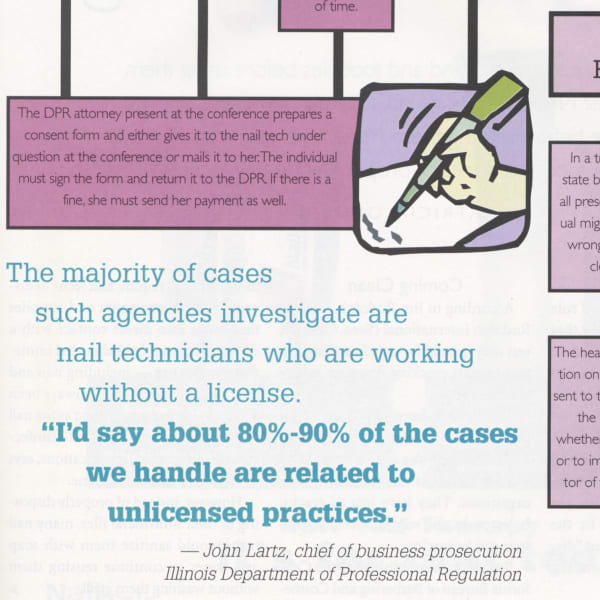
What happens when a nail technician or salon is reported to a state board or other regulating agency? Here’s a simplified rundown on what happens – beginning with the initial complaint and ending, in some case, with an arrest.
As of July 1, 2000, the Georgia State Board of Cosmetology has new requirements for nail techs. With the passing of Senate Bill 95, the number of hours of required schooling has gone up from 320 to 525.
Canadians are just as passionate about the nail industry as their American neighbors, and with the recent rise of nails-only salons and nail services up north, the time is right for the installation of associations, expansion of education, and – most importantly – the certification or licensure of nail technicians.
Of the four states still left without any kind of licensing regulations (Alaska, Connecticut, Nebraska, and Utah) regarding nail technicians, the first two are well on their way to making a change for the better.
Behind the bureaucracies of the state boards are your peers — working cosmetologists and nail technicians charged with protecting your — and their — customers' health and safety.
Licensed nail technicians and nails-only schools and their students were notified by letter in mid-April that the Alabama Board of Cosmetology was reviewing the provisions and authorization of Alabama’s managing manicurist, manicure instructor, manicure salon, and manicure school licenses.