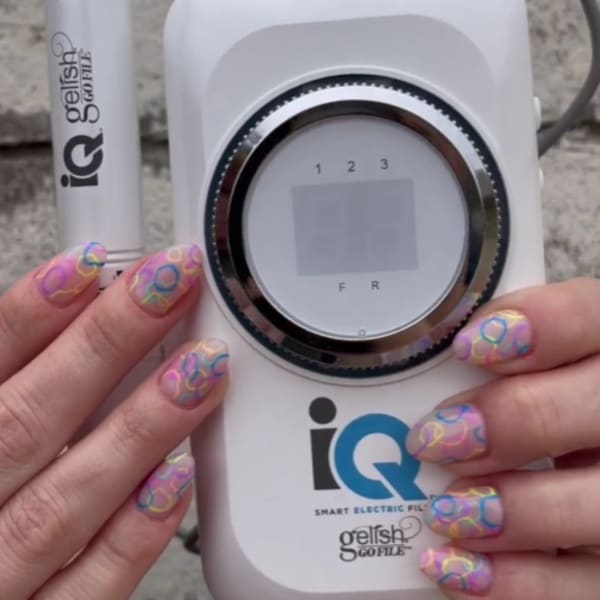
Once you’ve determined which drill to purchase, you’ll need to decide which bit head you prefer. Again, much of this is preference – what you choose is neither good nor bad, right nor wrong. However, each has strengths and weaknesses
BIT HEADS … abbreviated
Two basic bit heads will get techs started: a barrel bit (or a safety bit, which has a rounded tip) and an under-the-nail bit However, as skills improve, techs may want to expand their repertoire of bits. For that, choose bit heads that are job-specific. Listed here are popular styles and their most common uses. Remember, for many of these bit shapes, you still have the choice of materials, such as carbide or diamond. Which material you choose is simply a matter of preference.
1. Natural nail bit: Safe on natural nails, including toenails.
2. Tapered cone/UNC: Regardless ofwhat you call it, this little tool is ideal for cleaning the tight spots under the nail.
3. Cone: Another handy tool for under thenails or for running along the cuticle.
4. Small barrel and large barrel: Usedfor surface work, shortening, andbackfills. Bits come in different sizes and coarseness to satisfy any tech.
5. Mandrel/sanding bands: Made ofpaper, so they are not able to besanitized. Bits must be discarded after one use. Bands slide over the mandrels.
6. Pedicure bit: Comes in many shapes and sizes. Some pedicure bits have a hollowed — out inside to reduceheat. Electric files are excellent atremoving calluses.
7. Prepper bit: Prep nails and gently remove ridges on toenails using this smooth bit.
8. French fill bit Create a trench with ease using this specially designed bit.
9. Backfill bit: These bits come in different sizes. Techs choose the size depending on the amount of growthon the client’s nail.
10. Inverted backfill bit: Another option for fills. An ideal bit to trench andremove product at the tip of the nail.
11. Buffing bits: Some buffing bits aremade from chamois, some from silicone, and others from rubber. Chamois buffers cannot be disinfected, but they are washable. Silicone bits can be filed down (similar to a pencil) and then disinfected. Rubber bits can be disinfected.