





America’s Beauty and Wellness Industry Under Threat from Proposed Regulations Now Being Considered by U.S. Department of Education
A new report criticizes the regulations' impact against students and entrepreneurs.


 MENU
MENU SEARCH
These contests, established in 1967, test students on real-world skills and connect them with potential employers. The Nail Care category lets students compete with other aspiring techs from around the country.
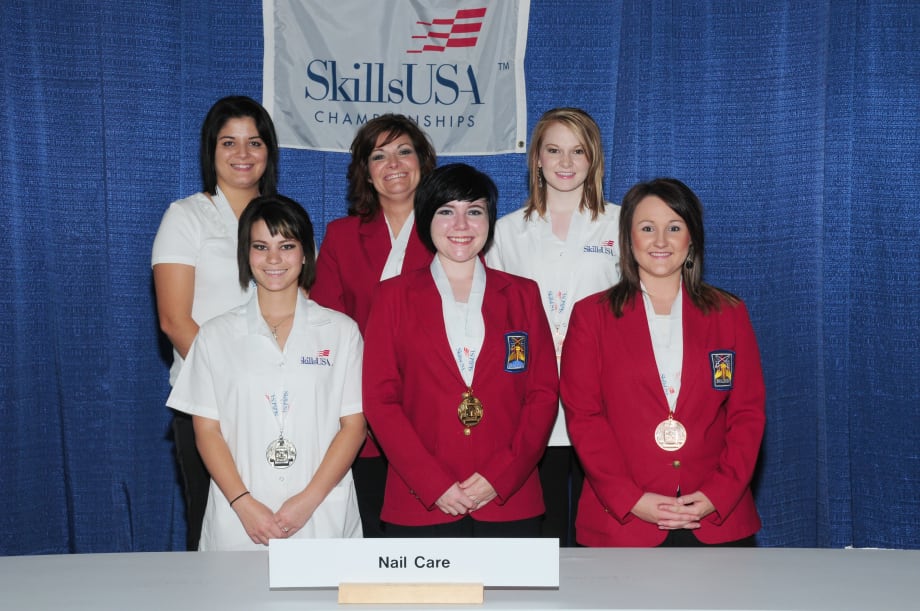
The beaming winners of the national 2012 Nail Care SkillsUSA Championship (college/postsecondary level).
The beaming winners of the national 2012 Nail Care SkillsUSA Championship (college/postsecondary level).
One tried-and-true way to improve students’ technical proficiency is to enroll them in nail competitions. The heart-thumping, adrenaline-pumping feel of a live contest, not to mention the weeks of practice that go into the preparation and the possibility of winning prizes, can bring the best out of many aspiring nail techs. But your school might not have the time, energy, or enrollment numbers to host your own competition. That’s where SkillsUSA Championships could fill the gap.
“When the Championships were created in 1967, it was decided that contests would run on industry standards rather than educator standards,” says Thomas Holdsworth, director of communications and government relations for SkillsUSA. “The reason was that students were preparing to be employed by industry, not by education, and these contests help them prepare for employment. As a consequence of this decision, the SkillsUSA Championships is one of the best ways for industry to update career and technical education curriculum.”
Nail Care has been an official SkillsUSA contest since 1998. Like the other categories in this nationwide competition, the contest challenges students in an entire occupational career area, not just a skill set in an occupation (for example, there’s a category for auto service technician, but not a contest just for brake repair). The nail care contest consists of six segments, each of which is about 45 minutes. Similar to a contest like Miss America, entrants compete on a local/state level first, then the winners at that level continue competing until finally working their way up to the national conference.
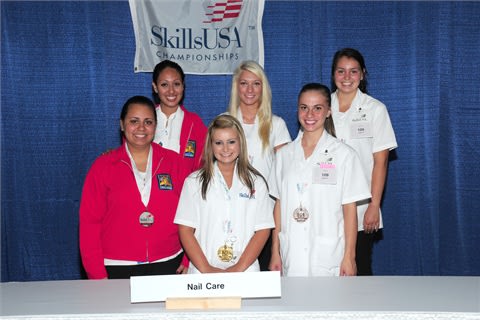
High school students can compete as well, if their school offers nail care training. Here are the high school winners for 2012.
WHY ENROLL YOUR STUDENTS
The top three reasons to participate are “students have an opportunity to meet a challenge and to be recognized for their efforts; it’s a very specific way to involve and win the support of local employers and industry for the instructional program; and this is a way students and future employers find each other,” Holdsworth says. Other benefits include making a difference in your community (for instance, cosmetology chapters often do hair in senior citizen homes), recognition from community leaders, and receiving SkillsUSA Champions magazine.
In the nail care category, two gold medals are given out at the national level: one for the high school winner and the other for the college/postsecondary winner. The prize is a donation from the technical committee and sponsors, so it varies from year to year. In the past, one prize was an all-expense paid trip to the Hair and Esthetics Show in Las Vegas.
The national nail care competition judges are selected by the technical committee, which includes representatives from OPI Products, Pivot Point International, Custom Nail Technology, and Milady, and come from all over the country. They’re often from the training departments of the industry and some are salon owners. On the local level, the programs are required to have local industry advisory committees. For nails, committee members would be local salon owners or other representatives from the industry.
FINANCIAL COSTS
To compete students must be members of a SkillsUSA chapter in their schools. National student dues are $8, and state dues are usually between $5 to $7. The individual registration fee for the national conference is $140. State-level registration fees vary from about $50 to $150, depending on the state and on what is included in the fee.
To help winning students pay for travel to the national conference, generally the local community and the school pitch in. “Many chapters have regular fundraising programs — often using the students’ occupational skills or interests (ex. car shows) or standard fare such as concessions at school sporting events — to raise funds for activities including conferences,” Holdsworth says. Some schools build chapter support into the budget. (SkillsUSA is part of the instructional curriculum.) Chapters also generally receive money from local employers, and the national organization offers some travel scholarships to get students to the national conference.
For more information, visit the “join” page of the SkillsUSA website.
Do your students compete in SkillsUSA Championships? Would you recommend it to other schools? Share your thoughts in the comments section (free NailsMag.com registration required).
A new report criticizes the regulations' impact against students and entrepreneurs.
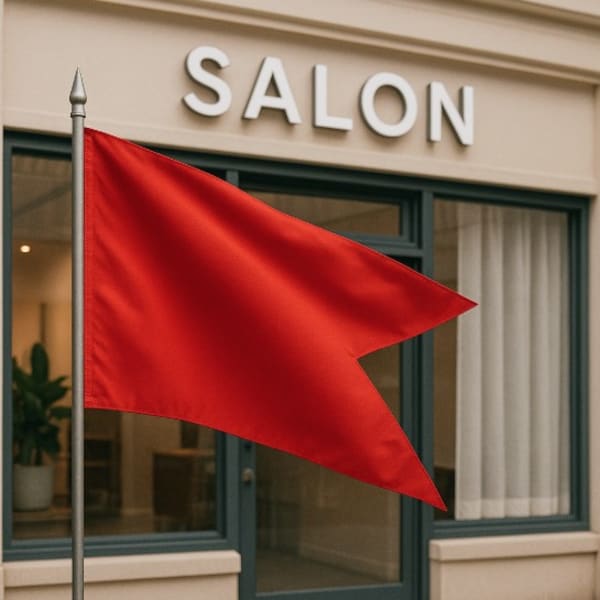
Looking for a healthy salon job? Watch for these red flags in listings, interviews, and salon culture to avoid a toxic environment and find the right fit.
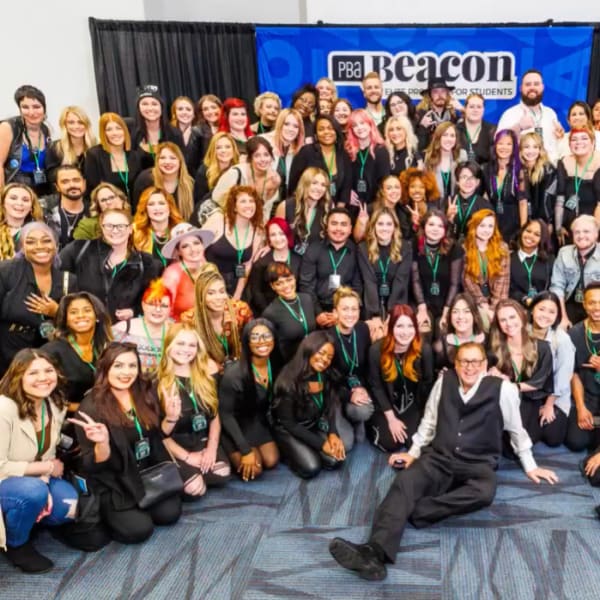
The 2024 The Professional Beauty Association (PBA) announces its Beacon Class recognizing top emerging talent in the beauty industry.

Do you often forget names? Here are some tips from global beauty educator Carlos Valenzuela to remember your clients.

Our cosmetology schools are at risk as proposed legislation would prevent many of them from participating in student federal loan programs. The American Association of Cosmetology Schools is asking for your help today!
Get the complete guide to navigating the world of professional beauty careers.
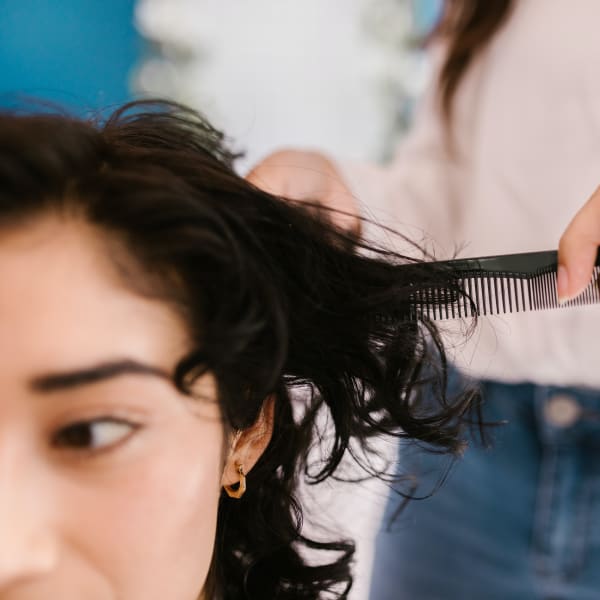
An affordable option for starting your beauty education, this post talks about taking those first steps to launching a successful career in the beauty industry.

Paul DiGrigoli began his four-decade long career, opening his first salon in 1986 in Massachusetts. The DiGrigoli School of Cosmetology has recently added new nails and esthetics programs.
While everyone's experience is unique, here is what it was like for me to take my state board exam, with details on the actual examination experience, from the moment I entered the building.
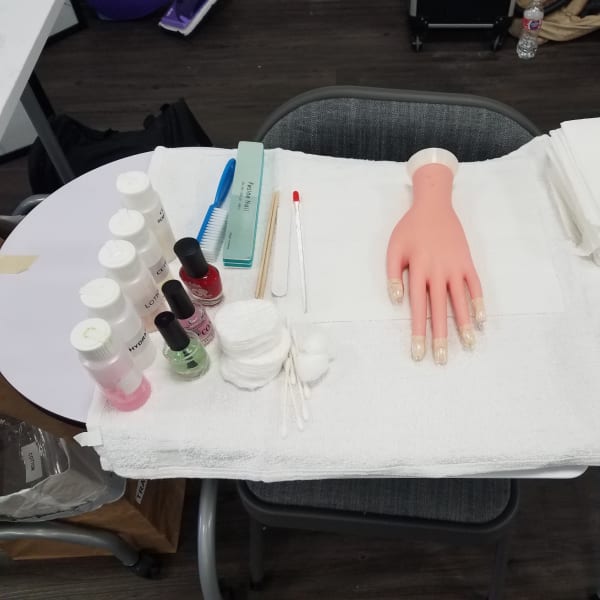
The Cosmetology Board Examination … the event that many, if not all, cosmetology students both anticipate and dread. Here is my story.
For those for whom I am just a hazy pre-pandemic memory, allow me to briefly introduce myself and summarize where I left off my story with this blog. And in future installments, I will cover more about practicing for the state board exam and the actual examination experience.
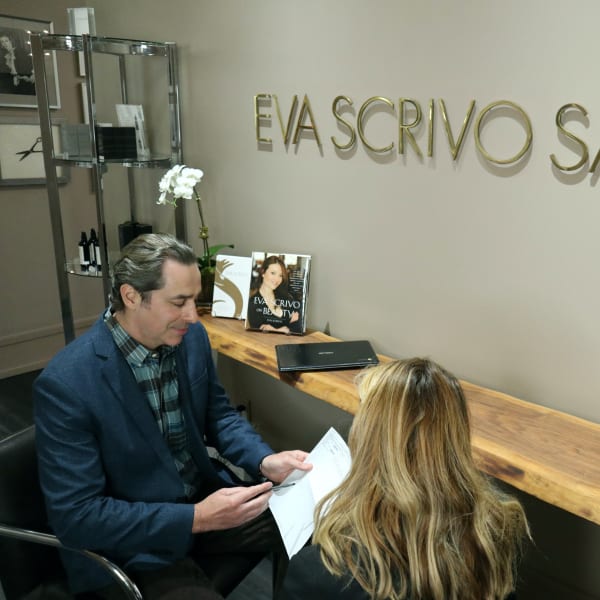
Getting employees to appreciate the importance of THE FUTURE with a 401K plan is the goal of Arik Efros, co-owner of the Eva Scrivo Salon. Efros outlines the importance of this perk and explains why many of the people in their NYC salon have already a nice bundle waiting for them upon retirement.

Julie Kandalec has fantastic personal style! Learn more about the manicurist to the stars.
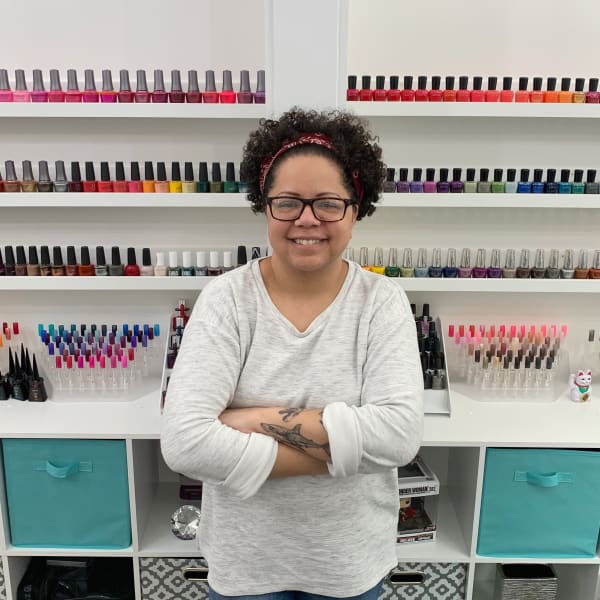
Learn more about celebrity nail artist, editorial artist, NYFW regular and salon owner Joanne Sorbello.

Get the five tips to winning NAHA's nail category from Reiko Omae. She entered just once and won.

"That first set of nails I did in the salon sucked but that client still comes back to me, three years later, because of the connection we made that day." Hear from the winners of these scholarships on how beauty helps them change lives and how it has changed their own.
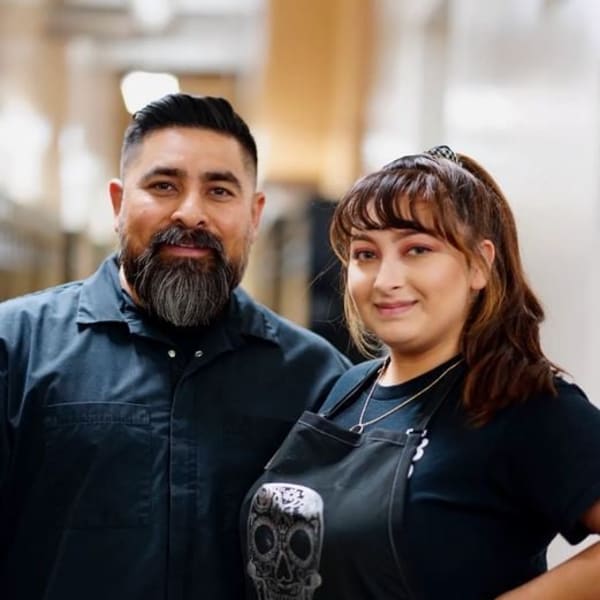
Keeping it all in the family, this Dad and daughter keep each other inspired as they train to become beauty professionals.