A federal initiative aimed at studying chemical exposure in nail salons has ended due to staffing and budget changes. Here’s what the project set out to do—and what its conclusion means for salon professionals.
At freecoat, the goal is to provide a fun, luxurious and clean experience for all guests so they have one less thing to worry about in their self-care routines.
A reminder about the proper way to dispose of salon liquids, like monomer, polish remover, and acetone.
Burst-style gel-polish removers have proven to have illegal ingredients along with falsified SDS sheets.
Throwing away nail polish? You’re putting your business at risk.
Disinfection is crucial for salon safety, but with so many products available, how can you choose the best one?
Sponsored by Virox ProBeauty
A new study says TPHP is a toxic chemical found that can be in nail polish. Holly turns to industry Doug Schoon for facts.
San Francisco’s Healthy Nail Salon Program aims to reward nail salons that make safer choices for their employees, customers, and the environment.
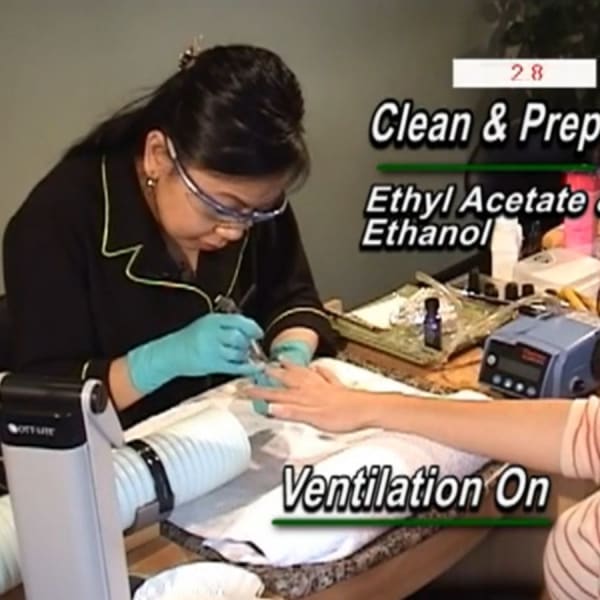
This video, from the Local Hazardous Waste Program in King County, Washington, shows the measurement levels of common nail salon solvents in the air, both with and without source-capture ventilation.
Watch move videos on salon ventilation.

Sometimes it can be hard to separate fact from fiction when it comes to potential hazards associated with work in the nail industry. With persuasive voices on both sides of the issue, we wondered how many of you feel you are jeopardizing your health by working in the salon.
Risé Carter of NSI, Doug Schoon of CND, Paul Bryson of OPI, and numerous other manufacturers and nail techs have sent letters to Dr. Oz. I encourage you to do the same. Go watch the video and then click on the Contact Us link at the bottom of the page.
A rash of salon fires reminds salon owners just how much they stand to lose. Knowing the potential fire dangers that exist in your salon and taking steps to curb them, as well as determining what your business is worth and getting good insurance coverage will help prevent a fire in your salon and minimize its effects should the worst come to pass.
I have learned one thing about nail technicians: They want the truth about the products they use and they can tell when they're getting it.
Artificial nail products are composed of various chemicals. The main ingredient for most artificial nail products is ethyl methacrylate (KMA). In 1974 the U.S. Food and Drug Administration (FDA) banned a similar chemical, methyl methacrylate (MMA), for use in nail products because of its harmful effects during application. Despite the FDA ban, MMA is still found in trace amounts in some products.
The nail industry is beginning to understand the dangers of methyl methacrylate. But more nail technicians need to take action.
The goal of the “Hazard Communication Standard” is to reduce the incidence of chemical-related work-place illnesses and injuries.