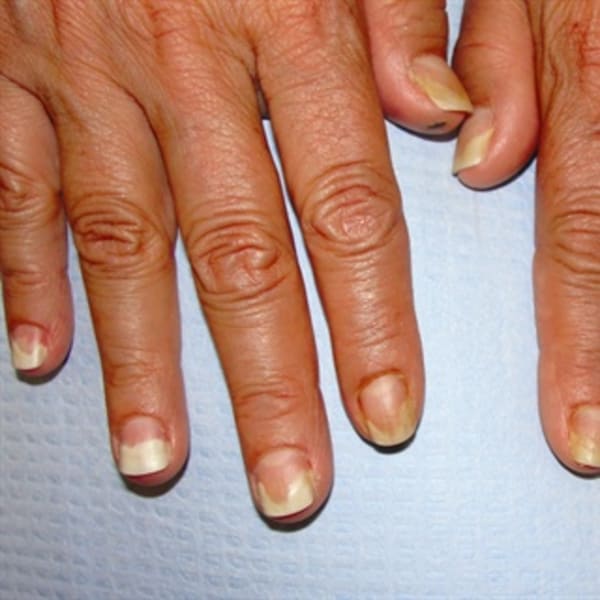
One of the most common conditions that affects the nail is onycholysis, which is the separation of the nail plate from the nail bed. Onycholysis occurs as a result of or along with a great variety of nail traumas and disorders. Probably the most common cause of onycholysis is a fungal infection of the nail.
Clients gather information from a wide range of sources, and it’s likely at some point they’ll want to know the polish you use is “three-free.” Build trust by recognizing — and relieving — their concerns.
In October, the San Francisco Board of Supervisors’ Public Safety Committee passed the Healthy Nail Salon Recognition ordinance at the urging of advocacy groups California Healthy Nail Salon Collaborative, Environment California, and Asian Law Caucus.
We’ve all heard of them by now. The big three: formaldehyde, toluene, and dibutyl phthalate (aka DBP). But what exactly are these chemicals and why have they been systematically eliminated from cosmetics?
Several years ago nail technicians expressed concern about the use of formaldehyde in nail polish and nail treatments because it is a know skin irritant and some people are allergic to it. However, I suspect that less than 1/10,000 of human exposure to formaldehyde comes from nail products.