In her second column, Dr. Stern covers spoon-shaped nails, Mee’s lines, habit tic, and more.
by Dr. Dana Stern
July 8, 2013
4 min to read
Dermatologists treat skin, hair, and nails. I am a board-certified dermatologist and I specialize in the treatment of nail disorders including nail infections, inflammatory diseases of the nail, cosmetic issues related to the nail, cancers of the nail, and sports-related nail injuries. I also perform surgery on the nail including biopsies and excisions. My initial interest in nails was like most things in life, somewhat random. Early in my training at Mount Sinai Hospital in New York City, the chairman of my department encouraged me to apply for a research grant to study nails. He suggested I study brittle nails because it was such a controversial topic in the medical literature. In 2007, our first study was published in The Journal of the American Academy of Dermatology. I have been passionate about nails ever since.
Most of my consults are from other dermatologists, physicians, or patients who have read about me. I also see patients referred from nail salons. I love the fact that my day is not predictable. I am constantly meeting new patients from all walks of life and I never know what interesting nail case awaits me when I enter the examination room.
Ad Loading...
Consult #1
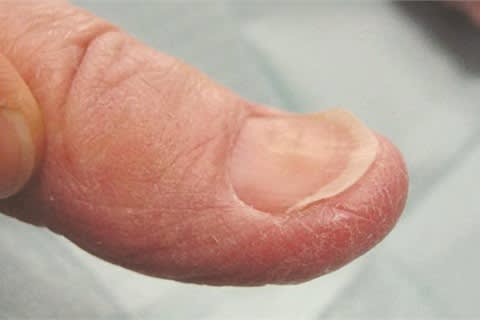
Patient is a 74-year-old female with a five-month history of abnormal appearance of the right thumbnail. There was no history of trauma and no pain.
Assessment: Koilonychia, also referred to as “spoon-shaped nails,” are concave in appearance so that a drop of water could balance on the surface of the nail plate without rolling off. Although there are many potential causes, the most common include iron deficiency anemia, trauma, psoriasis, and Raynaud’s. Often the cause is not completely clear but it is always important to check blood work to look for anemia.
Consult #2
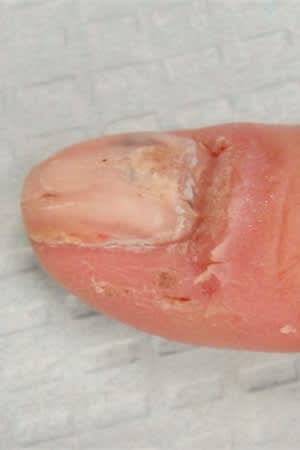
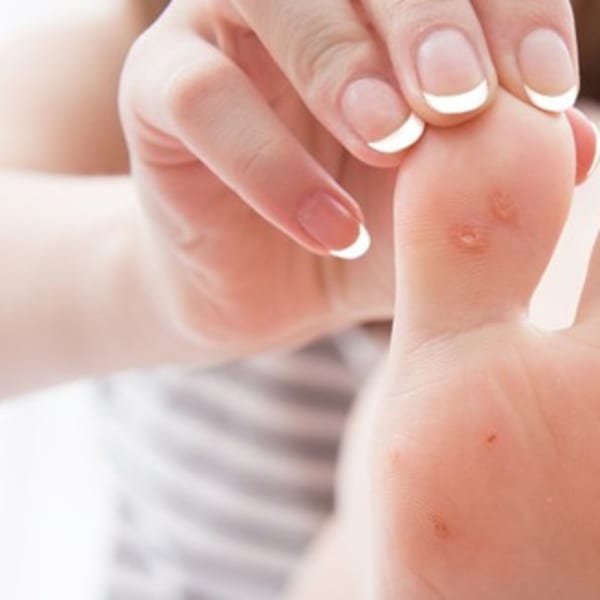
Patient is a 41-year-old female with a history of a wart at the left thumbnail for more than three years. When she came to me for consultation she reported a history of several years of unsuccessful therapy including freezing the wart.
Ad Loading...
Assessment: This is a great example of a wart that has impinged on the growth of the nail causing the nail to grow abnormally (nail dystrophy). If you look at the skin that is just in front of the cuticle you can see a rough looking plaque and this is the part of the wart that is visible. However, the wart also continues to extend deep and this is why it was not responsive to simple freezing. I surgically removed the wart so it was no longer interfering with the growth of the nail.
Before
After
Consult #3
The patient is a 32-year-old male who presented with a 10-year history of abnormal thumbnails. He was very embarrassed about the appearance of his nails and admitted to a habit of pushing the cuticles of the thumb nails back with his index fingers.
Assessment: Habit-tic deformity is an acquired habit-induced condition of the nails secondary to the repetitive habit of picking or pushing the cuticle of the thumbnail back. You can see a series of parallel, transverse depressions along the central access of the nail plate in a so-called “washboard” configuration. Additionally the lunula is often enlarged. There is always a ragged or absent cuticle and the patient may or may not be aware of the habit. Any repetitive trauma to the cuticle can ultimately result in the abnormal outgrowth of the nail because the cuticle directly overlies the nail matrix and the nail matrix is what becomes the actual nail. Therefore, overly aggressive cuticle removal or even pushing back of the cuticle can, when repetitive, affect the cosmetic appearance of the nail. I treated this patient by offering a solution for repair of the cuticle and we also discussed behavioral modification. He was very pleased with the outcome (see post-treatment photo).
Consult #4
Ad Loading...
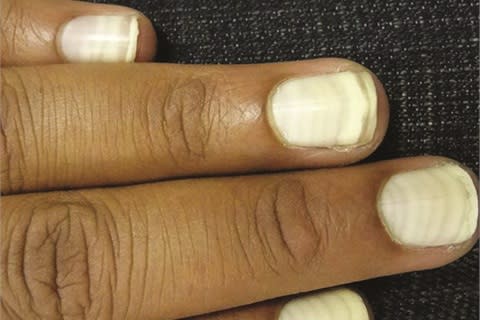
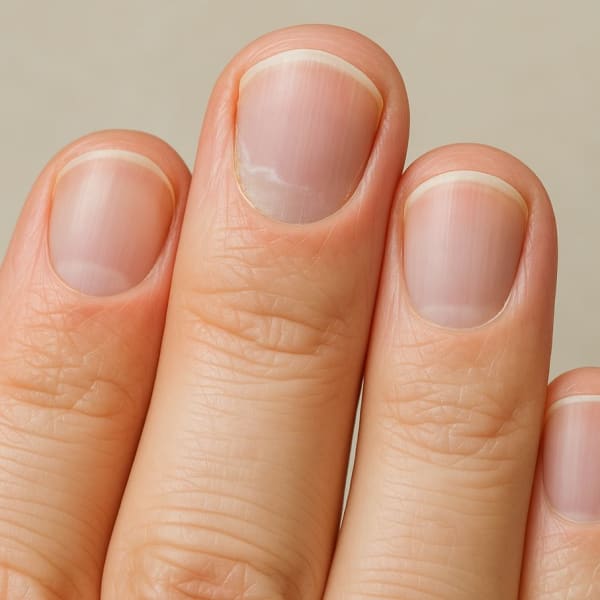
The patient is a 19-year-old male who presented with an eight-month history of abnormal white lines on all 20 nails.
Assessment: Mee’s lines are a type of leukonychia (white nail). The white color follows the contour of the lunula (half moon). Arsenic poisoning is the classic cause of Mee’s lines, however there are also many other potential medical causes including certain vitamin deficiencies and infections. A complete medical work up and extensive blood work are imperative.
Consult #5
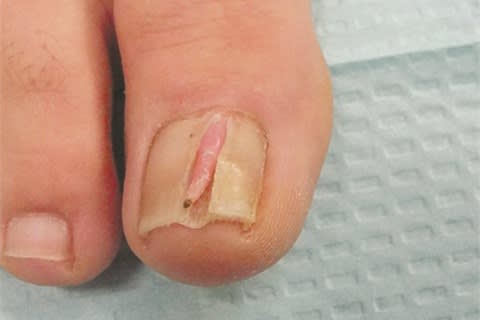
The patient is a 43-year-old female who presented with a nine-month history of something painless growing on her right great toenail.
Assessment: This horn-like projection is a benign tumor called an acquired digital fibrokeratoma. These tumors tend to occur on hands, feet, and nails. Treatment is surgical removal although they may recur. I surgically excised this tumor and so far we have been lucky and it has not grown back.
Ad Loading...
You can contact Dr. Stern with your questions via Facebook (www.facebook.com/danasternmd) or Twitter (@DrDanaStern).
Uncured gel polish and microscopic e-file dust contain active acrylates that penetrate the skin, triggering permanent contact dermatitis. Learn the chemistry behind these irritants and how to protect your clients and yourself.
The Good Patch is a leading wearable wellness patch brand, offering wellness and skincare patches that support everyday needs including energy, sleep, relaxation and more.
Orthopedic PT reveals three daily exercises plus ergonomic advice that can help salon professionals avoid the aches and injuries caused by standing, bending and repetitive overhead work.
From acrylic monomers to airborne bio-dust, the air inside a nail salon carries risks most professionals never see coming. Aerovex Systems reveals the source-capture and room-purification strategies that are setting a new standard for salon safety.
Working in beauty doesn’t have to hurt. Learn how Somatic Movement helps hairstylists, lash artists, and other beauty pros release tension, improve posture, and extend their careers.
As a spa or salon professional, your clients expect more than just beauty—they expect safety, hygiene, and peace of mind. Fungal infections like Athlete’s Foot and Nail Fungus are more common than you think, especially in environments where tools and footbaths are reused without proper sanitation. This blog covers how to stop these issues before they start, using proven infection prevention strategies for salons and spas.
A federal initiative aimed at studying chemical exposure in nail salons has ended due to staffing and budget changes. Here’s what the project set out to do—and what its conclusion means for salon professionals.
For many people, a pedicure is a relaxing beauty ritual. But what most don’t realize is that this simple service, if done without proper hygiene and sanitation, can cause serious infections and long-term health issues.
Onycholysis is the separation of the nail plate from the nail bed. While it may look painful, it typically isn’t—at least not at first. But without proper care, this common nail disorder can lead to infections, deformities, and long-term damage.
Mckenzie Kool, Psychologist, MC, RPsych provides us with guidance on what may or not be helpful in speaking with someone who has suffered a significant loss.
Clients come to you to feel their best—not leave with a viral souvenir. Warts and cold sores can spread fast in busy salons, but a few smart habits make all the difference. Let’s talk about what’s really lurking in your salon (and how to kick it to the curb).
As Earth Day approaches, The Green Beauty Community Foundation and the Green Spa Network invite beauty pros to step forward and embrace sustainability through the Green Pledge--a powerful initiative designed by and for beauty industry leaders.
Don’t cancel Valentine’s Day altogether, urges Jill Palmquist. Instead, think of it as a (frilly, flowery, Champagne-bubbly) wake-up call to fall deeply in love with your own life.
Life coach and Culture Ambassador of Sam Villa, Andrew Carruthers, outlines how to tell if your burnout is temporary - or if it's time to make a bigger career change.