In this month’s column, Dr. Stern discusses the causes of brittle nails and explores treatment myths and solutions.
by Dr. Dana Stern
September 23, 2016
Dr. Dana Stern
6 min to read
Brittle nails are one of the most common cosmetic nail concerns. The nail treatment section of the drugstore is loaded with remedies for ridged, peeling, weak nails and every day in my medical practice I see women who are extremely concerned about these issues. To a certain extent, nail strength and quality is inherited; however, there are also many environmental factors that can contribute to nail health. In rare cases, brittle nails can be attributed to an internal health issue.
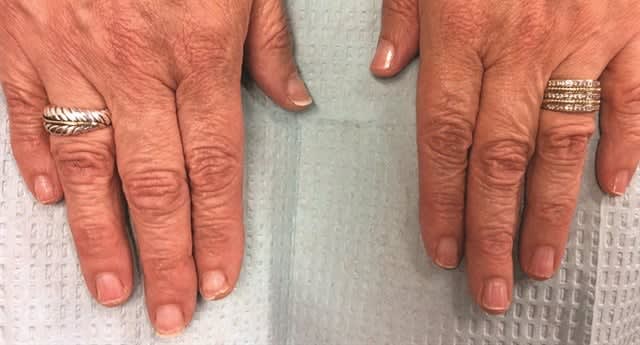
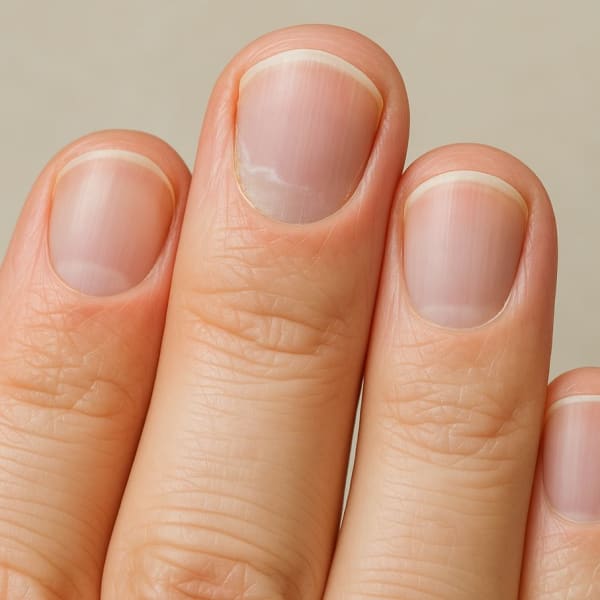
When physicians speak of brittle nails we are referring to two specific common nail conditions: onychorrhexis (longitudinal ridging that, when severe, can result in splits in the distal edge [free edge] of the nail) and onychoschizia (horizontal layering or peeling at the nail tip). If you were to look at a nail under a microscope, the layered nail cells would look like shingles on a roof. As the cells are exposed to environmental stressors such as chemicals in nail cosmetics or household cleaning products, the cells become dehydrated and often lift and separate. This is what you observe as peeling at the tip of the nail.
Ad Loading...
Onychoschizia (nail peeling)
When I evaluate a new patient with brittle nails, I always ask about specific environmental exposures. Excessive contact with water is a common cause of brittle nails because as water moves in and out of the nail, it places a strain on the delicate nail cells that leads to weakening and ultimately peeling and breakage. My patients who swim a lot are often very challenging from the perspective of treating their brittle nails, but I always tell them to keep swimming as it is one of the best exercise routines around! Instead I advise them to wear gloves with other wet work, such as washing dishes or doing laundry, in order to prevent additional water exposure. Gloves are also a must when working with household cleaning products.
Hand sanitizers that contain alcohol can also be extremely dehydrating to nails. Instead, when on the go, I recommend using a moisturizing cleanser or body wash in a travel dispenser (such as Dove).
Nail cosmetics — especially nail polish remover — can dehydrate the nail and cause the nail to become more brittle. Polish, in contrast, serves to reinforce the nail and creates a protective layer. For my polish-loving patients who are experiencing brittle nails, I recommend taking a break from polish, but the goal is really to take a break from polish remover. Non-acetone nail polish removers are less drying, but are usually formulated with strong solvents that can be dehydrating as well. So to avoid overuse of polish remover, I recommend a two- to four-week nail polish holiday. For gel-polish users, returning to traditional polish is beneficial until the nails are back in shape.
Onychorrhexis (nail ridging)
On rare occasions, I will see a patient who describes the sudden onset of dry, peeling, weak nails. When nail changes are acute, I always make sure to explore the possibility of internal causes such as anemia.
What Treatments Help?
Ad Loading...
Although there are treatments galore marketed for brittle, weak nails, there are many therapeutic myths and certain products can ultimately make brittle nails worse. One common myth is gelatin. At one time, gelatin was an inexpensive source of protein and so it was recommended for those who suffered from brittle nails. Today, protein deficiency as a cause of brittle nails is extremely rare and most often seen in hospitalized patients who are very ill or, very rarely, those who adhere to extreme diet trends such as an all-juice diet. Calcium deficiency as a cause of brittle nails is another myth. Unlike bones that derive strength from calcium, the nails contain keratin and taking calcium supplements will not help strengthen nails. Of all the supplements marketed for brittle nails, biotin has the best medical evidence of being an effective treatment for brittle nails. According to the studies, 2,500 micrograms of biotin daily may help with nail growth and strength. Biotin is a vitamin B co-enzyme that is water-soluble. This means that whatever your body does not need will be excreted, as opposed to stored in your fat. It is therefore considered to be a safe supplement and is available in most health food stores and drugstores. Since fingernails grow out every four to six months, biotin should be taken for at least that length of time to see if it works.
In general, nail “treatment” products that are formulated similar to nail polish and therefore require removal with polish remover are not effective for the treatment of brittle nails because, as previously discussed, polish removers can be extremely dehydrating to the nail. It is important to look at the ingredients in nail products as many so-called nail strengtheners and treatments contain formaldehyde. Formaldehyde is very effective at creating a stiffer, stronger nail initially, but paradoxically, over time the nail will become brittle due to a loss in flexibility and this can result in nail separation (onycholysis). Other issues associated with formaldehyde include allergies as well as concerns about carcinogenicity. For these reasons, I always advise my patients to avoid products that contain formaldehyde.
Additionally, there are a couple of prescription brittle nail treatments on the market. These are nail lacquers that are formulated to address fragile, brittle, or split nails. Genadur, a hydrosoluble nail lacquer, contains hydroxypropyl-chitosan (HPCH), which penetrates intercellular spaces and nail surface ridges, providing physical support and creating a barrier against external agents. Another prescription option in this category is Nuvail, a poly-ureaurethane protective barrier, which creates a stable yet flexible molecular structure within the nail plate and maintains moisture balance by preventing water absorption. Unfortunately, these products are often not approved by commercial insurances and Medicare, so they can be cost prohibitive for patients.
The Dr. Dana Nail Renewal System
I developed the Dr. Dana Nail Renewal System after years of hearing my patients express frustration with the lack of available effective brittle nail treatments on the market. It’s a once-weekly, three-step treatment system that rejuvenates dry, peeling, ridged, weak nails and leaves nails with a lustrous, healthy shine. The treatment is completely polish free, requires no removal, and is also free of formaldehyde, fragrance, dyes, and parabens. It’s also the first nail treatment system to contain glycolic acid, an ingredient we know so well in dermatology as a powerhouse exfoliator. There is also evidence in medical literature that glycolic acid can rejuvenate the nail by removing damaged nail cells. I refer to this step as “essential exfoliation” as it removes superficial nail damage (ridging, peeling, discoloration) and allows the nail to effectively absorb the final product in the system, a deep hydrating formula that also contains our proprietary natural nail strengthener, Phyto Crystal Complex.
Ad Loading...
Dr. Dana Stern
Dermatologists treat skin, hair, and nails. I am a board-certified dermatologist and one of the country’s only nail specialists. My practice is entirely focused on the treatment of nail disorders including nail infections, inflammatory diseases of the nail, cosmetic issues related to the nail, cancers of the nail, nail surgery, and sports-related nail injuries.
Uncured gel polish and microscopic e-file dust contain active acrylates that penetrate the skin, triggering permanent contact dermatitis. Learn the chemistry behind these irritants and how to protect your clients and yourself.
The Good Patch is a leading wearable wellness patch brand, offering wellness and skincare patches that support everyday needs including energy, sleep, relaxation and more.
Orthopedic PT reveals three daily exercises plus ergonomic advice that can help salon professionals avoid the aches and injuries caused by standing, bending and repetitive overhead work.
From acrylic monomers to airborne bio-dust, the air inside a nail salon carries risks most professionals never see coming. Aerovex Systems reveals the source-capture and room-purification strategies that are setting a new standard for salon safety.
Working in beauty doesn’t have to hurt. Learn how Somatic Movement helps hairstylists, lash artists, and other beauty pros release tension, improve posture, and extend their careers.
As a spa or salon professional, your clients expect more than just beauty—they expect safety, hygiene, and peace of mind. Fungal infections like Athlete’s Foot and Nail Fungus are more common than you think, especially in environments where tools and footbaths are reused without proper sanitation. This blog covers how to stop these issues before they start, using proven infection prevention strategies for salons and spas.
A federal initiative aimed at studying chemical exposure in nail salons has ended due to staffing and budget changes. Here’s what the project set out to do—and what its conclusion means for salon professionals.
For many people, a pedicure is a relaxing beauty ritual. But what most don’t realize is that this simple service, if done without proper hygiene and sanitation, can cause serious infections and long-term health issues.
Onycholysis is the separation of the nail plate from the nail bed. While it may look painful, it typically isn’t—at least not at first. But without proper care, this common nail disorder can lead to infections, deformities, and long-term damage.
Mckenzie Kool, Psychologist, MC, RPsych provides us with guidance on what may or not be helpful in speaking with someone who has suffered a significant loss.
Clients come to you to feel their best—not leave with a viral souvenir. Warts and cold sores can spread fast in busy salons, but a few smart habits make all the difference. Let’s talk about what’s really lurking in your salon (and how to kick it to the curb).
As Earth Day approaches, The Green Beauty Community Foundation and the Green Spa Network invite beauty pros to step forward and embrace sustainability through the Green Pledge--a powerful initiative designed by and for beauty industry leaders.
Don’t cancel Valentine’s Day altogether, urges Jill Palmquist. Instead, think of it as a (frilly, flowery, Champagne-bubbly) wake-up call to fall deeply in love with your own life.
Life coach and Culture Ambassador of Sam Villa, Andrew Carruthers, outlines how to tell if your burnout is temporary - or if it's time to make a bigger career change.