In this month’s column, Dr. Stern discusses habit tic, a nail defect that occurs as a result of repetitively picking or pushing back the cuticle. You might be surprised to learn that super glue can play a part in its treatment.
by Dr. Dana Stern
January 3, 2017
Dr. Dana Stern
5 min to read
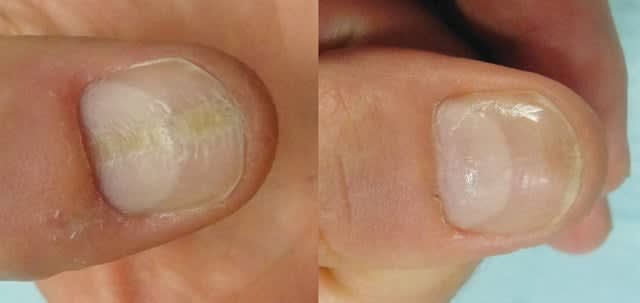
Habit tic: before and after treatment
We live in a hand-held world today, where we are always tapping away on our devices and our hands end up being front and center in everything we do. That means the appearance of our nails is a central part of our image and nail habits can be a major concern for many. The effective treatment of nail-related bad habits requires a combination of correctly diagnosing the issue and treatment with both behavioral modification and the correct therapeutic approach. Such is the case with habit tic.
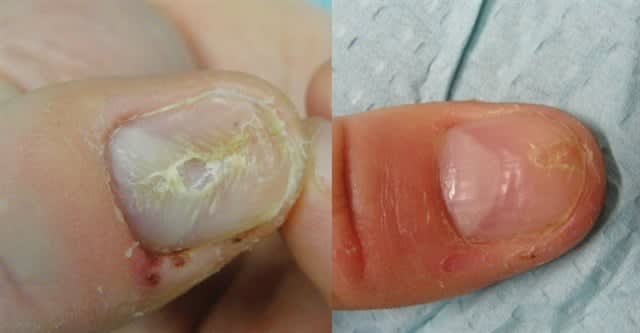
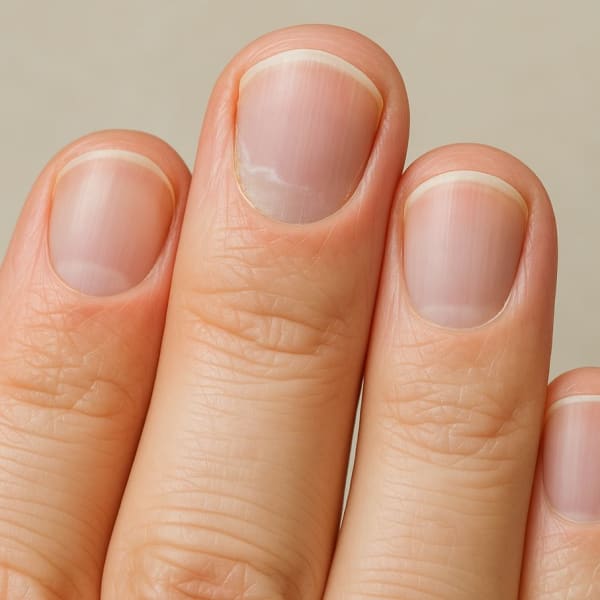
Habit tic deformity occurs when a person repetitively picks or pushes back her cuticle. An acquired condition that usually occurs in adulthood, habit tic is associated with a very distinct appearance, although, as with most conditions in medicine, variations are also often seen. Classically, the nail (or nails) has a longitudinal defect that is usually several millimeters in width and extends along the midline of the nail plate beginning at the cuticle and ending at the free edge. Along the longitudinal defect are a series of parallel, transverse depressions often in a “washboard” configuration. Other typical features include a macro-lunula — an enlarged half-moon area at the base of the nail. On occasion I have observed enlarged lunula that are half the length of the nail. The cuticles are always compromised and often they are completely absent, with associated redness and swelling along the proximal nail fold (the skin behind the cuticle).
Ad Loading...
Habit tic is most often a result of onychotillomania, the compulsive and repetitive habit of picking at the nails specifically at the cuticle area. Patients may or may not be aware that they are picking. Most often, the index finger is used to pick or repetitively push back the cuticles of the thumbnail. There are exceptions and habit tic deformities can occur in other fingernails as well. However it isn’t normally seen on toenails as it is not typical for people to have access to their toenails throughout the day.
It’s important to note that any repetitive trauma to the cuticle can ultimately result in the abnormal outgrowth of the nail because the cuticle directly overlies the nail matrix and the nail matrix is the anatomical structure that becomes the actual nail plate. Therefore, overly aggressive cuticle removal or even pushing back of the cuticle can, when repetitive, impact and deform the cosmetic appearance of the nail. The cuticle is an amazing biological structure; it’s the nail’s natural protective seal, preventing moisture and infection from entering the nail unit. Once this barrier is compromised, the new nail will grow in a very abnormal environment and if the issue persists, the nail itself will begin to grow abnormally.
Habit tic: before and after treatment
Approaches to Treatment
Effective treatment of habit tic requires an individualized approach. The first step is to determine whether the patient is conscious of the habit. Most patients are aware of their actions, but simply don’t know how to break the habit. As with any habit, the patient needs to be motivated to stop the behavior. The next step is homing in on when the patient tends to demonstrate the tic. It’s often during a lull in activity during the day, such as sitting in traffic, attending a meeting, sitting at the computer, or watching television. I encourage my patients to keep a diary for a few days to establish their personal pattern of when they are most tempted to pick. Once patients have a good sense of the times when they are tempted, they then need to prepare to divert the behavior.
Everyone’s method for diversion differs. I had a patient who was picking primarily while he was in the car in traffic. He said that he was embarrassed by his nails and most concerned about what his children thought of the habit. We decided that having a photo posted of his children on his dashboard would be a great way to remind him not to pick and this successfully reminded him to not engage in the behavior during his high-risk times in traffic. Other patients have worn rubber bands around their wrists and played with the rubber bands as a method of behavioral modification. Some use squeezy balls and some cover their nails with Band-aids. These methods are all part of the behavioral modification aspect of conquering the habit, but treatment is also required.
Ad Loading...
In 2012, a case report was published in The Archives of Dermatology entitled “Inexpensive Solution for Habit Tic Deformity.” I read this report with interest, as when I was a resident in dermatology training, I was always taught that treatment of this disorder was challenging and that there were not many effective treatments. I was excited to learn of a new, successful treatment approach. The article showed incredible treatment success by having the patient apply super glue (cyanoacrylate) to the cuticle twice weekly for three to six months. This method made a lot of sense to me as one of the biggest issues with habit tics is compromise to the cuticle.
By applying the glue, the patient is essentially recreating the cuticle artificially. Patients also feel that the glue and this artificial barrier serve as a reminder to not engage in the habit. The first patient I treated with this technique had a severe habit tic and experienced a dramatic improvement. In fact the nails completely normalized in five months. I was sold and my approach to treating habit tic deformity is always a combination of behavioral modification and super glue, plus or minus a prescription or treatment in the office.
At times, if patients have very significant swelling and bogginess (a spongy texture) at the proximal nail fold, I will prescribe an anti-yeast cream and steroid or inject a small amount of steroid into the nail fold, although the majority of patients improve dramatically with a combination of behavioral modification and super glue.
Dr. Dana Stern
Dermatologists treat skin, hair, and nails. I am a board-certified dermatologist and I specialize in the treatment of nail disorders including inflammatory diseases of the nail, cosmetic issues related to the nail, cancers of the nail, sports-related nail injuries, and nail infections. Nails can also be at the center of many habitual behaviors that may negatively affect the appearance of our nails.
Uncured gel polish and microscopic e-file dust contain active acrylates that penetrate the skin, triggering permanent contact dermatitis. Learn the chemistry behind these irritants and how to protect your clients and yourself.
The Good Patch is a leading wearable wellness patch brand, offering wellness and skincare patches that support everyday needs including energy, sleep, relaxation and more.
Orthopedic PT reveals three daily exercises plus ergonomic advice that can help salon professionals avoid the aches and injuries caused by standing, bending and repetitive overhead work.
From acrylic monomers to airborne bio-dust, the air inside a nail salon carries risks most professionals never see coming. Aerovex Systems reveals the source-capture and room-purification strategies that are setting a new standard for salon safety.
Working in beauty doesn’t have to hurt. Learn how Somatic Movement helps hairstylists, lash artists, and other beauty pros release tension, improve posture, and extend their careers.
As a spa or salon professional, your clients expect more than just beauty—they expect safety, hygiene, and peace of mind. Fungal infections like Athlete’s Foot and Nail Fungus are more common than you think, especially in environments where tools and footbaths are reused without proper sanitation. This blog covers how to stop these issues before they start, using proven infection prevention strategies for salons and spas.
A federal initiative aimed at studying chemical exposure in nail salons has ended due to staffing and budget changes. Here’s what the project set out to do—and what its conclusion means for salon professionals.
For many people, a pedicure is a relaxing beauty ritual. But what most don’t realize is that this simple service, if done without proper hygiene and sanitation, can cause serious infections and long-term health issues.
Onycholysis is the separation of the nail plate from the nail bed. While it may look painful, it typically isn’t—at least not at first. But without proper care, this common nail disorder can lead to infections, deformities, and long-term damage.
Mckenzie Kool, Psychologist, MC, RPsych provides us with guidance on what may or not be helpful in speaking with someone who has suffered a significant loss.
Clients come to you to feel their best—not leave with a viral souvenir. Warts and cold sores can spread fast in busy salons, but a few smart habits make all the difference. Let’s talk about what’s really lurking in your salon (and how to kick it to the curb).
As Earth Day approaches, The Green Beauty Community Foundation and the Green Spa Network invite beauty pros to step forward and embrace sustainability through the Green Pledge--a powerful initiative designed by and for beauty industry leaders.
Don’t cancel Valentine’s Day altogether, urges Jill Palmquist. Instead, think of it as a (frilly, flowery, Champagne-bubbly) wake-up call to fall deeply in love with your own life.
Life coach and Culture Ambassador of Sam Villa, Andrew Carruthers, outlines how to tell if your burnout is temporary - or if it's time to make a bigger career change.