In this month’s column, Dr. Stern discusses infections of the skin and nails that nail techs should be aware of.
by Dr. Dana Stern
December 22, 2014
Dr. Dana Stern
4 min to read
Being a nail technician is not just about applying the perfect coat of polish or knowing the latest Essie shades for the season. Nail technicians are also responsible for protecting the health of their clients and themselves. Maintaining top health standards in order to prevent the spread of infectious disease is accomplished by adhering to strict sanitation and disinfection guidelines, reading product Safety Data Sheets, and by being able to recognize the appearance of skin and nail infections. Having a clear understanding of the clinical presentation of infections of the skin and nails is crucial for the health and safety of both clients and nail technicians. The following is a summary of several infectious entities that every salon worker should be able to recognize and that will no doubt walk through your salon door at some point.
If you suspect that a client or a fellow salon worker has one of these infections, it is imperative to recommend that they see a physician for treatment. Knowledge is power and knowing what to look out for is vital for the health of everyone involved.
Ad Loading...
Warts
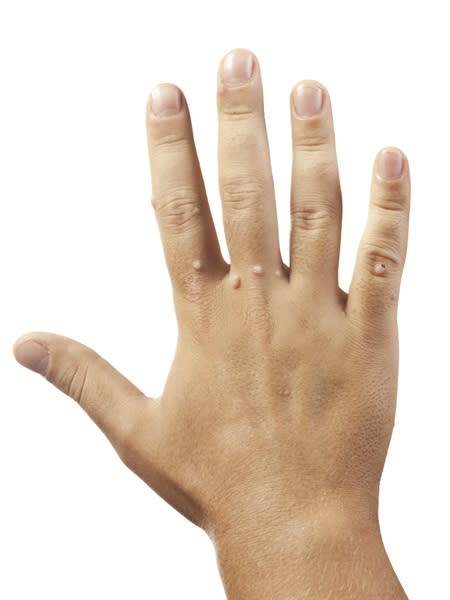
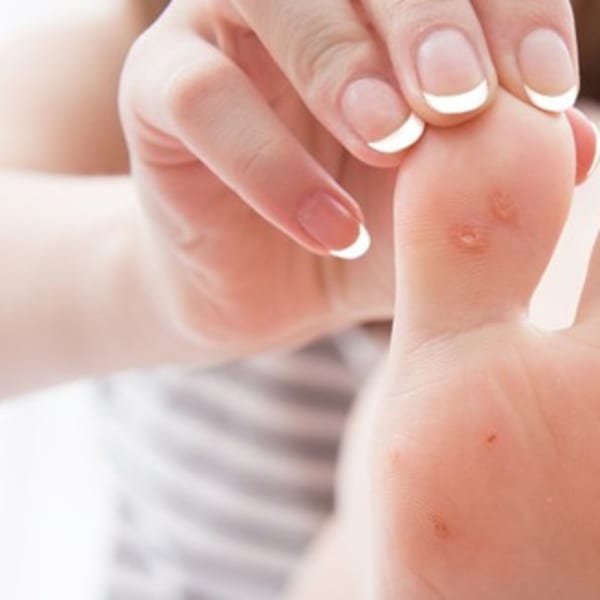
Warts are verrucous papules that frequently have a “cauliflower-like” appearance and tend to occur on the hands, feet, and around the nails. Warts are caused by the human papilloma virus (HPV), are contagious, and can spread from contact. Warts can be very difficult to treat.
Onychomycosis
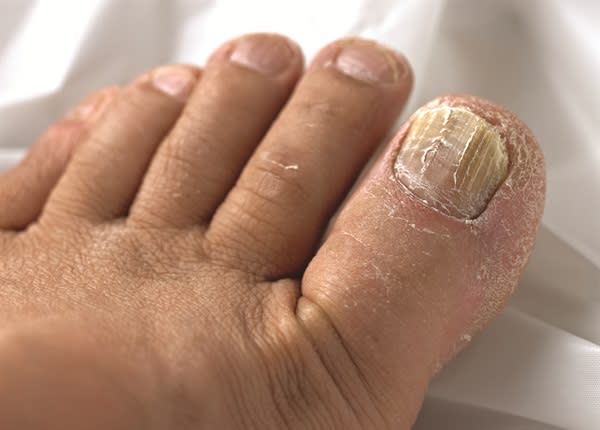
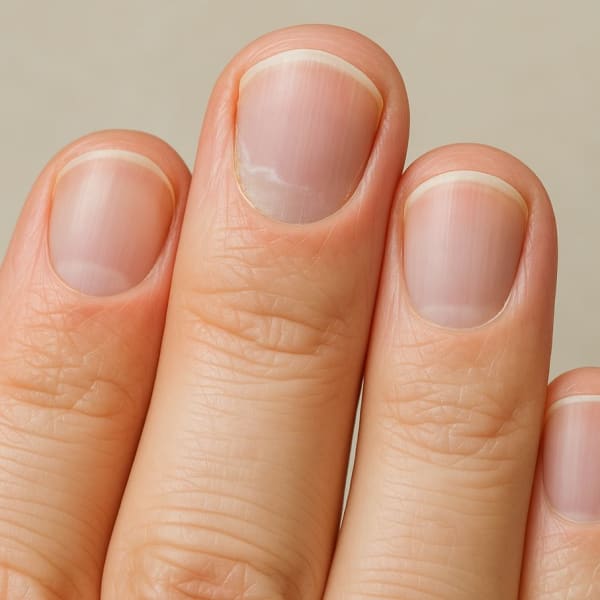
Onychomycosis means fungal infection of the nail. Nail fungus can be caused by dermatophytes (fungus), yeast, or non-dermatophyte molds. Multiple factors predispose a person to fungal infections of the nail including increasing age, diabetes, suppressed immunity, excessive sweating (hyperhidrosis), poor circulation, and nail dystrophy (irregular growing nails). Additionally, nail fungus can be acquired from fungal infections at other areas of the body. For example, tinea pedis (athlete’s foot) can spread to the toenail, especially if the nail is damaged or lifted. Although onychomycosis can occur on either the fingernails or toenails, it is much more common on the toenails. Onychomycosis on the hands tends to occur in two scenarios: 1) when the feet are significantly affected and the individual frequently touches his or her feet; or 2) in people who may have a compromised immune system. Onychomycosis on only the fingernails is unusual and a dermatologist should evaluate any suspected case because it is possible that the diagnosis is onycholysis (nail separation). Onychomycosis is the most common infection you will see in the salon and it happens to be the most common nail disorder in adults. Even though the appearance can be highly variable, most nail technicians are able to recognize onychomycosis. Often the nail appears discolored and can be yellow, white, brown, thickened and/or crumbly. There is significant debris under the nail and the surrounding nail folds, and the cuticle may be redder than usual.
Staph Folliculitis
Ad Loading...
Staph folliculitis is an infection of the hair follicle that is usually caused when the bacteria Staphylococcus aureus enter an opening in the skin. This can occur anywhere on the body where there are hair follicles. Red and pus filled pimple-like bumps appear and the surrounding skin can become red and tender. This type of infection is extremely contagious. A bacterial culture should be performed and antibiotic therapy is imperative.
Pseudomonas
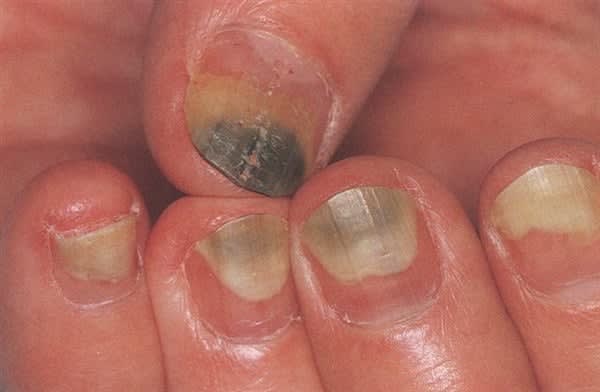
Pseudomonas is a bacteria known as “the greenies” in many salons because it produces a pigment, pyocyanin, that imparts a green color to nails when the organism makes its habitat on the nail plate. Most nail technicians are aware of pseudomonas, but many don’t know that it is caused by bacteria and needs to be effectively treated.
Photo courtesy of James Heilman, M.D.
Herpetic Whitlow
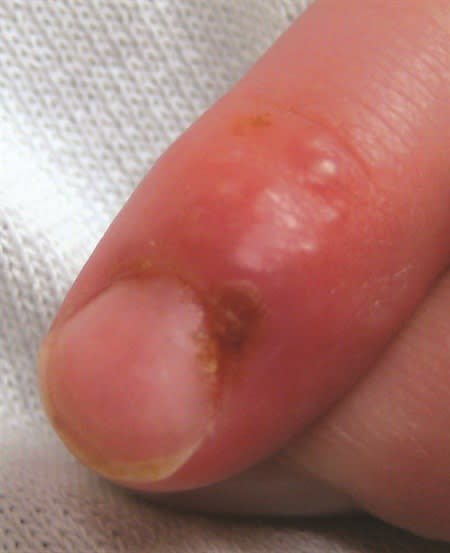
Herpetic whitlow is an infection of the hand and usually the tip of the finger caused by a herpes virus. The digit appears red and swollen, and is usually significantly tender. There may be fluid-filled blisters and the infection is contagious.
Ad Loading...
Tinea Pedis
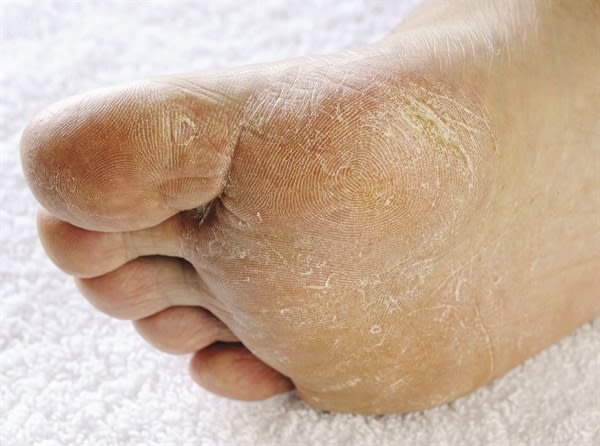
Tinea pedis, also known as “athlete’s foot,” is a fungal infection of the skin of the foot. The sole of the foot can be red and scaly, or alternatively you may observe a macerated [soft and whitish], wet, and cracked appearance between the toes in the toe web spaces. It is most commonly in the third and fourth toe web spaces.
Dr. Dana Stern
Dermatologists treat skin, hair, and nails. I am a board-certified dermatologist and I specialize in the treatment of nail disorders including nail infections, inflammatory diseases of the nail, cosmetic issues related to the nail, cancers of the nail, sports-related nail injuries, and nail surgery.
Most of my consultations are from other dermatologists, physicians, or patients who have read about me and I also see patients referred from nail salons. I view my relationship with nail technicians as a partnership in that we are all trying to do what is best for our patients and clients. I am always happy to collaborate and to offer my expertise, and the relationship is reciprocal, as I enjoy learning from nail technicians as well.
Uncured gel polish and microscopic e-file dust contain active acrylates that penetrate the skin, triggering permanent contact dermatitis. Learn the chemistry behind these irritants and how to protect your clients and yourself.
The Good Patch is a leading wearable wellness patch brand, offering wellness and skincare patches that support everyday needs including energy, sleep, relaxation and more.
Orthopedic PT reveals three daily exercises plus ergonomic advice that can help salon professionals avoid the aches and injuries caused by standing, bending and repetitive overhead work.
From acrylic monomers to airborne bio-dust, the air inside a nail salon carries risks most professionals never see coming. Aerovex Systems reveals the source-capture and room-purification strategies that are setting a new standard for salon safety.
Working in beauty doesn’t have to hurt. Learn how Somatic Movement helps hairstylists, lash artists, and other beauty pros release tension, improve posture, and extend their careers.
As a spa or salon professional, your clients expect more than just beauty—they expect safety, hygiene, and peace of mind. Fungal infections like Athlete’s Foot and Nail Fungus are more common than you think, especially in environments where tools and footbaths are reused without proper sanitation. This blog covers how to stop these issues before they start, using proven infection prevention strategies for salons and spas.
A federal initiative aimed at studying chemical exposure in nail salons has ended due to staffing and budget changes. Here’s what the project set out to do—and what its conclusion means for salon professionals.
For many people, a pedicure is a relaxing beauty ritual. But what most don’t realize is that this simple service, if done without proper hygiene and sanitation, can cause serious infections and long-term health issues.
Onycholysis is the separation of the nail plate from the nail bed. While it may look painful, it typically isn’t—at least not at first. But without proper care, this common nail disorder can lead to infections, deformities, and long-term damage.
Mckenzie Kool, Psychologist, MC, RPsych provides us with guidance on what may or not be helpful in speaking with someone who has suffered a significant loss.
Clients come to you to feel their best—not leave with a viral souvenir. Warts and cold sores can spread fast in busy salons, but a few smart habits make all the difference. Let’s talk about what’s really lurking in your salon (and how to kick it to the curb).
As Earth Day approaches, The Green Beauty Community Foundation and the Green Spa Network invite beauty pros to step forward and embrace sustainability through the Green Pledge--a powerful initiative designed by and for beauty industry leaders.
Don’t cancel Valentine’s Day altogether, urges Jill Palmquist. Instead, think of it as a (frilly, flowery, Champagne-bubbly) wake-up call to fall deeply in love with your own life.
Life coach and Culture Ambassador of Sam Villa, Andrew Carruthers, outlines how to tell if your burnout is temporary - or if it's time to make a bigger career change.