In this month’s column, Dr. Stern talks about melanoma and the nail tech’s role in referring clients to a physician.
by Dr. Dana Stern
September 15, 2013
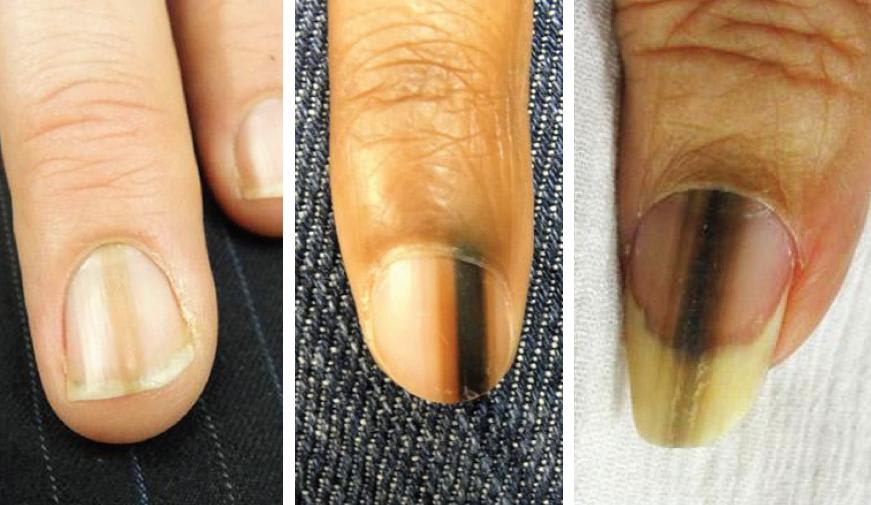
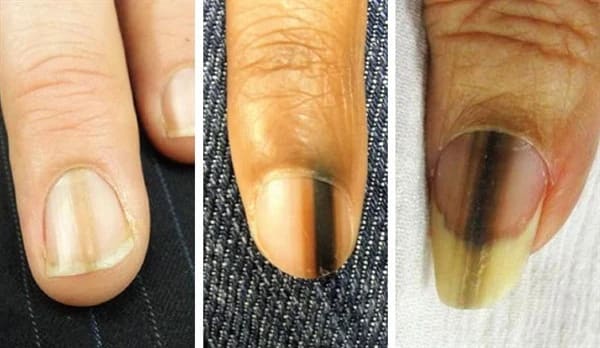
Here are three examples of melanoma in-situ (early stage melanoma).
3 min to read
Here are three examples of melanoma in-situ (early stage melanoma).
Melanoma is a type of cancer that most people tend to associate with the skin. However melanoma can arise in the nail as well. Melanoma occurs when the pigment-producing cells in the nail (melanocytes) begin to grow in an uncontrolled fashion. Although melanoma in the nail appears as a single pigmented brown or black band, most brown or black pigmented bands in the nail are benign or non-worrisome. The other causes of single brown pigmented bands in the nail are usually either benign moles or simply the pigment cells “waking up” and producing pigment much like when a new freckle appears in the skin.
Unfortunately, early melanomas are very difficult to distinguish from benign pigmented bands and that is why it is imperative to see a dermatologist for a thorough exam and consultation when it is unclear what the diagnosis is.
Ad Loading...
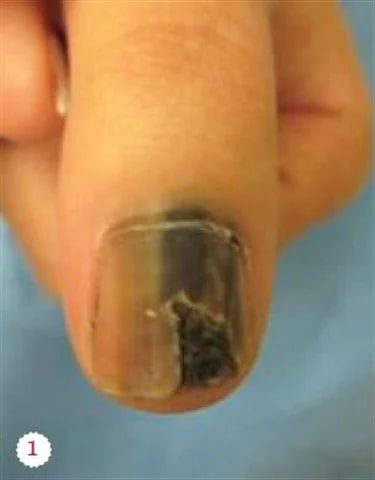
This is the nail of a 29-year old female with advanced melanoma who was covering up her nail with acrylic because she thought it was ugly.
Pigmented bands in the nail are common and usually normal especially in people with darker complexions. This is because the nail, similar to the skin, has pigment-producing melanocytes. These cells mostly reside in the half moon region of the nail (the distal matrix). Therefore, people with a lot of melanocytes in their skin tend to have a higher number of these pigment-producing cells in their nails and will often have multiple pigmented bands in the nails.
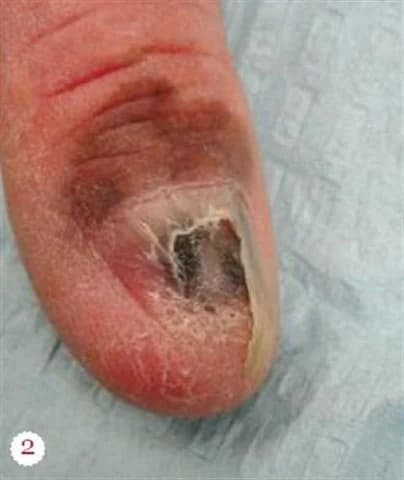
Note the surrounding pigment, indicative of an advanced stage melanoma.
Multiple pigmented bands are usually non-worrisome. When stimulated, these cells begin to produce pigment, appearing as a brown, length-wise band in the nail. So what stimulates these cells? Trauma to the matrix region is a definite stimulator. Any trauma to the cuticle area can result in stimulation of these pigment-producing cells because the cuticle lies directly over the area where the melanocytes reside. Aggressive and repetitive cuticle pushing, cutting, picking, or biting can stimulate these pigment-producing cells to wake up and start making pigment.
This photo shows benign longitudinal melanonychia in a patient with multiple pigmented bands.
If caught early, nail melanoma is curable. Unfortunately, nail melanoma tends to be diagnosed late. Nail technicians are frequently on the “front line” and can be instrumental in recommending referral to a physician for treatment. This action can be life-saving!
WHAT TO DO IF YOU SUSPECT A CLIENT HAS A NAIL MELANOMA:
Refer to a dermatologist. It is always a good idea to have a local dermatologist’s card readily available in your salon. Your client will appreciate your professional concern.
Do not cover or mask the abnormal nail with an artificial nail or polish. This can result in a delay in diagnosis.
When in doubt, discuss your concerns openly with your client. You can keep a copy of this article with the photos to compare and show your client if you are having difficulty communicating your concerns.
Ad Loading...
WHAT TO LOOK FOR:
As a nail technician, you are not expected to be a pigmented lesions expert, but there are certain red fl ags that should alert you to refer your client to a dermatologist.
A single pigmented band that is brown or black in color on a single nail
There is brown pigment on the surrounding skin (around the nail)
The band is on the thumb, index finger, or great toenail (the most common digits to have melanoma).
Dr. Dana Stern
WHAT DERMATOLOGISTS DO:
Dermatologists treat skin, hair, and nails. I am a board-certified dermatologist and I specialize in the treatment of nail disorders including nail infections, inflammatory diseases of the nail, cosmetic issues related to the nail, cancers of the nail, and sportsrelated nail injuries. I also perform surgery on the nail including biopsies and excisions.
Ad Loading...
Most of my consults are from other dermatologists, physicians, or patients who have read about me. I also see patients referred from nail salons. I love the fact that my day is not predictable. I am constantly meeting new patients from all walks of life and I never know what interesting case awaits me when I enter the examination room.
Uncured gel polish and microscopic e-file dust contain active acrylates that penetrate the skin, triggering permanent contact dermatitis. Learn the chemistry behind these irritants and how to protect your clients and yourself.
The Good Patch is a leading wearable wellness patch brand, offering wellness and skincare patches that support everyday needs including energy, sleep, relaxation and more.
Orthopedic PT reveals three daily exercises plus ergonomic advice that can help salon professionals avoid the aches and injuries caused by standing, bending and repetitive overhead work.
From acrylic monomers to airborne bio-dust, the air inside a nail salon carries risks most professionals never see coming. Aerovex Systems reveals the source-capture and room-purification strategies that are setting a new standard for salon safety.
Working in beauty doesn’t have to hurt. Learn how Somatic Movement helps hairstylists, lash artists, and other beauty pros release tension, improve posture, and extend their careers.
As a spa or salon professional, your clients expect more than just beauty—they expect safety, hygiene, and peace of mind. Fungal infections like Athlete’s Foot and Nail Fungus are more common than you think, especially in environments where tools and footbaths are reused without proper sanitation. This blog covers how to stop these issues before they start, using proven infection prevention strategies for salons and spas.
A federal initiative aimed at studying chemical exposure in nail salons has ended due to staffing and budget changes. Here’s what the project set out to do—and what its conclusion means for salon professionals.
For many people, a pedicure is a relaxing beauty ritual. But what most don’t realize is that this simple service, if done without proper hygiene and sanitation, can cause serious infections and long-term health issues.
Onycholysis is the separation of the nail plate from the nail bed. While it may look painful, it typically isn’t—at least not at first. But without proper care, this common nail disorder can lead to infections, deformities, and long-term damage.
Mckenzie Kool, Psychologist, MC, RPsych provides us with guidance on what may or not be helpful in speaking with someone who has suffered a significant loss.
Clients come to you to feel their best—not leave with a viral souvenir. Warts and cold sores can spread fast in busy salons, but a few smart habits make all the difference. Let’s talk about what’s really lurking in your salon (and how to kick it to the curb).
As Earth Day approaches, The Green Beauty Community Foundation and the Green Spa Network invite beauty pros to step forward and embrace sustainability through the Green Pledge--a powerful initiative designed by and for beauty industry leaders.
Don’t cancel Valentine’s Day altogether, urges Jill Palmquist. Instead, think of it as a (frilly, flowery, Champagne-bubbly) wake-up call to fall deeply in love with your own life.
Life coach and Culture Ambassador of Sam Villa, Andrew Carruthers, outlines how to tell if your burnout is temporary - or if it's time to make a bigger career change.