A Day in the Life of a Nail Expert: Subungual Hematoma
In this month’s column, Dr. Stern discusses subungual hematoma, an accumulation of blood under the nail plate resulting from trauma to the fingers or toes.
by Dana Stern, M.D.
July 2, 2018
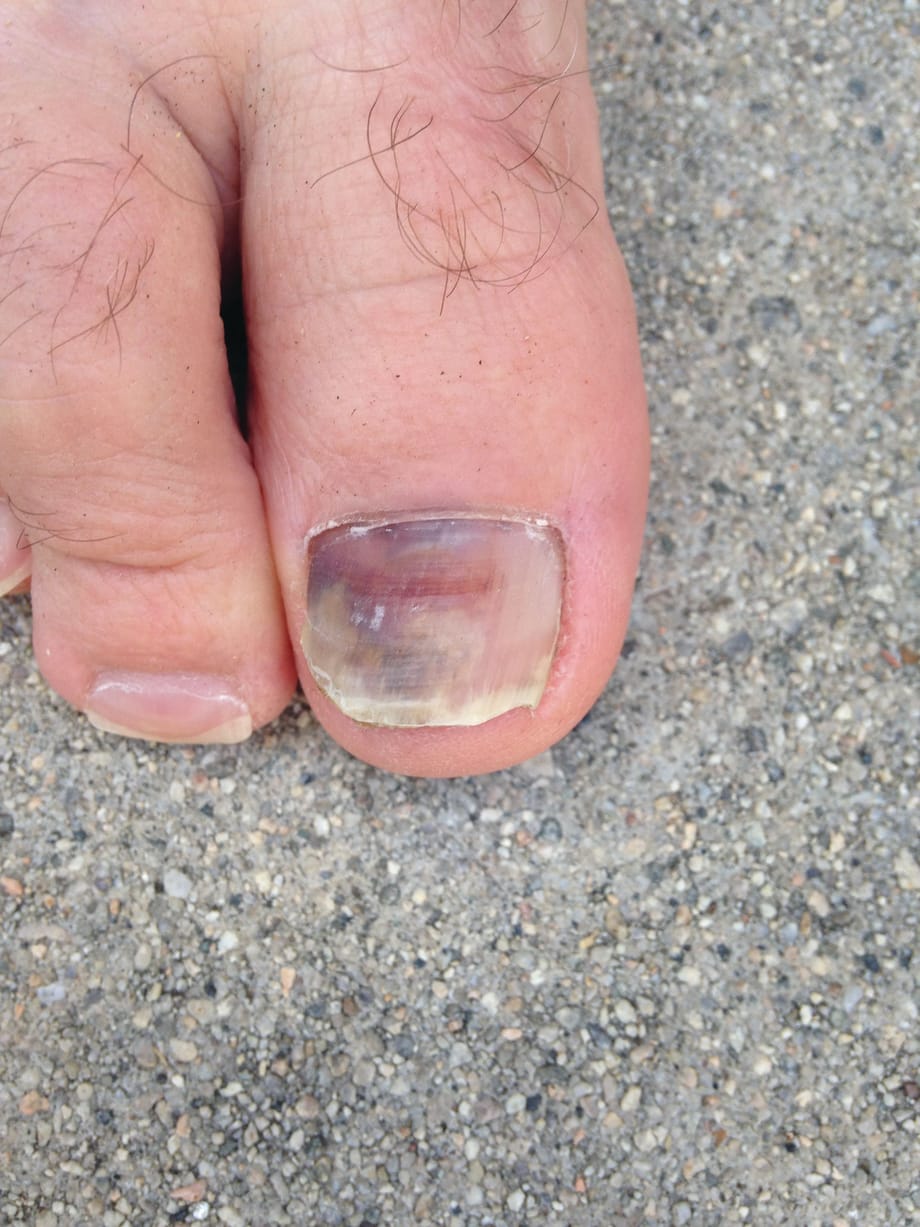
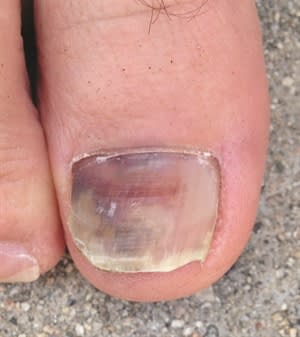
This injury occurred when the toe was repeatedly forced into the tip of a hiking boot while walking downhill.
5 min to read
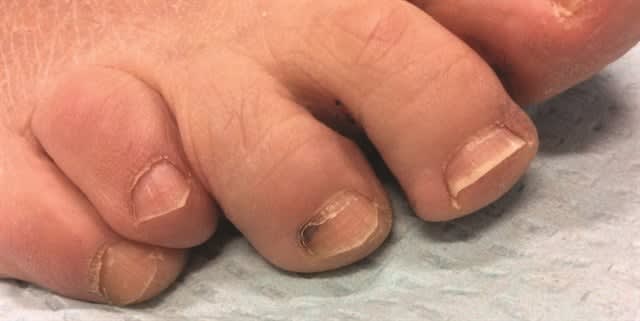
Subungual hematomas can result from acute injuries, such as getting your finger stuck in a door, or have a less traumatic cause, such as a poorly fitting shoe.
Subungual hematoma occurs when the nail bed is injured by either blunt or sharp trauma to the fingers or toes. The nail bed has a rich supply of blood vessels that when injured can cause blood to accumulate under the attached nail plate. This increased volume and resultant pressure will often cause the nail plate to lift and separate off of the nail bed. Significant discomfort may ensue. The nail with subungual hematoma will initially appear purple to copper to blue and over time may take on a more brown/black appearance.
Several scenarios can result in subungual hematoma. Injuries can be classic acute crush-type injuries, such as getting your finger stuck in a door, or conversely the injury may have a more subtle and less traumatic cause, such as a poorly fitting shoe. Certain athletic activities can also predispose a person to hematomas; tennis, running, hiking, and skiing are all common culprits because the toe is often forced into the tip of the shoe during the athletic movement. Those who take blood thinners are also at increased risk for subungual hematomas.
Ad Loading...
If the injury has occurred within the past 36 hours, a physician may need to intervene, depending on the type and degree of the injury. The generally accepted rule is that if the hematoma takes up 50% or more of the nail’s surface area then it’s advisable to relieve the pressure by creating an opening in the nail plate. This procedure, referred to as trephination, can be done sterilely by a physician. Alternatively, if the patient doesn’t have access to a physician, in a pinch the nail can be trephinated using a hot paperclip.
If a hematoma takes up 50% or more of the nail’s surface area, it may be advisable to relieve the pressure by creating an opening in the nail plate.
Creating an opening in the nail relieves the buildup of pressure and ultimately prevents the nail from lifting off of the bed. This maneuver will also dramatically improve the discomfort associated with a nail that is detaching from the bed. If the finger or toe was damaged due to a crush injury then an X-ray may be needed as well, and depending on the type of trauma, the nail plate may need to be partially removed in order to assess for nail bed cuts that require suture.
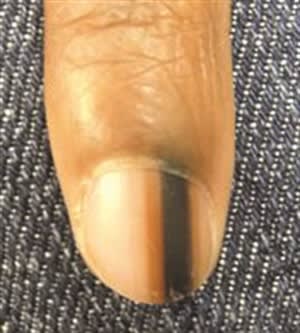
Nail technicians observe subungual hematomas on a daily basis in the salon. Most of the time these findings are from old injuries and are commonplace and not of grave concern. However, the distinction between subungual hematoma and nail melanoma, which can look similar, is a crucial one.
Signs of Melanoma
Melanoma is a type of cancer that most people tend to associate with the skin. However, it can arise in the nail unit as well. Melanoma occurs when the pigment-producing cells in the nail (melanocytes) begin to grow in an uncontrolled fashion. Although melanoma in the nail usually first appears as a single pigmented brown or black band, most pigmented bands in the nail are actually benign or non-worrisome. More advanced melanomas can appear more smudge-like and irregular with dark brown to black pigment on the nail and often on the surrounding nail fold.
Ad Loading...
Nail melanoma usually occurs in a nail that has previously experienced trauma. Therefore if you see a nail that has dark, ill-defined pigment that is not growing out, consider the possibility that it may be more than just blood under the nail. [See sidebar for what to do if you suspect a client has a nail melanoma.] Keep in mind, however, that nails grow slowly and a subungual hematoma will take a long time to grow out. For example, if the hemorrhage is on the big toe at the half moon area it may take over a year for the pigment to grow out completely. Fingernails, in contrast, are much faster growing.
Handling the Injured Nail
This injury occurred when the toe was repeatedly forced into the tip of a hiking boot while walking downhill.
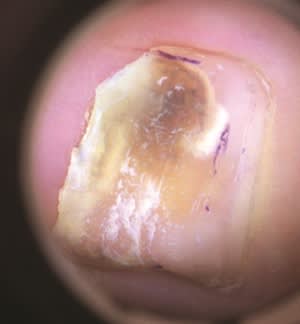
The buildup of blood under the nail will often cause part of the nail to separate from the nail bed. When the injured nail is separated (onycholysis) certain precautions should be followed in order to optimally achieve re-adhesion of the nail plate to the nail bed.
Keep the nail clipped short. Do not file, as filing will cause further separation.
Avoid nail cosmetics during the treatment period, especially polish remover. Polish remover is a strong solvent and will cause significant irritation to the exposed nail bed.
Recommend that your client keep the nail clean and dry, and avoid soaking it in water or other liquids. Gloves are advised for any wet work.
If the nail is significantly separated it may require treatment with an anti-yeast topical agent prescribed by a doctor.
Can subungual hematomas be prevented? In many circumstances the answer is yes. If the injury is caused by athletic activity, then it is advisable to assess whether the footwear is properly fitting. Many adults don’t realize that their feet change with age and often their shoe size is not what they think it is. Someone especially prone to toenail trauma with certain activities should consider wearing a silicone toe protector (available online). Runners may benefit from wearing a sock with extra padding at the toe. Keep the toenails clipped short. Those who take blood thinners may want to consider several of these precautions because they are especially prone to hematoma.
Ad Loading...
If You Suspect a Client Has a Nail Melanoma:
Refer to a dermatologist. It is always a good idea to have a local dermatologist’s card readily available in your salon.
Do not cover or mask the abnormal nail with an enhancement or polish. This can result in a delay in diagnosis.
When in doubt, discuss your concerns openly with your client. You can keep a copy of this article with the photos to compare and show your client.
What to look for:
As a nail technician, you are not expected to be an expert in pigmented lesions, but there are certain red flags that should alert you to refer your client to a dermatologist.
A single pigmented band that is brown or black on a single nail.
There is brown pigment on the surrounding skin (around the nail).
The band is on the thumb, index finger, or great toenail (the most common digits to have melanoma).
The pigment is taking too long to grow out and appears to be growing larger.
Dr. Dana Stern
Dermatologists treat skin, hair, and nails. I am a board-certified dermatologist and I specialize in the treatment of nail disorders including nail infections, inflammatory diseases of the nail, cosmetic issues related to the nail, cancers of the nail, and sports-related nail injuries. I also perform surgery on the nail including biopsies and excisions.
Uncured gel polish and microscopic e-file dust contain active acrylates that penetrate the skin, triggering permanent contact dermatitis. Learn the chemistry behind these irritants and how to protect your clients and yourself.
The Good Patch is a leading wearable wellness patch brand, offering wellness and skincare patches that support everyday needs including energy, sleep, relaxation and more.
Orthopedic PT reveals three daily exercises plus ergonomic advice that can help salon professionals avoid the aches and injuries caused by standing, bending and repetitive overhead work.
From acrylic monomers to airborne bio-dust, the air inside a nail salon carries risks most professionals never see coming. Aerovex Systems reveals the source-capture and room-purification strategies that are setting a new standard for salon safety.
Working in beauty doesn’t have to hurt. Learn how Somatic Movement helps hairstylists, lash artists, and other beauty pros release tension, improve posture, and extend their careers.
As a spa or salon professional, your clients expect more than just beauty—they expect safety, hygiene, and peace of mind. Fungal infections like Athlete’s Foot and Nail Fungus are more common than you think, especially in environments where tools and footbaths are reused without proper sanitation. This blog covers how to stop these issues before they start, using proven infection prevention strategies for salons and spas.
A federal initiative aimed at studying chemical exposure in nail salons has ended due to staffing and budget changes. Here’s what the project set out to do—and what its conclusion means for salon professionals.
For many people, a pedicure is a relaxing beauty ritual. But what most don’t realize is that this simple service, if done without proper hygiene and sanitation, can cause serious infections and long-term health issues.
Onycholysis is the separation of the nail plate from the nail bed. While it may look painful, it typically isn’t—at least not at first. But without proper care, this common nail disorder can lead to infections, deformities, and long-term damage.
Mckenzie Kool, Psychologist, MC, RPsych provides us with guidance on what may or not be helpful in speaking with someone who has suffered a significant loss.
Clients come to you to feel their best—not leave with a viral souvenir. Warts and cold sores can spread fast in busy salons, but a few smart habits make all the difference. Let’s talk about what’s really lurking in your salon (and how to kick it to the curb).
As Earth Day approaches, The Green Beauty Community Foundation and the Green Spa Network invite beauty pros to step forward and embrace sustainability through the Green Pledge--a powerful initiative designed by and for beauty industry leaders.
Don’t cancel Valentine’s Day altogether, urges Jill Palmquist. Instead, think of it as a (frilly, flowery, Champagne-bubbly) wake-up call to fall deeply in love with your own life.
Life coach and Culture Ambassador of Sam Villa, Andrew Carruthers, outlines how to tell if your burnout is temporary - or if it's time to make a bigger career change.