Afungal infection of the nail is the most common nail disorder you’ll see in the salon. At least 50% of all nail disorders are related to fungal infections, and an estimated 25%-40% of the elderly population have some form of nail fungus infection. Though not life-threatening, this disorder is a major problem.
In recent years, there has been a marked increase in the number of cases of onychomycosis (the medical term for fungal infection) due to a number of factors, including a high incidence in HIV-positive patients as well as in people taking antibiotics or cortisone preparations. Additionally, the health craze has led to many athletic people such as runners and tennis players developing fungal infections in their toenails.
A fungus is a microorganism derived from the plant family; it is a relative of the mushroom. Fungal infections differ from bacterial and viral infections that can affect the nails in that fungal infections are chronic, not tender, slow-growing, and localized. Bacterial and viral infections, on the other hand, are acute, tender, grow rapidly, and are bloodborne, meaning they can affect ore than one part of the body.
There are many over-the-counter topical preparations currently marketed for the treatment of “fungal nails,” sometimes referred to as nail ringworm or tinea unguium. Unfortunately, these preparations are not very effective because they are often not strong enough to kill the fungus, even if they are potent enough to penetrate the nail sufficiently to get to the infection. In very mild cases these preparations might show some benefit, particularly when the infected nail is cut away and cleaned up first. Total cures with these medicines, however, are not common. The same also holds true for many prescription preparations that are topically applied, although these treatments may be somewhat more potent and thus more effective. In general, to totally eradicate nail fungus, some type of oral systemic drug (a drug taken by mouth) is required. Unfortunately, to only medicines available until recently, grieofulvin and ketoconazole, either had a low cure rate or caused too many side effects. Griseofulvin, for example, can be toxic to the liver. However, a new generation of oral medications have much higher cure rates and very few side effects. Of these medications – itraconazole, fluconazole, and terbinafine – only itraconazole is approved by the FDA for the treatment of nails in the United States. In our clinical trials at the Nail Disorder Center of Columbia University, we evaluated all three of the new products discussed above. Each was significantly effective, with few side effects observed. Thus, a new era of treating fungal infections is rapidly approaching.
Clients who have nail abnormalities should see their dermatologist to have the condition diagnosed and treated. It is essential for the treating physician to take samples from the nails and culture them in order to confirm the diagnosis of a fungal infection. Without a culture, it is possible to misdiagnose a nail disorder as fungus when it may be something such as nail psoriasis.
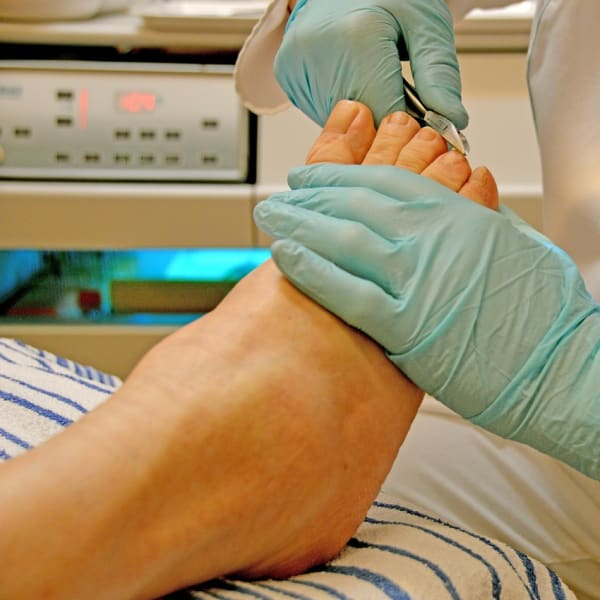
Nail technicians have a unique opportunity to play an important role in managing clients with fungal infections of the nails. First, it is essential for the technician to urge her clients to see a dermatologist so that the diagnosis can be confirmed and the condition treated with one of the newer medicines. Second, the technician should avoid mechanical manipulation of infected nails because this could cause minor injuries that might spread the fungal infection. Over-vigorous probing or cutting of the cuticles, as well as excess cleaning under the nails, must be avoided. Third, it is the technician’s responsibility to disinfect all implements before and after each client to prevent spreading infections from one client to another. If these criteria are met, there is no reason why a client with a fugal infection of the nails cannot have regular nail care from her technician. In addition, nail cosmetic preparations can be used to make the nails look attractive while the affected nails are undergoing therapy. Thus, the nail technician is an integral participant in the client’s nail treatment program.