The chemicals a nail technician encounters every day are never of more concern to her than when she is pregnant. All the medical, chemical, and workplace hazard experts NAILS consulted agree that a pregnant nail technician can continue working in the salon unless she is experiencing other medical problems nor related to the salon environment or she is unwilling to work safely. However, everyone emphasizes that while there is no information to show that it’s unsafe to continue working with nail products, there’s not enough information to say it’s completely safe, either. Simple safety precautions can lessen any potential risks.
“While studies have shown that women who have high levels of exposure to chemicals also have the greatest level of risk for spontaneous abortions, when precautions were taken to limit exposure, the risks were not found to be different than the background expected risks, such as age or family history,” says Karen Filkins, M.D., director of reproductive genetics at UCLA School of Medicine’s department of Obstetrics and Gynecology.
Unfortunately, little is known definitively about the effect of chemicals at the low levels of exposure typical in salon environment. In very high concentrations, some of the chemicals used in the salon have been linked with a higher incidence of miscarriage, congenital malformations, and other pregnancy complications; however, most of these studies have been done either on laboratory animals or on people with much higher exposure levels than nail technicians have. No negative conclusions can be drawn from this research about the relative safety of salon work, says Doug Schoon, director of R&D for Creative Nail Design (Vista, Calif.).
For example, there have been studies done on laboratory animals that have linked some salon chemicals with birth defects or other abnormalities, but the levels that the lab animals were exposed to were hundreds, and in some cases, thousands of times higher than what a nail technician is exposed to in the salon. Studies of women working in the plastics industry, where the exposure to methacrylates is much higher than in the salon, did not show any increase in miscarriages or birth defects.
Long-term overexposure to toluene has been associated with mental retardation and physical deformities, but these deformities resulted when pregnant women sniffed toluene to get high; they were not caused by occupational exposure. There has never been a reported case of birth defects associated with the small quantities of the chemical present in the salon, says Schoon.
A March 1994 study appearing in Epidermiology magazine titled “Spontaneous Abortions Among Cosmetologists” does rate some concern on the part of nail technicians. Unlike previous studies, the subjects were working cosmetologists. The analysis focused on 96 cosmetologists who had had a single live birth and who worked either full-time in cosmetology or in other jobs during the first trimester of pregnancy.
The researchers found associations between spontaneous abortion and the number of hours worked per day in cosmetology, the number of chemical services performed per week, use of formaldehyde-based disinfectants, and work in salons where nail sculpting was performed by other employees. The study did not prove that there was an increased risk based on exposure to nail sculpting; it only suggested a possible association. Additionally, when the cosmetologists wore gloves, a protective effect was seen.
In order to take adequate precautions, a pregnant nail technician must first understand which chemicals may pose a threat to her baby’s health and her own. While you certainly must be careful about exposure to all chemicals, volatile organic solvents (VOCs)—such as nail dehydrators, primers, acrylic monomers, wrap adhesives, activators, nail polish, and polish remover—warrant the greatest concern.
Inhalation is the primary route that vapors and dust take into your body. The single most important action a pregnant nail technician can take is to assure that her work environment is adequately ventilated. Product can also be absorbed through the skin or through your digestive system if you accidentally ingest it.
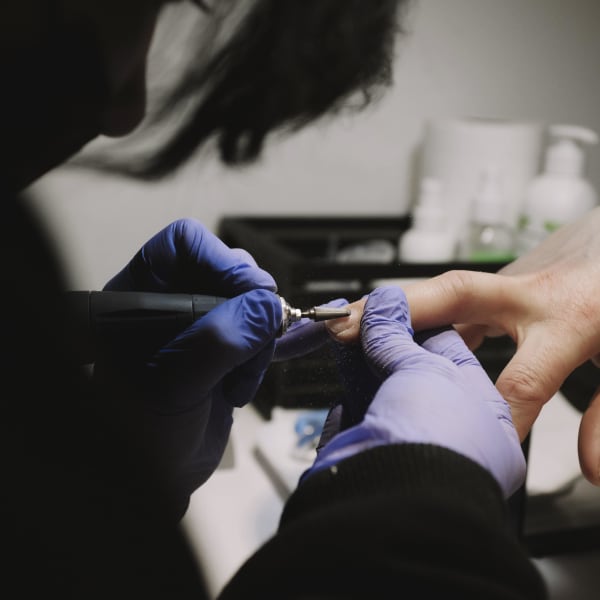
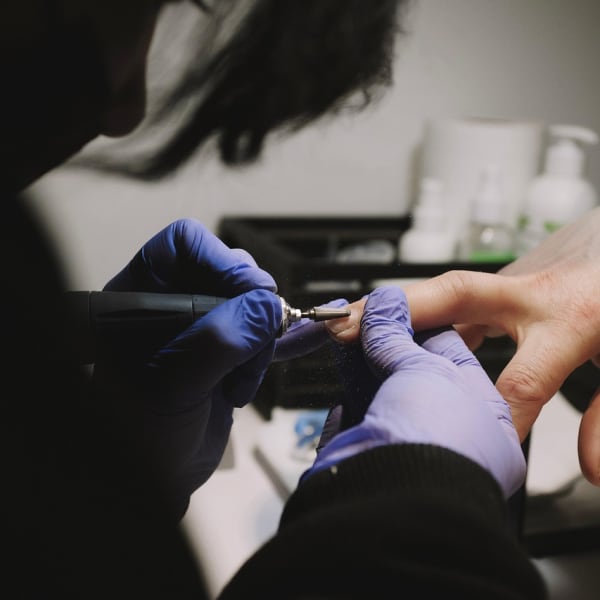
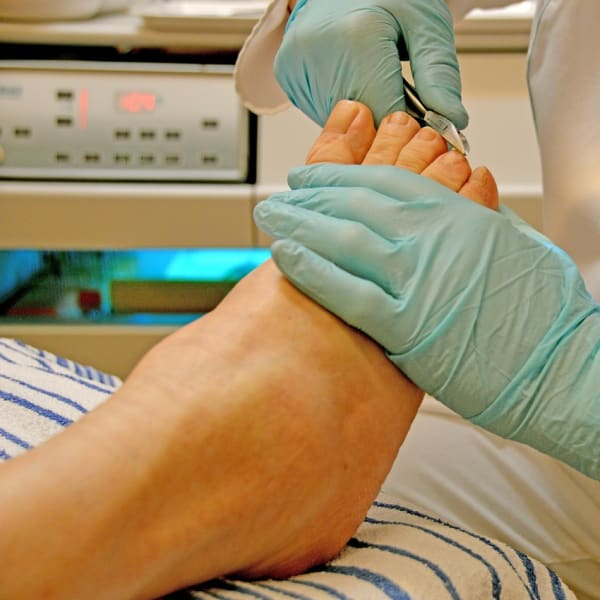
Other precautions include: wearing gloves, capping bottles tightly when not in use, using only small amounts of product in dappen dishes instead of working from large bottles, wiping up spills immediately, using closed trash containers and emptying the containers several times a day, washing your hands before and after eating or drinking, taking frequent breaks to get fresh air, and paying special attention to symptoms such as nausea, headaches, or dizziness.