Getting behind the science of gel-polish is no easy feat, but with a better framework for its chemistry comes improved technique and the ability to educate clients. NAILS picked the brain of OPI's Dr. Paul Bryson for some user-friendly answers.
Gel-polish, also known as the “chipless manicure,” is arguably one of the biggest nail industry inventions in the last decade. The idea of a system that lasts two or three times the duration of regular polish yet is removable without e-files or heavy soaking has wowed techs and clients alike.
Getting behind the science of this complex product is no easy feat. But with a better framework for its chemistry comes improved technique and the ability to educate clients. NAILS picked the brain of Dr. Paul Bryson, director of research and development for OPI since 1997, for some user-friendly answers.
NAILS: How does soak-off gel-polish generally work?
Paul Bryson: Soak-off gel-polish is mainly made of urethane methacrylates (or acrylates). Gel-polish cures by “polymerization,” meaning the formula’s molecules react by linking up with one another into large chains called polymers. Crosslinks, or chemical bonds that connect different polymer chains together, are also created, resulting in a structurally strong molecular network. By contrast, lacquer doesn’t cure, it dries — the polymers in lacquer are simply left behind on the nail as the solvents evaporate. A hybrid product, such as CND’s Shellac or OPI’s UV-Cure Topcoat, undergoes curing and drying.
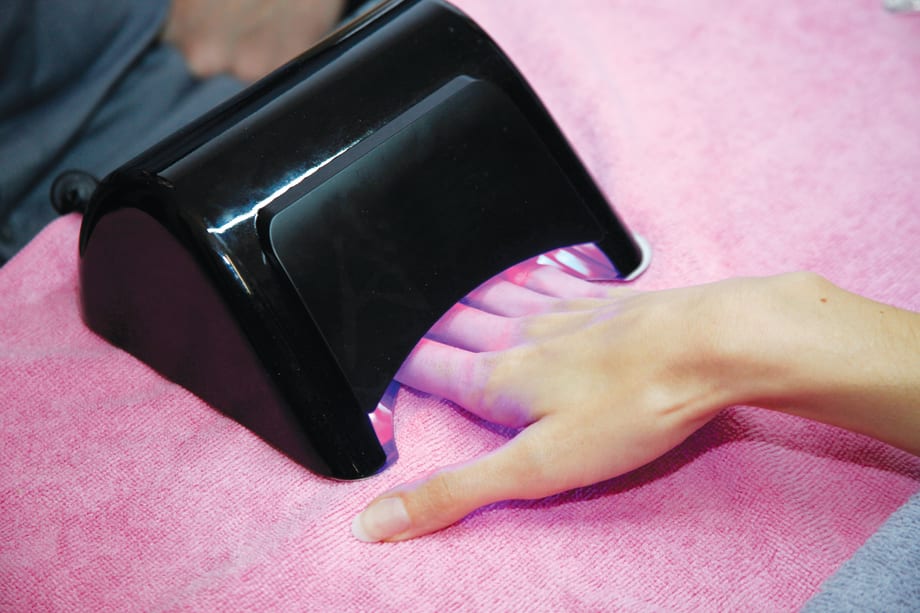
When light hits the gel-polish, a UV-sensitive molecule called a photoinitiator chemically starts the curing reaction. Think of the photoinitiator as a “lighting rod” that captures a bolt of UV energy. More technically, the photoinitiator has a chemical bond that’s easily broken by UV, and when it’s breaks, the fragment of the molecule (or a “free radical” in chemistry lingo) is very reactive and bonds to the nearest methacrylate, which causes it to bond to another and another, resulting in a cure.
NAILS: What exactly is the tacky layer?
PB: The “free radical” curing process is subject to oxygen inhibition, which means the oxygen in the air prevents the molecules at the surface from polymerizing. So right at the very surface, there’s an uncured layer. It happens with all acrylics, even liquid-and-powder systems, but it’s more noticeable with gel-polish and low-odor liquid-and-powders since the larger molecules are more easily inhibited.
NAILS: Will soak-off gel-polish ever dry if it’s not cured?
PB: Gel-polish requires UV light to start the chemical curing reaction. So without UV light, it won’t cure and will stay wet for a very long time until the methacrylates deteriorate, which could take months or even years.
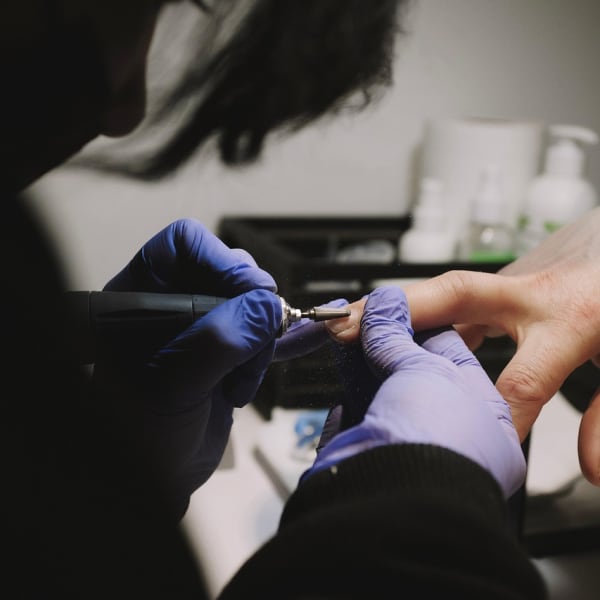
NAILS: Why do some gel-polishes require you to rough up the nail before soaking off?
PB: By breaking up the surface of the cured gel a bit, you’re allowing the acetone to penetrate more easily. Acetone penetration is what softens the gel.
NAILS: How does soak-off gel-polish differ from traditional gels?
PB: Traditional gels were mainly made for sculpting. They need good structural strength, so they’re highly crosslinked. Soak-off gels have to be made with fewer crosslinks because too many creates a tight polymer network that can’t be penetrated easily by acetone, which would make the product much slower to soak-off.
NAILS: Is there anything you can tell us about proper gel-polish application? Why do you paint on such thin layers?
PB: Follow manufacturer’s directions, and don’t mix systems. Above all, don’t try to modify a gel by adding nail polish, as you may experience undercuring. As for the thin layer, the UV light can only penetrate to a certain depth. And the more color you add, the more UV can be blocked. So if you lay down a colored gel too thick, it won’t cure all the way through. I’ve actually had a test product — a deeply colored UV nail coat — slip right off because it wasn’t cured all the way to my fingernail. It appeared cured from the top, but was still actually wet.
Uncured gel polish and microscopic e-file dust contain active acrylates that penetrate the skin, triggering permanent contact dermatitis. Learn the chemistry behind these irritants and how to protect your clients and yourself.
The Good Patch is a leading wearable wellness patch brand, offering wellness and skincare patches that support everyday needs including energy, sleep, relaxation and more.
Orthopedic PT reveals three daily exercises plus ergonomic advice that can help salon professionals avoid the aches and injuries caused by standing, bending and repetitive overhead work.
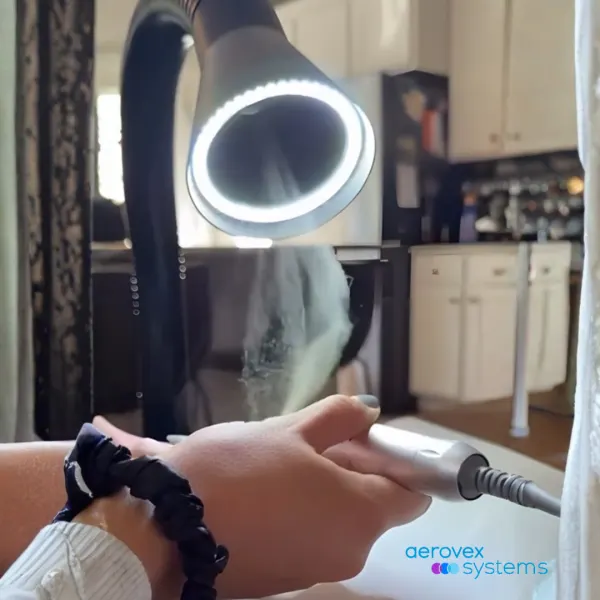
From acrylic monomers to airborne bio-dust, the air inside a nail salon carries risks most professionals never see coming. Aerovex Systems reveals the source-capture and room-purification strategies that are setting a new standard for salon safety.
Working in beauty doesn’t have to hurt. Learn how Somatic Movement helps hairstylists, lash artists, and other beauty pros release tension, improve posture, and extend their careers.
As a spa or salon professional, your clients expect more than just beauty—they expect safety, hygiene, and peace of mind. Fungal infections like Athlete’s Foot and Nail Fungus are more common than you think, especially in environments where tools and footbaths are reused without proper sanitation. This blog covers how to stop these issues before they start, using proven infection prevention strategies for salons and spas.
A federal initiative aimed at studying chemical exposure in nail salons has ended due to staffing and budget changes. Here’s what the project set out to do—and what its conclusion means for salon professionals.
For many people, a pedicure is a relaxing beauty ritual. But what most don’t realize is that this simple service, if done without proper hygiene and sanitation, can cause serious infections and long-term health issues.
Onycholysis is the separation of the nail plate from the nail bed. While it may look painful, it typically isn’t—at least not at first. But without proper care, this common nail disorder can lead to infections, deformities, and long-term damage.
Mckenzie Kool, Psychologist, MC, RPsych provides us with guidance on what may or not be helpful in speaking with someone who has suffered a significant loss.
Clients come to you to feel their best—not leave with a viral souvenir. Warts and cold sores can spread fast in busy salons, but a few smart habits make all the difference. Let’s talk about what’s really lurking in your salon (and how to kick it to the curb).
As Earth Day approaches, The Green Beauty Community Foundation and the Green Spa Network invite beauty pros to step forward and embrace sustainability through the Green Pledge--a powerful initiative designed by and for beauty industry leaders.
Don’t cancel Valentine’s Day altogether, urges Jill Palmquist. Instead, think of it as a (frilly, flowery, Champagne-bubbly) wake-up call to fall deeply in love with your own life.
Life coach and Culture Ambassador of Sam Villa, Andrew Carruthers, outlines how to tell if your burnout is temporary - or if it's time to make a bigger career change.