Information about mild or serious infections will help you understand the importance of your own hygiene as well as increase your appreciation of the complexity of the nail area and make you aware of when a patient needs medical care.
by Orville J. Stone, M.D.
December 1, 1991
5 min to read
In this column, I’d like to explain short-lived mild to serious infections around the nail. This information will help you understand the importance of your own hygiene as well as increase your appreciation of the complexity of the nail area and make you aware of when a patient needs medical care.
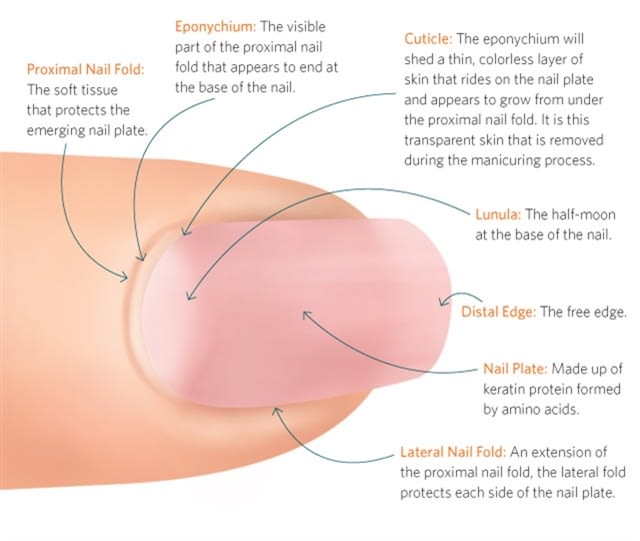
A quick review of nail anatomy
Acute or short-term infections
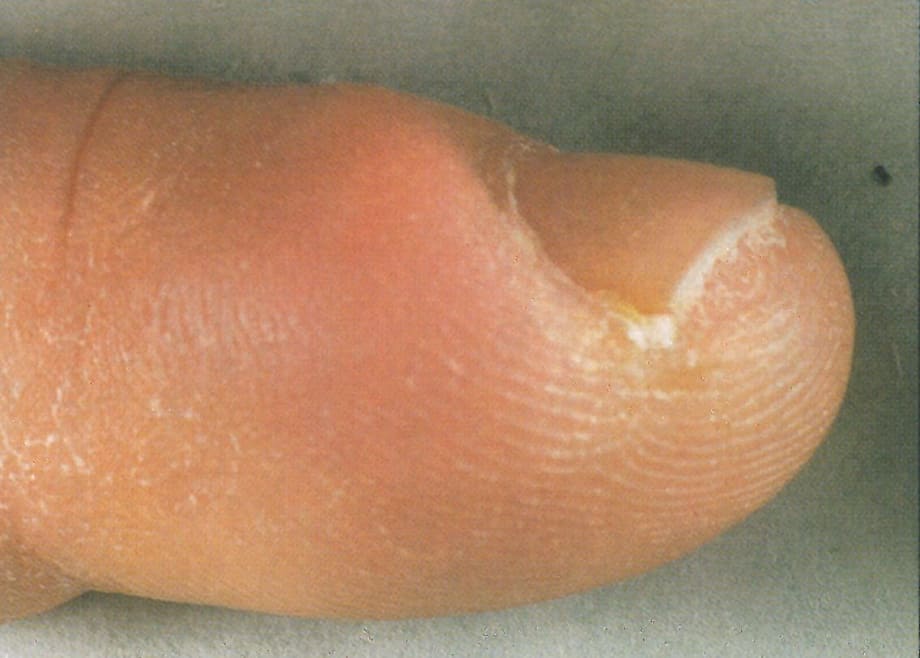
Acute, or short-term, infections around the nail can vary in seriousness from mild to severe. An acute infection can be anything from an infected hangnail to an abscess under the nail bed.
Ad Loading...
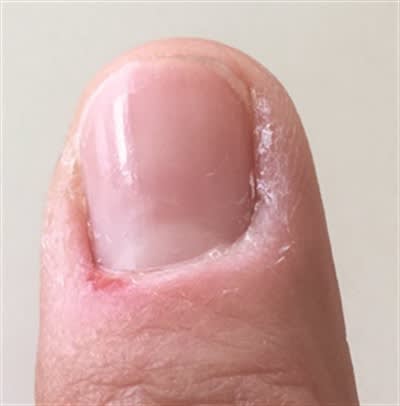
A non-infected hangnail
Although an infected hangnail may seem minor, the amount of movement required form fingers makes me very cautious about infections around the nail.
Although the nail can withstand significant infections without causing permanent deformity, I always warn patients that any permanent deformity is the risk when there’s an infection near the nail bed or matrix.
Minor infections
Minor infections, such as a small pus-filled pocket, an infected splinter, or a hangnail, can usually be treated by the patient with an over-the-counter antibiotic. An excellent self-treatment for an early, mild infection is to apply wet or dry heat for 15 minutes four times a day as well as a topical antibiotic. The heat draws white blood cells to the site to help fight the infection. Wet heat is especially beneficial when the pustule is close to the skin’s surface because the wetness softens the overlying skin to allow drainage. If you can see foreign material, such as a splinter, in the infected area, remove it. Low-grade infections with some pus but little spreading redness usually respond well to removing the foreign matter and treating the area with heat and an over-the-counter topical antibiotic.
More serious infections demand quick medical attention. Each time the finger is bent, more pressure is put on the infected site, and the infection can spread into surrounding tissues. I have seen a red area on the posterior nail fold advance to a red streak leading up the arm (indicating blood poisoning) in just four hours.
If a patient has redness around several cuticles or fingers, the condition may have been caused by irritation or injury. A single tender area that seems to be spreading is more suspicious as an infection. If you suspect an infection, don’t do any procedures that require touching the soft tissues around the nail. Discontinue the client’s nail service until she has seen a doctor or until the area is completely healed. Many times the infection will clear without a doctor’s attention, but don’t work on an infected area without making sure the client is at least taking antibiotics.
Ad Loading...
If a splinter or other foreign object is under the nail, don’t try to remove it yourself. I anesthetize the whole finger before trying to remove foreign objects from under the nail.
Sometimes a patient will come to me complaining of great pain around or under the nail just one or two days after seeing another doctor. This indicates there is a pocket of pus under the nail, which can hurt as much as, or worse than, a pocket of blood under the nail. If a client complains of pain even after seeing a doctor, recommend she call the doctor again or go for a follow-up visit.
To find a pus pocket under the nail, I shine a light through the fingernail in a dark room and can sometimes locate the pus pocket. At other times an area under the nail is white because pressure on the blood vessels is cutting off the blood supply. To treat this condition, I anesthetize the finger and make a hole through the nail or through the immediately adjacent area to relieve the pressure.
Rare Infections
A rarer infection around the finger is found in the deeper tissue under the fingertip. Called a felon, it most commonly occurs as the result of a penetrating injury like a puncture wound. As the tissue swells, pressure increases and cuts off the blood supply to the fingertip, worsening the infection. This is a true medical emergency that requires an opening for drainage and internal antibiotics. Infections directly around the nail rarely spread into the deep tissues unless there was a penetrating injury.
Repeated low-grade infections
If a client has repeated low-grade infections around the nail, she is probably tearing at hangnails or picking and biting the nail area. Remind clients to trim hangnails with cuticle scissors and to lubricate the area with an over-the-counter antibiotic ointment. To prevent hangnails, recommend clients regularly use cuticle oil or cream, skin lotion, or other lubricants around the cuticles.
Ad Loading...
No matter how mild, infections should always be treated with care in the salon. Never work on a client who has an infection near the nail, but refer her to a doctor for treatment.
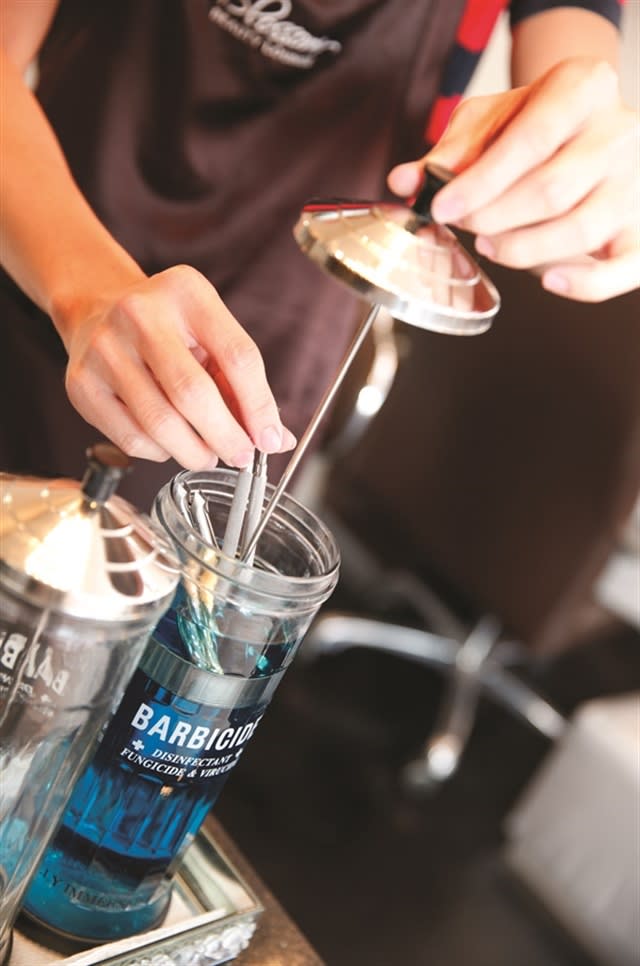
To avoid causing or spreading infection, always use disinfected or disposable implements on each client. If it’s not practical or cost-efficient to use disposable items, such as files, on each client, reuse them only on the same client and store them in a plastic bag between appointments.
If you nick a client with an instrument or even irritate the cuticles by vigorous filing, apply an over-the-counter antibiotic cream on the area and tell the client what you are doing and why. Minimize her concern by reminding her that you disinfect your instruments and your work surface, use disposable implements when needed, and wash your hands between clients.
Uncured gel polish and microscopic e-file dust contain active acrylates that penetrate the skin, triggering permanent contact dermatitis. Learn the chemistry behind these irritants and how to protect your clients and yourself.
The Good Patch is a leading wearable wellness patch brand, offering wellness and skincare patches that support everyday needs including energy, sleep, relaxation and more.
Orthopedic PT reveals three daily exercises plus ergonomic advice that can help salon professionals avoid the aches and injuries caused by standing, bending and repetitive overhead work.
From acrylic monomers to airborne bio-dust, the air inside a nail salon carries risks most professionals never see coming. Aerovex Systems reveals the source-capture and room-purification strategies that are setting a new standard for salon safety.
Working in beauty doesn’t have to hurt. Learn how Somatic Movement helps hairstylists, lash artists, and other beauty pros release tension, improve posture, and extend their careers.
As a spa or salon professional, your clients expect more than just beauty—they expect safety, hygiene, and peace of mind. Fungal infections like Athlete’s Foot and Nail Fungus are more common than you think, especially in environments where tools and footbaths are reused without proper sanitation. This blog covers how to stop these issues before they start, using proven infection prevention strategies for salons and spas.
A federal initiative aimed at studying chemical exposure in nail salons has ended due to staffing and budget changes. Here’s what the project set out to do—and what its conclusion means for salon professionals.
For many people, a pedicure is a relaxing beauty ritual. But what most don’t realize is that this simple service, if done without proper hygiene and sanitation, can cause serious infections and long-term health issues.
Onycholysis is the separation of the nail plate from the nail bed. While it may look painful, it typically isn’t—at least not at first. But without proper care, this common nail disorder can lead to infections, deformities, and long-term damage.
Mckenzie Kool, Psychologist, MC, RPsych provides us with guidance on what may or not be helpful in speaking with someone who has suffered a significant loss.
Clients come to you to feel their best—not leave with a viral souvenir. Warts and cold sores can spread fast in busy salons, but a few smart habits make all the difference. Let’s talk about what’s really lurking in your salon (and how to kick it to the curb).
As Earth Day approaches, The Green Beauty Community Foundation and the Green Spa Network invite beauty pros to step forward and embrace sustainability through the Green Pledge--a powerful initiative designed by and for beauty industry leaders.
Don’t cancel Valentine’s Day altogether, urges Jill Palmquist. Instead, think of it as a (frilly, flowery, Champagne-bubbly) wake-up call to fall deeply in love with your own life.
Life coach and Culture Ambassador of Sam Villa, Andrew Carruthers, outlines how to tell if your burnout is temporary - or if it's time to make a bigger career change.