One in four women and one in nine men who walk through your salon door are potential victims of domestic violence. Read on to find out how can you spot it and what you should do about it.
On October 23, 2004, Ebony Fletcher almost lost her life. Her then boyfriend shot her in the thigh, tackled her to the ground, then sat on her back and shot her in the head. “Miraculously, the bullet didn’t penetrate my skull; it only cut my skin,” Fletcher says. “He had never slapped, punched, or verbally abused me, so this came as a total shock. But looking back, he was very suspicious of everything I did, and there were probably other warning signs, ones I couldn’t see because I was so in love.”
More recently, on Wednesday, December 18, 2013, Jose Leonardo Martinez stormed into Solo Nail Salon in West New York, N.J., pistol-whipped the owner, fatally shot the mother of his children (she was a nail tech there), and then fled to a nearby parking lot and shot himself to death. Martinez had a history of domestic abuse. Tragically, these are just two of many similar stories in recent news.
Ad Loading...
These stories may seem shocking, but in fact, domestic violence is the leading cause of injury to women in the United States. According to Domestic Violence Statistics (domesticviolencestatistics.org.), a woman is beaten or assaulted by her husband or partner every nine seconds in the U.S., and one in every four women will experience domestic violence in her lifetime. Why are these facts of particular importance to nail techs?
Research shows that most battered women never blow the whistle on their abusers, likely out of fear. They never call the police or go to a shelter. They do, however, usually talk about the abuse with someone they trust. As skilled and experienced listeners who are personally interested in their clients, salon professionals are often the one person many victims suffering from abuse feel comfortable confiding in — even if they would never tell anyone else.
“Salon professionals are in a unique position to recognize the signs and symptoms of abuse in their clients and co-workers,” says Rachel Molepske, manager of leadership operations and charitable programs for the Professional Beauty Association (PBA). “Because of the intimate and nurturing nature of the relationship between salon professionals and their clients and co-workers, salon professionals can often spot signs of physical abuse that others may never see. And for a victim of abuse, the salon may be one of the few places they are allowed to go alone, giving salon professionals the potential to positively impact and potentially save many lives.”
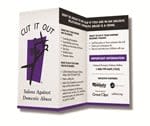
Recognize, Respond, Refer What should you do if you suspect your client is suffering from domestic abuse? You may recognize a pattern of behaviors such as broken or late arrivals to appointments, bruises, or comments about her partner’s controlling behaviors. It’s important not to push if a client doesn’t want to talk, but communicate your concern. It’s imperative to keep conversations confidential and to respect the client’s privacy. When appropriate, give the client the Domestic Violence Hotline number, (800) 799-SAFE (7233). Or better yet, have the hotline number, along with educational materials, displayed in your salon. Free materials and training are available from Cut It Out, a PBA program dedicated to mobilizing salon professionals to fight domestic abuse.
“With proper training on how to recognize the signs of abuse and safely refer victims to help, salon professionals can become invaluable and influential community partners in the fight against domestic abuse,” says Molepske. “Our recently revamped Cut It Out training program is a one-hour, in-person training lead by a domestic violence professional. The training focuses on the three R’s: Recognize, Respond, and Refer. The training is geared specifically for the beauty industry and situations that can be found in the salon. We do not want those who go through the training to become counselors — we want them to know to refer victims to professional help.”
Ad Loading...
Beth Hickey, a marketing professional for Spa Specialties Representatives in Arlington, Texas, had two experiences with clients whom she knew were being abused years ago when she was a nail professional. “One of the clients eventually shared her experience with me,” Hickey says. “I felt my hands were tied and was sick to my stomach over it. In 2007 I was introduced to Cut It Out, and I’m so glad this resource is available. The collateral materials and training available from Cut It Out are priceless. I recommend putting the collateral materials, like the awareness poster and the safety cards, in the bathroom. That way, an abuse victim can pick-up the Domestic Abuse Hotline info at will and privately take it with her.”
Hickey also emphasizes that it’s important to remember not to be a counselor or offer advice. “I know it is hard to do,” she says. “We, as nail professionals are givers and caretakers, and we think we can help all. We are in a wonderful position as we sit across from our clients and hold their hands — we are very close and connected to them. But as professionals, we will feel even more empowered to help by recognizing, responding, and referring.”
The collateral/educational materials from Cut It Out are available free of charge.
After Ebony Fletcher’s harrowing experience, she became determined to flee the abuse and build a better life for herself. With the help of shelters, she was able to get back on her feet and pursue her dream of owning and operating a small business. In 2007 she opened Ebbie’s Hair & Nail Salon, Inc. in Brooklyn, N.Y. Since then she has helped other domestic abuse survivors who come through her salon by sharing her own story. In 2010, she reached an even wider audience by co-writing Souls of My Young Sisters: Young Women Breaking Their Silence with Personal Stories That Will Change Your Life.
Domestic Violence survivor Ebony Fletcher opened Ebbie’s Hair Salon, Inc. in 2007.
“The advice I give to other women is to never love someone else more than you love yourself,” Fletcher says. “But I know now that all the things I went through in my past actually pushed me to be better and to strive for more. Sometimes women have to have a ‘snap out of it’ moment. When I had mine on October 23, 2004, it was both the worst and the best day of my life.”
Helpful Resources
Ad Loading...
If you or someone you know is experiencing abuse, call the National Domestic Violence Hotline at 1-800-799-7233 or visit www.thehotline.org. Here is a list of other resources:
Professional Beauty Association/Cut It Out: The program is dedicated to mobilizing salon professionals in the fight against domestic abuse via training and education. www.probeauty.org/cutitout
The Joyful Heart Foundation: Founded by actress Mariska Hargitay in 2004, the foundation seeks to promote education and awareness, and provide policy and advocacy and healing and wellness programs to victims. www.joyfulheartfoundation.org
WomensLaw.org: This website provides a state-by-state- directory of local programs and shelters in the U.S. www.womenslaw.org
HelpGuide.org: This website offers help for men escaping abuse by women or domestic partners, as well as tips for staying safe and locating qualified therapists. www.helpguide.org
SafeHorizon.org: The largest provider of residences for victims of domestic violence in the U.S., the site provides a domestic violence hotline, as well as legal assistance, and counseling and support resources. www.safehorizon.org
Uncured gel polish and microscopic e-file dust contain active acrylates that penetrate the skin, triggering permanent contact dermatitis. Learn the chemistry behind these irritants and how to protect your clients and yourself.
The Good Patch is a leading wearable wellness patch brand, offering wellness and skincare patches that support everyday needs including energy, sleep, relaxation and more.
Orthopedic PT reveals three daily exercises plus ergonomic advice that can help salon professionals avoid the aches and injuries caused by standing, bending and repetitive overhead work.
From acrylic monomers to airborne bio-dust, the air inside a nail salon carries risks most professionals never see coming. Aerovex Systems reveals the source-capture and room-purification strategies that are setting a new standard for salon safety.
Working in beauty doesn’t have to hurt. Learn how Somatic Movement helps hairstylists, lash artists, and other beauty pros release tension, improve posture, and extend their careers.
As a spa or salon professional, your clients expect more than just beauty—they expect safety, hygiene, and peace of mind. Fungal infections like Athlete’s Foot and Nail Fungus are more common than you think, especially in environments where tools and footbaths are reused without proper sanitation. This blog covers how to stop these issues before they start, using proven infection prevention strategies for salons and spas.
A federal initiative aimed at studying chemical exposure in nail salons has ended due to staffing and budget changes. Here’s what the project set out to do—and what its conclusion means for salon professionals.
For many people, a pedicure is a relaxing beauty ritual. But what most don’t realize is that this simple service, if done without proper hygiene and sanitation, can cause serious infections and long-term health issues.
Onycholysis is the separation of the nail plate from the nail bed. While it may look painful, it typically isn’t—at least not at first. But without proper care, this common nail disorder can lead to infections, deformities, and long-term damage.
Mckenzie Kool, Psychologist, MC, RPsych provides us with guidance on what may or not be helpful in speaking with someone who has suffered a significant loss.
Clients come to you to feel their best—not leave with a viral souvenir. Warts and cold sores can spread fast in busy salons, but a few smart habits make all the difference. Let’s talk about what’s really lurking in your salon (and how to kick it to the curb).
As Earth Day approaches, The Green Beauty Community Foundation and the Green Spa Network invite beauty pros to step forward and embrace sustainability through the Green Pledge--a powerful initiative designed by and for beauty industry leaders.
Don’t cancel Valentine’s Day altogether, urges Jill Palmquist. Instead, think of it as a (frilly, flowery, Champagne-bubbly) wake-up call to fall deeply in love with your own life.
Life coach and Culture Ambassador of Sam Villa, Andrew Carruthers, outlines how to tell if your burnout is temporary - or if it's time to make a bigger career change.