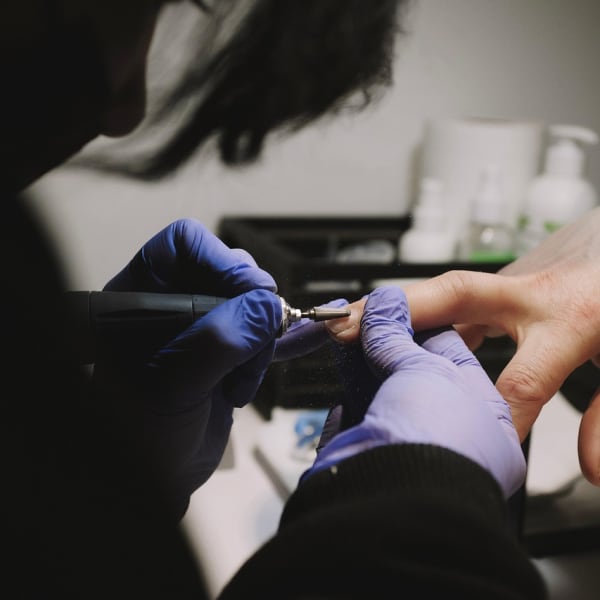
Nail salons are pretty places where clients can relax for an hour or two, and leave with beautiful nails. But they are also places where industrial chemicals are used and dispersed into the atmosphere. That’s why good salon ventilation is a must. Most salons have some kind of general ventilation system, whether it’s a built-in exhaust fan in the ceiling or a heating/air conditioning system that “conditions” (either heats or cools) the outside air coming in.
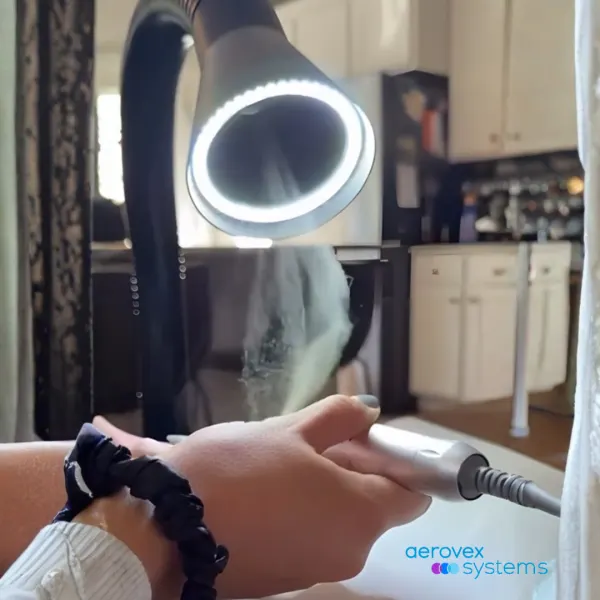
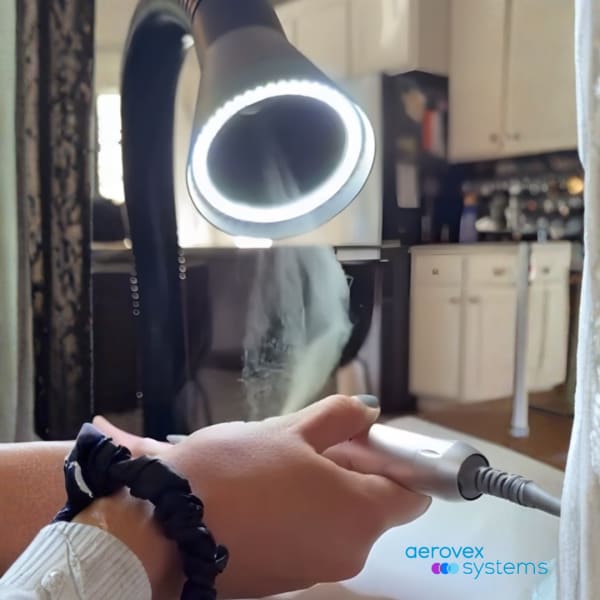
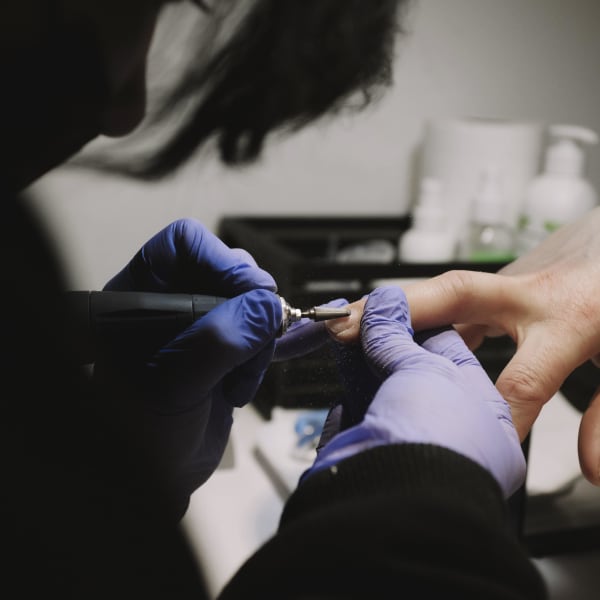
Local exhaust ventilation goes above and beyond general ventilation capabilities, and it can help nail technicians who-develop asthma-like symptoms, dizziness, and fatigue in reaction to the chemicals used in a salon, particularly liquid monomer or filing dust. An effective local exhaust system removes artificial nail vapors (including acrylic, gel, and fiberglass), filing dust, and solvents such as primers, nail dehydrators, removers, nail polish, and catalysts, as soon as they are expelled from your dappen dish or nail file. When installed and operated properly, a system can dramatically decrease both salon odor and the presence of chemicals and particulates.
“If you go beyond the minimum standards for acceptable air quality as determined by the American Society of Heating, Refrigeration, and Air Conditioning Engineers (ASHRAE), then you can improve your air quality by a factor of 10,” states Bud OfFermann, president of Indoor Environmental Engineering in San Francisco, Calif.
“I worked in a salon for five years with minimal ventilation,” says Kelly Begin of Perfect Ten Nails 8c Accessories to Lynnwood, Wash. “I was diagnosed with occupational asthma and was told to quit doing nails.” Instead, Begin opened her own salon with a partner and asked her father, a heating specialist, to install an adjustable exhaust fan in the ceiling, as well as air cleaners on each table. She also wears a dust mask at all times.
Begin says she no longer suffers from the symptoms of occupational asthma, and odor in the salon is minimal.
Begin’s system combines general and local ventilation (from the workstation air cleaners), and it seems to work for her. However, there are other options for a local exhaust system that can work in any size salon, with greater effect and less maintenance. With a simple system consisting of a hose much like the one on a canister vacuum cleaner, an industrial exhaust fan, and some minor electrical and contracting work, you can get rid of nearly all the monomer vapors and salon dust before they have a chance to circulate in the salon.
Where Does the Air Go?
By far the best solution for local exhaust is one that will carry vapors quickly and directly out of the building, says Doug Schoon, director of R&D for Creative Nail Design Systems (Vista, Calif.). “Salons need local exhaust that vents to the outdoors,” he says. The difference between air cleaners and a local exhaust system is that cleaners attempt to filter the air within the salon, while a local exhaust system virtually removes air laden with chemicals and dust and disperses it away from the salon. The best aspect of a local exhaust system is that it removes tainted air before it even reaches the nail technician’s breathing zone (the area two feet around your mouth, where your breathing air comes from).
Of course, air that goes out of the salon must be replaced with new air. Whenever you have an exhaust system, whether it’s general or local, you need to think about air exchange. “To balance a general exhaust system pulling air out at 200 cfm (cubic feet per minute) in a 600-square-foot salon, you would need to have complete air exchange more than two times every hour,” explains Dave Kahn, president of Kahn Air Conditioning in North- ridge, Calif. “But spot ventilation, such as a hose system, would only pull about 50-60 cfm That amount probably wouldn’t need any more makeup air than what is coming in naturally.” A one- or two-station nail salon with a local exhaust setup probably wouldn’t need to worry about air exchange. Makeup air comes in every time you open your door or windows, so salons in temperate climates where the door is frequently open are getting plenty of natural air exchange. Nail salons in colder climates, however, are often more insulated and airtight. “If you’re in a cold climate and use any kind of combustion heater, such as gas or oil, local exhaust systems can cause negative pressure in the salon so that the heater fumes back-draft down the flue into the salon,” says Offermann. “Then you and your clients face a danger of carbon monoxide poisoning.”
Another drawback for salons in places with hot and cold weather extremes is that a good ventilation system will pull your conditioned air literally out the window. Be prepared for higher utility bills to keep your salon at a comfortable temperature. On the other hand, says Schoon, if you have a proper local exhaust system, you won’t have to open as many doors and windows to keep the salon adequately ventilated. So in some cases, you may actually save on heating and air conditioning costs.
Building the Perfect System
Gigi and Simon Rouse, owners of Designer Nails m Leeds, England, think they have come up with the perfect solution in a local exhaust system. They installed a tube attached to an extractor fan that descends from a false ceiling over each of the salon’s nail tables. The tube, made of an attractive ceramic material, pulls air, dust, and vapors up to the extractor fan, which moves the air to an outdoor air vent, and it is dispersed outside. “Our local health and safety executives are delighted with us,” claims Gigi. “We have a system that works, yet is attractive, unobtrusive, inexpensive, and practically maintenance-free.”
Closer to home, Maggie Boyd literally built her own local exhaust system. The owner of Avanté Salon in Barrington Hills, Ill., used a two-inch carburetor heater hose attached to PVC pipe. Each table has two hoses on either side to pull in vapors. The hoses go down through the basement, into a 60-cubic- foot box that houses the exhaust fan, and the air is exhausted outside to a basement ramp. “I used air cleaners before and they’re great at removing dust,” comments Boyd. “But this system actually removes monomer from the air as well as dust.” The salon has 17 hoses (eight nail tables have two each and the pedicure station has one). Only one at each table is used at anytime, depending on whether the nail technician is right- or left-handed; the one not in use is simply blocked with a sponge or a PVC pipe cap.
What You Will Need
The main components of a local exhaust system include:
flexible hose made of plastic or metal, 2-3 inches in diameter (collector hood optional)
metal bendable arm (such as those used for study lamps) with a bracket to attach to the side of the table
an adjustable explosion-proof blower or exhaust fan
fan housing such as a wooden or metal box
exhaust vent
metal ducting with rain cap (for rooftop exhausting)
charcoal/HEPA filter (for an industrial adsorption system)
There are three ways to go with a local exhaust system, says Offermann. One is to hook it up to your building’s central exhaust system. Another option is to create your own exhaust outlet, either through a window, wall or the ceiling. If you absolutely cannot exhaust to the outdoors (for instance, if your city building codes don’t allow it or if you are in a high-rise building and not.