Once deemed almost impossible to treat, newer antifungal medications are claiming cure rates of 80% and higher.
Once deemed almost impossible to treat, newer antifungal medications are claiming cure rates of 80% and higher. With cases of onychomycosis on the rise, know what to look for and what clients can expect from treatment.
How times change: A decade ago, physicians specializing in nail disorders advised patients with fungal infections of the toenails, also called onychomycosis, to learn to live with the condition. Widely viewed as little more than a cosmetic flaw, onychomycosis was deemed more benign than the medications used to treat it.
But with onychomycosis approaching epidemic proportions, nail experts are changing their stance. A decade ago, dermatologists estimated that 3%-5% of the U.S. population suffered from onychomycosis. Now, they speculate that as many as one in seven the market a few years ago as the first topical antifungal approved by the FDA for use on nails with mild to moderate onychomycosis. Brushed onto the nail and surrounding area like a polish each day, Penlac inhibits the growth of fungi without systemic side effects.
Treatment typically continues for 48 weeks, and patients are advised to visit the physician monthly to have the nail plate debrided and trimmed.
Penlac fell out of favor, however, when low cure rates frustrated patients and physicians alike. However, Dr. Tompkins prescribes Penlac to all patients who seek treatment for mild onychomycosis.
For moderate to severe cases of onychomycosis, Dr. Tompkins adds oral Lamisil to the treatment regimen for 90 days. “The combinations of Lamisil orally and Penlac topically is rendering success rates of up to 80%-90% for me clinically,” he says.
Researchers also suggest that Penlac got a bad rap. A group of researchers led by Aditya K. Gupta, M.D., analyzed the results of 15 different studies on Penlac and found that it provided a cure in 29%-36% of cases. “With its novel mechanism of action, topical route of administration, and excellent safety profile, ciclopirox nail lacquer offers an innovative approach to the treatment of this often difficult-to-manage disease,” Dr. Gupta, associate professor, division of dermatology, department of medicine, Sunnybrook and Women’s College Health Sciences Center, University of Toronto Medical School, told Doctor’s Guide in September 2000.
40% Urea Gel Gives Topical Treatments a Boost
Topical treatments like Penlac may well get a boost in the near future from 40% urea gel. Well-known for its skin- and nail-softening properties, 40% urea is garnering new recognition as a potential tool against onychomycosis. “Urea is a substance that eats protein, so it eats right through the nail,” explains Dr. Caldwell.
Dr. Zapf has used 40% urea paste to treat onychomycosis for almost 10 years. “Usually topical medicine cannot reach the fungus buried deep under the nail,” says Dr. Zapf. “My analogy is going through a drive- through car wash: The water and soap attack the outside of your car, but you’re safely dry inside.”
Dr. Zapf applies the 40% urea paste to the affected part of the nail. Within a few days, he says the infection portion of the nail “melts away,” painlessly exposing the infected nail bed to the topical antifungal.
Recently, Bradley Pharmaceuticals launched Carmol 40 Gel, formulated specifically for use on nails. Brushed on to the nail like polish, Carmol 40 Gel penetrates and softens the nail plate, which proponents say works just like the paste to allow topical antifungals to penetrate the nail bed to more effectively treat the infection.
The Future: Combine and Conquer?
While no treatment for onychomycosis yet boasts a 100% cure rate, Dr. Jaffe anticipates that researchers will soon identify ideal combinations of topical and oral antifungals that free patients from the embarrassment and discomfort of fungal nail infections.
In the meantime, educate clients on preventive foot care to minimize their risk of developing onychomycosis:
Keep feet covered in public areas such as locker rooms and showers.
Wash feet daily and dry thoroughly before dressing to avoid trapping moisture.
Keep feet cool and dry by wearing cotton socks that absorb moisture, or invest in socks made of newer synthetics that wick moisture away.
Wear low-heeled shoes (to minimize trauma to the toenails) constructed of leather or other “breathable” materials.
Change socks whenever feet feel damp; consider sprinkling a high-quality foot powder inside shoes daily.
Keep toenails neatly trimmed, always cutting straight across. Avoid cutting the cuticles.
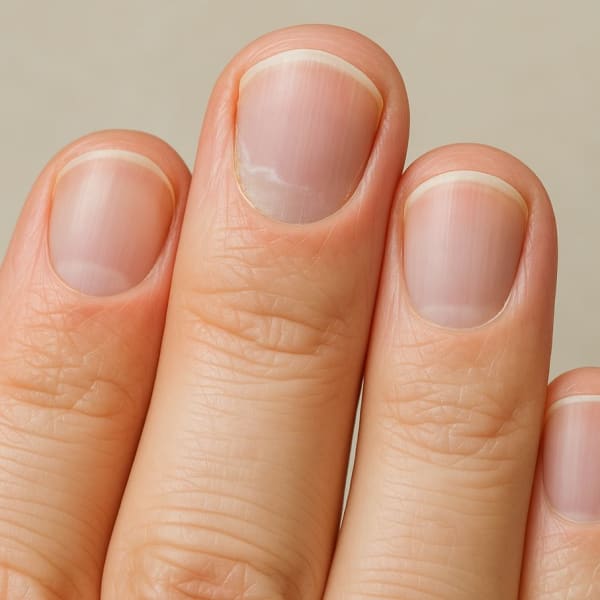
Finally, advise clients to see a doctor at the first sign of a problem — but take care not to speculate on the cause of their condition. Onychomycosis accounts for nearly 50% of the nail disorders dermatologists and podiatrists treat, but it’s easily confused with other, look-alike conditions such as psoriasis of the nails and lichen planus. Refer them to a physician, who can do a simple microscopic examination to confirm the diagnosis and treat accordingly.
Give Pedicure Clients a Safe Haven from Onychomycosis
Tropically, most physicians consider professional manicures and pedicures as risk factors for onychomycosis. And while it’s tempting to lay the blame at the doorstep of budget salons, the fact is that the risk of inadvertently spreading onychomycosis exists in every salon. Fungal spores exist everywhere in nature—including foot-baths, on files and implements, even on the salon floor.
Dr. Caldwell urges nail techs to follow rigorous sanitation procedures between every client. “Fungal infections can easily be transferred from one client to the next,” he affirms.
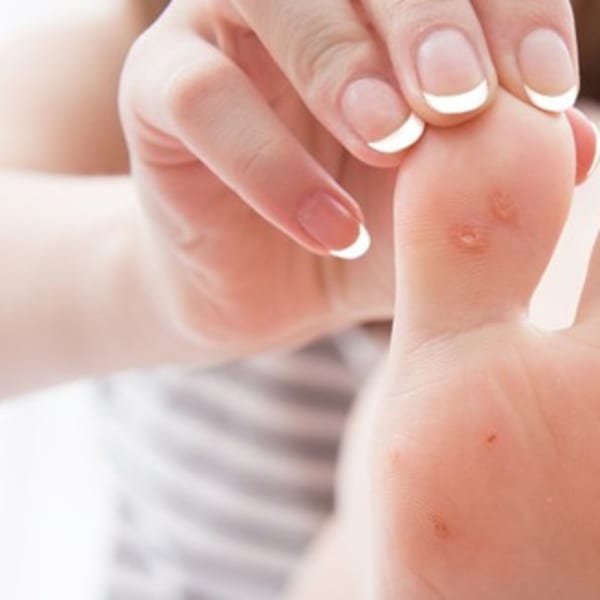
Nor will you always know when a client has a mild case of tinea pedis, the medical term for a fungi infection on the foot surface. Most onychomycosis, doctors say, starts with tinea pedis that spreads under the free edge of the nail and breaches the hyponychium.
“Long before they have any symptoms of onchomycosis, many people have subclinical athlete’s foot,” Dr. Caldwell explains. “Their skin may appear dry, but otherwise they have few or no symptoms so they don’t realize they have an infection.”
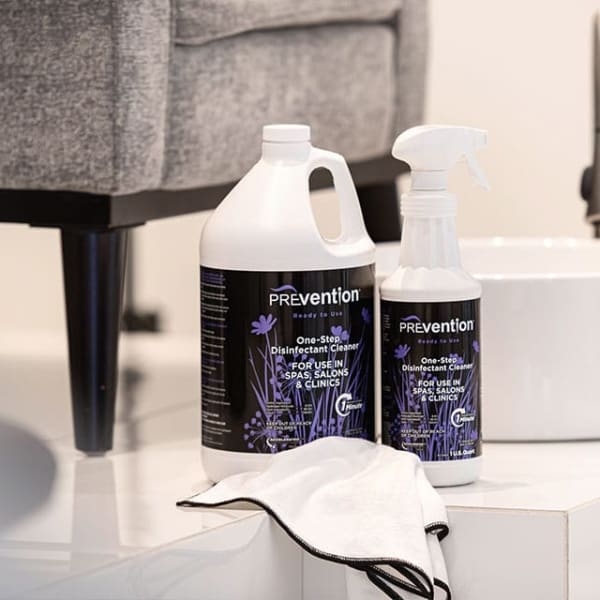
Minimize the risks by adopting high sanitary standards. Sterilize implements in an autoclave or dispose of them between clients, disinfect foot baths and table surfaces, and provide clients with disposable slippers to move around the salon.