Be an informed patient by avioding common mistakes and misperceptions about a visit for you first nail evaluation.
Preparing for an Appoinment
KNOW BEFORE YOU GO:
Know when to schedule an appointment. Many patients don’t schedule an appointment until they feel pain or discomfort, or until the nail itself is cosmetically unappealing. However, many of the most serious issues, including cancer, have no painful or bothersome symptoms. These are the very conditions that concern a doctor the most. Instead of waiting for the nail to hurt, schedule an appointment when you see any change in the nail, such as a discoloration or a line. Remember, nails should not be changing in appearance. Even if you go for a visit and the doctor ultimately says nothing is wrong, it’s good to have the nail evaluated and someone tell you that everything is OK.
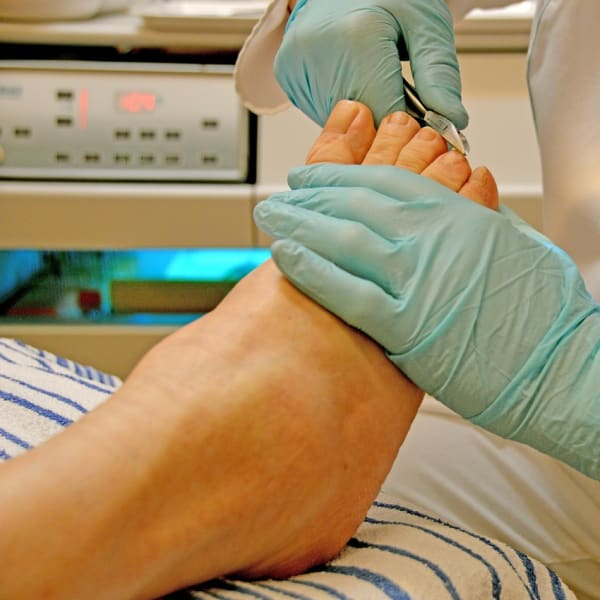
Know who to call for the appointment. The rule of thumb is that if a nail condition is isolated to the feet, choose a podiatrist. If a nail problem develops on the fingernails, call a dermatologist. Start with your primary care doctor. He may have a strong background in nail care or he may be able to help you coordinate care. Do some research before you schedule an appointment with a dermatologist, as areas of specialty within dermatology vary widely. Try to find one who has experience with nails. You may be able to find someone local by researching online or even by calling a university, depending on where you live.
IN THE OFFICE:
The doctor may find that nothing is wrong with the nail, and you can leave with the assurance that all is well. However, he may determine that a culture of the nail is needed. If so, he will use a swab kit to take a sample and test for bacteria and fungus. Finally, the doctor may need to biopsy the nail. (See “The Biopsy Appointment” for more on what to expect.)
BEFORE YOU ARRIVE AT THE OFFICE:
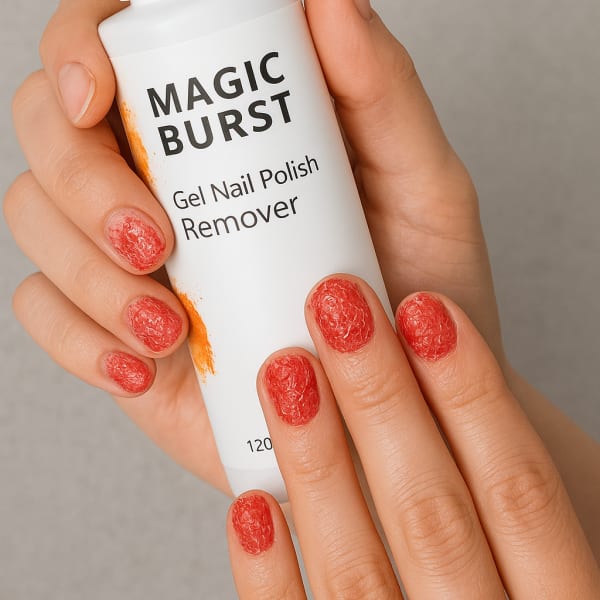
Remove polish from all of your nails. Patients are often allotted only 15 minutes, and you don’t want to spend five of those minutes removing your polish, which can be done at home. Take the polish off of all 10 nails, not just the nail that is giving you trouble. The reason the doctor needs to see all 10 nails is because he needs to document “normal.” Even though only one nail may be affected, the doctor needs to see all 10 nails before he can sign off on them.
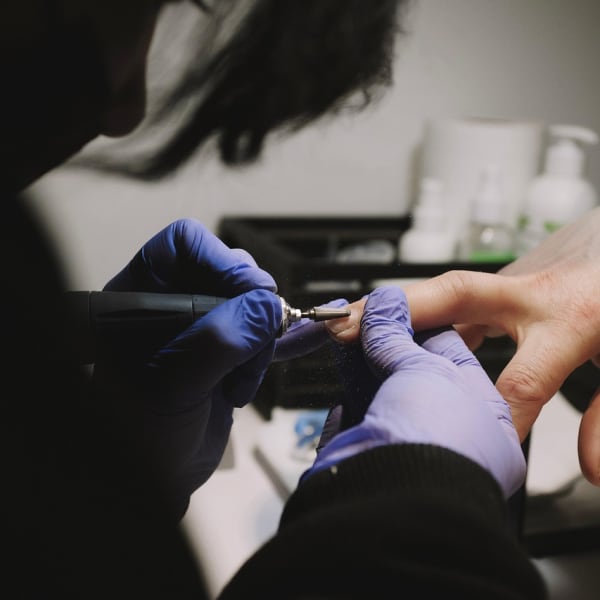
Ditto for any nail enhancements — take them off. Think of the appointment as you would a facial. All makeup would need to be removed for a facial. In the same way, any nail product, including any residual product from glue, needs to be removed.
Be prepared to answer questions. Doctors will want to know about the history of the nail. When did the problem start — has it been days, weeks, months, or years? Does the condition of the nail fluctuate, that is, does it seem to get better or worse, or does it remain stable? Does it become inflamed or itchy? Does a discoloration on the nail appear to grow or to lessen? It is very helpful when a patient has considered these questions before an appointment so she can answer them fully during the evaluation.
Be prepared to wait. Often people have the misconception that they will receive a complete evaluation from one visit to the doctor, but many times a diagnosis will take multiple office visits: the initial 15-minute visit plus at least one follow-up visit. Some conditions can be evaluated and diagnosed right in the office, of course, but many times a doctor will need to biopsy the nail, wait for lab results, and schedule a second appointment to discuss the findings. Avoid disappointment by understanding you may not have answers on the initial visit.
[PAGEBREAK]
The Biopsy Appointment
THE STEPS OF A BIOPSY:
Prep: The doctor will administer anesthesia, and he may choose to soak the nail in water or a water and antiseptic mixture to soften the nail. It’s difficult to numb the fingers, so it’s likely the application of the anesthesia will hurt, but nothing beyond this step should cause pain. The doctor may apply a tourniquet to the finger to reduce bleeding.
Step 1: Release the cuticle. Working with a nail elevator, the doctor lifts the entire cuticle, separating it from the nail plate.
Step 2: Expose the nail. Two incisions are made in the proximal nail fold so the cuticle area can be folded back and the entire nail exposed.
Step 3: Release the nail. Using a nail elevator, the doctor releases the nail plate from the nail bed. Depending on what needs to be biopsied, the doctor will cut away half the plate or the whole plate. Note: in some situations, the distal half (closest to the free edge) of the nail is all that will need to be removed. In these cases, there is no reason to lift the cuticle or make incisions to the nail fold.
Step 4: Secure a sample. In cases where a biopsy of the nail bed is needed, the doctor will use one of three tools to secure a sample: a biopsy punch, a shaving blade, or a scalpel. The biopsy punch removes a round hole from the surface of the nail bed; the shaving blade will scrape the surface of the nail bed to gather a sample. The scalpel is used when a larger section of the nail bed and matrix is needed. A section from the back of the matrix to the middle of the nail bed is removed.
Step 5: Clean the area, stitching the incisions as necessary.
In all, the biopsy appointment takes about 45 minutes, and the patient may leave the office with a prescription for an antibiotic. It could take two to three weeks to hear the results of the biopsy.
KNOW BEFORE YOU GO:
You’re about to have a biopsy because there is a potentially serious problem developing under, on, or around your nail. The biopsy will take a section of your nail, or of the nail bed with matrix, or possibly both. You need to understand your nail may not grow back to its normal look; there could be permanent cosmetic change to the nail. This is emotional for many people, but it’s an unavoidable reality, because nails can scar easily.
Another thing to understand is that your nail will take up to six months to grow back and during that time you should avoid applying any type of enhancement to the nail.
THE TOOLS:
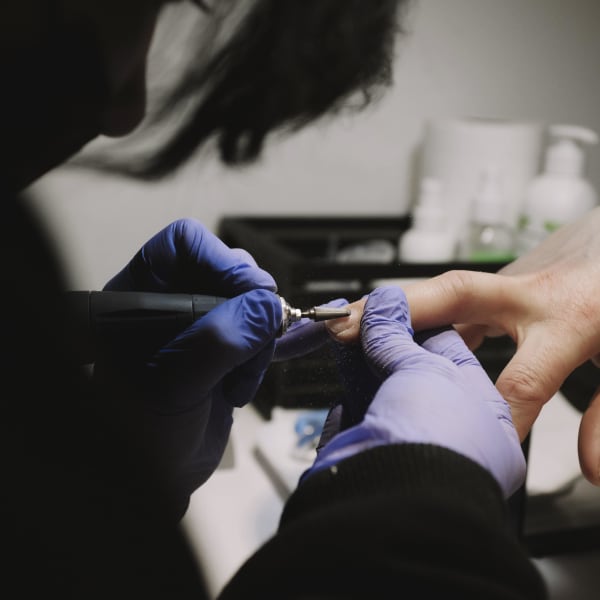
Depending on the preference of the doctor, here are some tools you may see during a biopsy:
Clippers: a professional version of the common, household tool
Nippers: resembling cable cutters, nippers help a doctor grasp, hold, and cut at a particular angle
Dermatoscope: a polarized light used to stop the glare
Biopsy punch: similar to how a cookie cutter is used, the biopsy punch carves out perfect circle from the nail bed
Scraper: a blade used for scraping
Splitter: similar to nippers but used to cut through very thick nails
Elevator: with a flat, thin, extended end, the elevator is used to pry the nail plate away from the nail bed