You can’t pour it down the drain and you can’t throw it in the trash, so what do you do with it?
by Suzette Hill
March 1, 1993
Illustration by Dominique Blaskovich
5 min to read
Illustration by Dominique Blaskovich
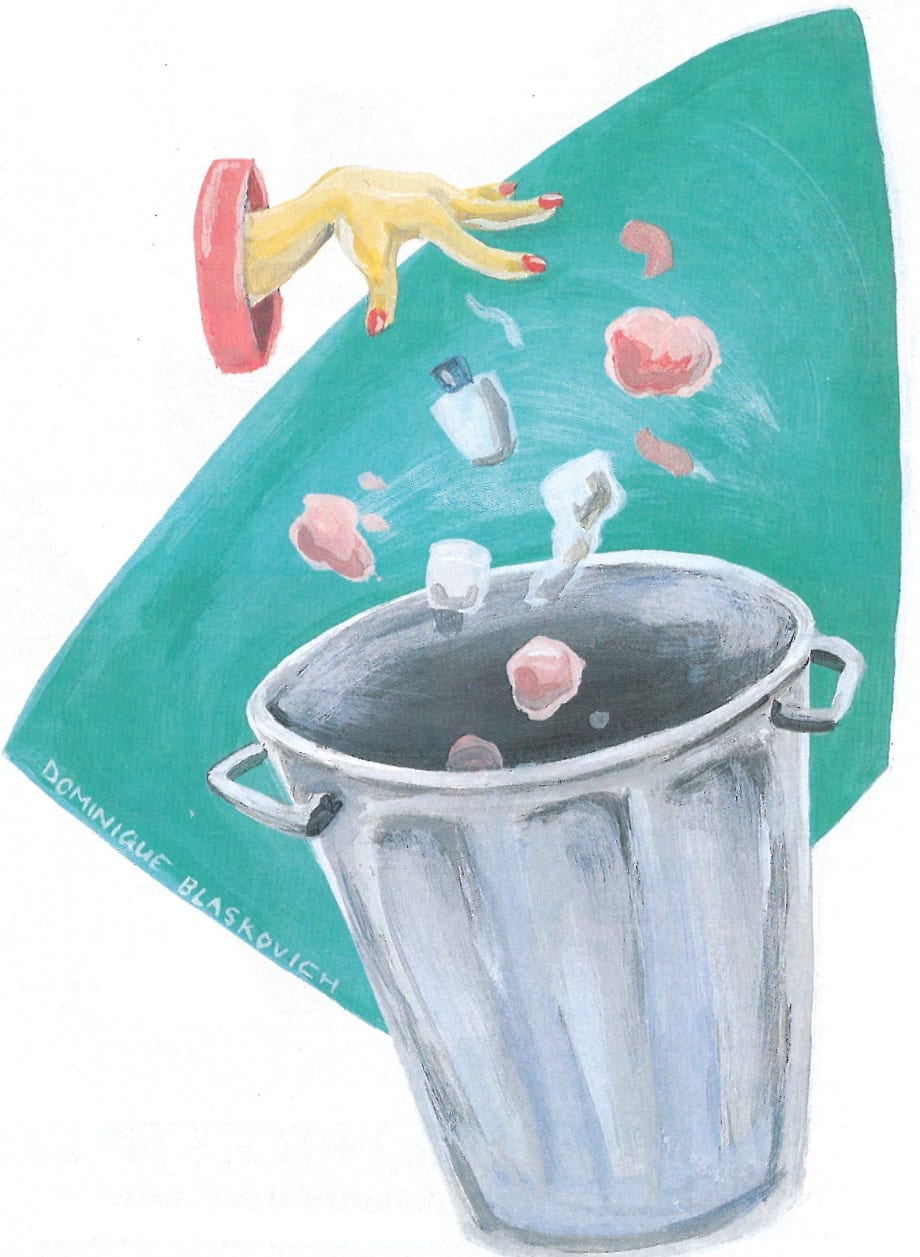
Do you pour unused product down the sink or throw it in the trash? If you pour liquid nail products down the sink, they may eventually end up in a river or ocean, poisoning plants and wildlife. Throwing liquids in the trash is not the answer either. If a container leaks, which it eventually will, product can seep into groundwater supplies and contaminate tap water.
So what do you do with unused nail products? To find out, NAILS spoke to chemical waste specialists, chemists, federal and state EPA officials, and an industrial hygienist with Cal OSHA. They all told us what not to do with unused product, but admittedly, finding out the right way to dispose of it was much more difficult.
Ad Loading...
THE WRONG WAY
Never pour nail products in the sink or flush them down the toilet. Waste water from your sink and toilet goes through a local treatment plant where it is generally treated for bacteria. Water treatment plants are not set up to filter out chemicals that aren’t supposed to be in the water in the first place. These chemicals can poison plants and wildlife and they can get into crops that may eventually end up on your table.
Throwing liquid nail products in the trash is just as problematic, even if they are sealed in their original container, because the container may break, deteriorate, or leak. If it does, the product can leach through the soil into a groundwater supply, which is where many communities get their tap water.
Environmental concerns aside, throwing flammable chemicals such as acrylic monomer, nail polish remover, and the like in the trash can cause salons other problems. Doug Schoon, a chemist and owner of Chemical Awareness Training Service (Newport Beach, Calif.), relates a story about a salon whose trash can exploded because someone flicked a barely lit cigarette into the container where the salon had thrown away chemicals.
THE RIGHT WAY
Ad Loading...
Any hazardous material requires special care and careful disposal. Acrylic monomer, polish remover, nail polish, disinfectant, and most other products used in the salon are considered hazardous. If you’re not sure whether a product is hazardous, look at Section 1, Number 2 on the MSDS where it says “Hazardous Material.” If the blank says Yes, you cannot pour the product down the drain or put it in the trash. Proper disposal instructions should be listed in section 7 on the MSDS.
However, says Scott Hanrahan, a chemist for Forsythe Cosmetic Group (Lawrence, N.Y.), MSDS are directed at both large and small users in different geographic areas. Since disposal regulations vary depending on the amount of waste and the state you’re in, these instructions often say, “Dispose of in accordance with state and local regulations.”
If you just want to get rid of a small amount of liquid monomer from your dappen dish, you can mix it with some acrylic powder and make a small, hard ball of product. When the ball hardens, throw it in the trash. Don’t mix more than a dappen dish of product at a time, cautions Schoon, because you could get a reaction with larger amounts that could result in smoking product, toxic fumes, or even a fire,
For larger amounts of product and liquid, disposal becomes a problem. EPA regulations make disposal hazardous materials complex and costly. Most hazardous waste generators use the services of waste management companies to pick up the materials and either recycle or dispose of them. For small users such as salons, this is impractical. Waste management companies charge a lot and won’t even pick up small amounts. According to one Azusa, Calif., waste management company, a salon would need to have a minimum of 27 gallons of product for the company to pick up, and it would cost a minimum of $400, depending on the material. Not only can expenses like this drive your salon out of business, but you have the added problem of figuring out how to store the product while you’re accumulating 27 gallons. And, remember, you can’t just empty all hazardous liquids into a container. Nail polish, polish remover, liquid monomer, etc. would all have to be stored separately.
The waste disposal needs of small businesses are why some cities have started “hazardous waste days,” designated days when residents can bring small amounts of hazardous materials to a specified fixed place for the city to collect and dispose of, says Schoon. This is the easiest and most economical way for small users like salons to dispose of old product. Many cities will collect the materials for free or a nominal fee.
Ad Loading...
To find out if your city has a hazardous waste day, call your local fire department or city hall. If they don’t have one, ask who to talk to about starting one. In the meantime, check with other nearby cities to see if they have one.
LOOK TO THE FUTURE
Most salons have been pouring product down sinks or throwing it in the trash for years without anyone complaining, so it’s easy to say that the amount of hazardous material you throw away is so small that it doesn’t matter. But if every salon continues to carelessly throw away hazardous waste each month, the chemicals will continue to accumulate and be set free in the environment. So even if no else is, hold yourself responsible and explore environmentally sound options.
You take cautions to protect yourself from exposure while you’re in the salon, be sure you use as much caution to prevent your own – and others’ – exposure outside the salon.
Uncured gel polish and microscopic e-file dust contain active acrylates that penetrate the skin, triggering permanent contact dermatitis. Learn the chemistry behind these irritants and how to protect your clients and yourself.
The Good Patch is a leading wearable wellness patch brand, offering wellness and skincare patches that support everyday needs including energy, sleep, relaxation and more.
Orthopedic PT reveals three daily exercises plus ergonomic advice that can help salon professionals avoid the aches and injuries caused by standing, bending and repetitive overhead work.
From acrylic monomers to airborne bio-dust, the air inside a nail salon carries risks most professionals never see coming. Aerovex Systems reveals the source-capture and room-purification strategies that are setting a new standard for salon safety.
Working in beauty doesn’t have to hurt. Learn how Somatic Movement helps hairstylists, lash artists, and other beauty pros release tension, improve posture, and extend their careers.
As a spa or salon professional, your clients expect more than just beauty—they expect safety, hygiene, and peace of mind. Fungal infections like Athlete’s Foot and Nail Fungus are more common than you think, especially in environments where tools and footbaths are reused without proper sanitation. This blog covers how to stop these issues before they start, using proven infection prevention strategies for salons and spas.
A federal initiative aimed at studying chemical exposure in nail salons has ended due to staffing and budget changes. Here’s what the project set out to do—and what its conclusion means for salon professionals.
For many people, a pedicure is a relaxing beauty ritual. But what most don’t realize is that this simple service, if done without proper hygiene and sanitation, can cause serious infections and long-term health issues.
Onycholysis is the separation of the nail plate from the nail bed. While it may look painful, it typically isn’t—at least not at first. But without proper care, this common nail disorder can lead to infections, deformities, and long-term damage.
Mckenzie Kool, Psychologist, MC, RPsych provides us with guidance on what may or not be helpful in speaking with someone who has suffered a significant loss.
Clients come to you to feel their best—not leave with a viral souvenir. Warts and cold sores can spread fast in busy salons, but a few smart habits make all the difference. Let’s talk about what’s really lurking in your salon (and how to kick it to the curb).
As Earth Day approaches, The Green Beauty Community Foundation and the Green Spa Network invite beauty pros to step forward and embrace sustainability through the Green Pledge--a powerful initiative designed by and for beauty industry leaders.
Don’t cancel Valentine’s Day altogether, urges Jill Palmquist. Instead, think of it as a (frilly, flowery, Champagne-bubbly) wake-up call to fall deeply in love with your own life.
Life coach and Culture Ambassador of Sam Villa, Andrew Carruthers, outlines how to tell if your burnout is temporary - or if it's time to make a bigger career change.