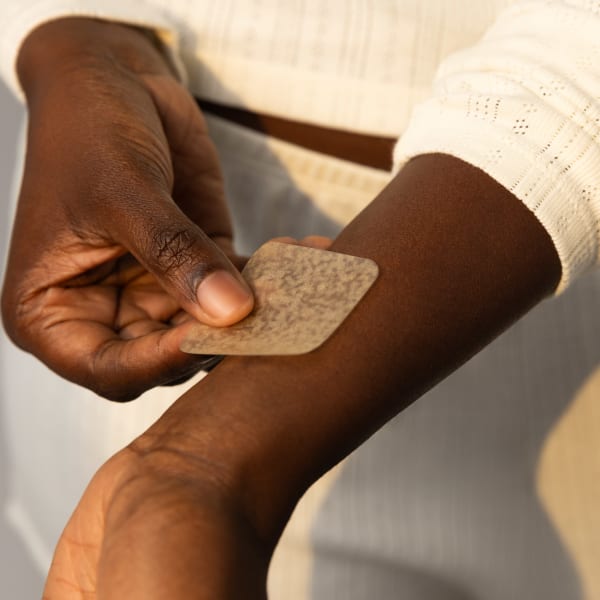
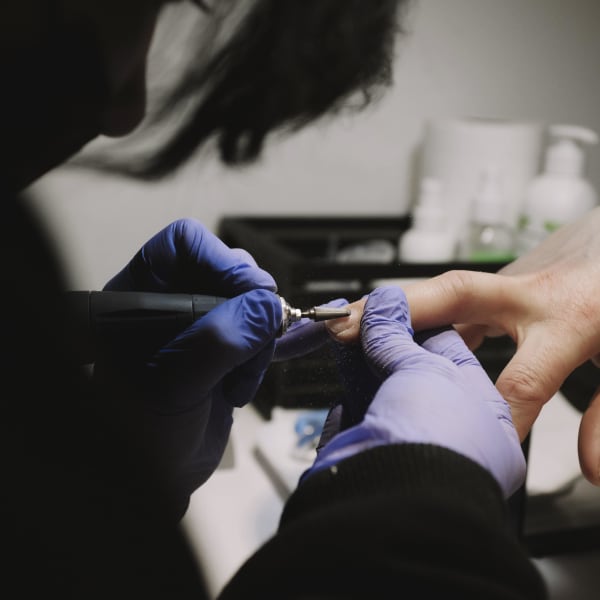
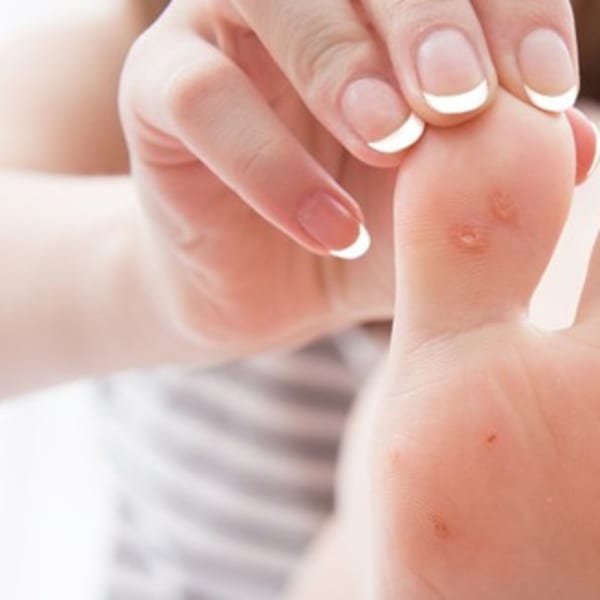
Red, Swollen patches? Blister-like bumps? Chances are it’s contact dermatitis, but only the doctor can say if it’s a simple case of irritation or a more serious allergy.
What do you do when, after enjoying beautiful artificial nails for five years, you invest the time and money to take up the profession of doing nails yourself—only to almost immediately start suffering a red, bumpy, itchy rash on your hands every time you work with your products?
One nail technician recently posed this question to Dr. Richard Scher, and she’s just one of a long line who have asked a similar question of NAILS’ Nail Doctor over the years. This comes as no surprise to Boris Lushniak, M.D., medical officer and dermatologist for the National Institute for Occupational Safety and Health (NIOSH) in Cincinnati, Ohio, who says that contact dermatitis is the most common occupational skin disease in the United States, and adds that the cosmetology industry, in particular, is one where workers are at high risk for developing it because of the substances they work with.
Whether it appears weeks or years into your career, contact dermatitis is more than unsightly and uncomfortable—in some cases it can mean the end of your career in nails. Happily, though, most dermatologists and industrial hygienists reassure nail technician that this is the worst-case scenario. Still, they caution, the condition is one best prevented in the first place. Even if it’s too late to avoid your first bout with contact dermatitis, understanding the condition and its condition and its cause can prevent it form appearing on your hands again…and again.
Two Causes, One Effect
The swollen, red skin, fluid-fill bumps, and the burning and itching sensations characteristic of contact dermatitis are, quite simply, the skin’s reaction to a substance that either irritates the skin or triggers an allergic response of your immune system.
“Contact dermatitis means a reaction of the skin following contact with a substance that is either an irritant or an allergen,” explains Ponciano Cruz, M.D., an associate professor of dermatology at the University of Texas, Southwest Medical Center at Dallas. “Examples of irritants would be sulfuric acid or even detergents in soap. Anybody who comes in contact with irritants can develop a reaction—it’s merely a matter of dose and time.”
While everyone will develop contact dermatitis if their skin is overexposed to an irritant, only those genetically predisposed will develop an allergic contact dermatitis. “With allergic contact dermatitis, only certain people will develop it, like only certain people react to nickel in jewelry or rubber additives in gloves,” says Dr. Lushniak. He sums up the difference between the two causes: “An irritant reaction is caused by damage to the skin from the outside. An allergic reaction, on the other hand, comes from the inside out. The real reaction comes from the body’s immune system.”
“The substance gets into the skin and is taken up by the cells in the skin, which interprets the substance as something foreign,” Dr. Cruz explains. “The immune system gets this message and activates the immune system to bring T cells and white cells into the sire, which causes inflammation. In this scenario, when the immune system would otherwise be protecting the body it is the one causing the harmful effects.”
What Are the Culprits
In the nail industry, acrylates are considered moderate to strong sensitizers (allergens), says Suzanne Connolly, M.D., a dermatologist with the Mayo Clinic at Scottsdale in Arizona. “It’s the monomer that’s really the allergen,” she says, “so nail technicians need to be very careful to minimize their exposure to it.”
Some acrylates are stronger sensitizers than others. For example, methyl methacrylate (MMA) is considered a very strong sensitizer both because a higher percentage of people react to it than to other acrylates, and because the reactions tend to be more severe—hence the FDA’s stance against its use in the nail industry. However, adds Dr. Connolly, ethyl and butyl acrylates found in some nail products also are sensitizers, as are cyanoacrylates (found in nail adhesives), although all to a lesser degree than MMA.
Irritation or Allergy?
While they have two very different causes, irritant and allergic contact dermatitis can only be distinguished by a patch test. Both exhibit the same symptoms—which ranges from redness, swelling, fluid-filled bumps (that sometimes ooze or “weep”), and dry, cracked skin. Even the number of exposures offers no clues: While a one-time massive exposure can cause irritation contact dermatitis arise from constant, chronic exposure to a substance. Likewise, it takes at least one exposure to a substance to develop an allergy to it, and it sometimes takes years before an allergy appears.
“The immune system changes as you age, so cells may be more sensitive to a substance as time goes on,” Dr. Lushniak explains. “You may have spent 15 years working with a substance and then develop an allergy because you have dry, cracked skin that allows a larger amount of allergen to get in, and all of a sudden you develop an allergic reaction.”
While the symptoms are the same, the cause is very important because it dictates how you must manage your exposure to the substance in the future. If the cause is irritation, you must limit your exposure to the irritating substance. If it’s an allergy, however, you must avoid all skin contact with the allergen or risk increasingly severe reactions as your immune system builds up antigens (which attack the “foreign” substance) with each exposure.
Dr. Lushniak and Nellie Brown, M.S., C.I.H, a certified industrial hygienist and western regional director for the Chemical Hazard Information Programs at Cornell University in Buffalo, N.Y., both agree that irritant contact dermatitis is much more common than allergic contact dermatitis, with both of them citing studies that show irritation is the culprit in four out of five cases. By the same token, however, Dr. Lushniak adds, “That varies according to the workplace, and we see the ration really change around sometimes.” For example, a study done at the Skin and Cancer Foundation in Sydney, Australia, found that almost 40% of reported cases of contact dermatitis in the cosmetology industry were caused by an allergic reaction.
Only a dermatologist can determine whether contact dermatitis is an irritant or allergic reaction, and then only by doing a patch test. This test involves applying diluted concentrations of potential allergens on the skin. If the dermatitis occurs at the site of the test after 48-96 hours, the person is considered allergic to the substance. It is an essential test to both distinguish between an irritant and allergic reaction as well as to pinpoint the exact allergen so that it can be avoided in the future.
Even an allergic reaction, however, doesn’t mean the end of your career, says Brown. “I tell people not to give up quite so easily,” she says. “Preventing the reaction form occurring can be a function of work practice and technique. Before giving up, look for a slightly different material or formulation and see if the reaction goes away.” For example, many technicians have saved their careers by switching from acrylics to wraps or from wraps to gels, depending on their allergy. And sometimes you may need only to switch brands. “You could be allergic to all products, or to just this one formulation,” says Brown.
Even if the allergy is to an ingredient used in all formulations—say ethyl methacrylate in acrylic monomers, for example—Brown and Dr. Lushniak suggest simply using gloves to control your exposure. However, Dr. Lushniak cautions, “Gloves need to be chosen wisely to be effective.” (see “Can Gloves Prevent Dermatitis?” below)
Minimizing your exposure to the chemicals you work with benefits everyone in the industry—not just those who already have contact dermatitis. At the same time, while Dr. Lushniak says there’s no need for alarm over the condition, he does caution nail technician, he does caution nail technicians not to ignore the signs and symptoms. “It may not be a super inconvenience, but when it’s on the hands, all activities of daily living can become problematic,” he says. “If you ignore it, it can develop into a chronic dermatitis, which can become a permanent situation.” This happens when the skin thickens and becomes scaly in a response to the chronic irritation. After awhile, the skin’s structure alters at the area of irritation or allergic reaction, and even once the cause is removed, the effect remains.
[sidebar] Prevention Is the Best Medicine
While the only true “cure” for contact dermatitis is complete avoidance of the irritant or allergen, doctors recommend the following treatments for flare-ups:
* Wash your skin with a mild soap and water as soon as possible
*Apply cold compresses (washcloths soaked in a solution containing two ounces of vinegar to one quart of water) to soothe inflammation and itching.
*An oral antihistamine, such as Benadryl, may help ease the itching and inflammation.
*Apply calamine lotion to ease itching and to help dry the fluid-filled “blisters”
*If all else fails, you can try an over-the-counter cortisone cream for mild outbreaks. Moderate and severe outbreaks may require prescription-strength creams or even oral cortisone pills.
*Do not replace a call to your dermatologist with the above treatments. Always consult your doctor first.
[sidebar] Can Gloves Prevent Contact Dermatitis ?
If you can develop an allergy to any of the products you work with, one option to prevent skin contact is wearing gloves. “Wearing gloves is a viable alternative to giving up doing nails,” says Nellie Brown. While many technicians avoid gloves because they reduce tactile sensitivity, Brown mentions that three are many gloves noted for their tactile sensitivity.