Lifting acrylic nails are frustrating to the nail tech and annoying to the client. Left uncorrected, they could trap water and be the first step toward a bacterial infection. But before we get defensive and start pointing fingers, let’s check out the nails — and let them do the talking.
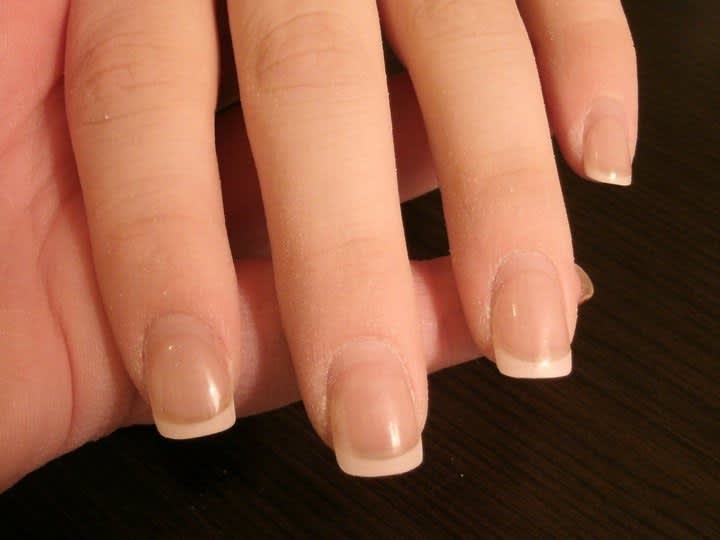
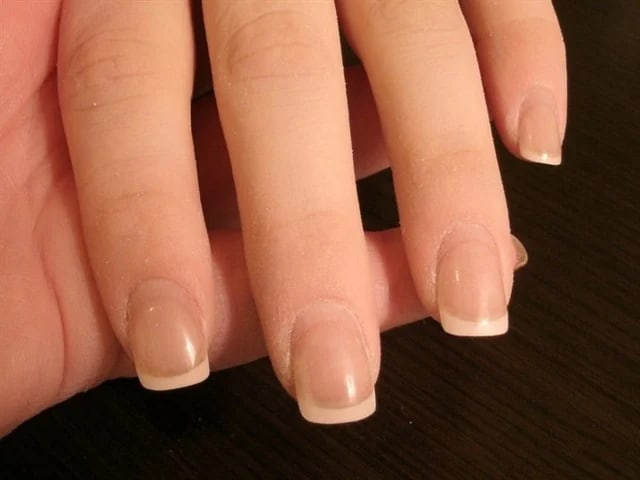
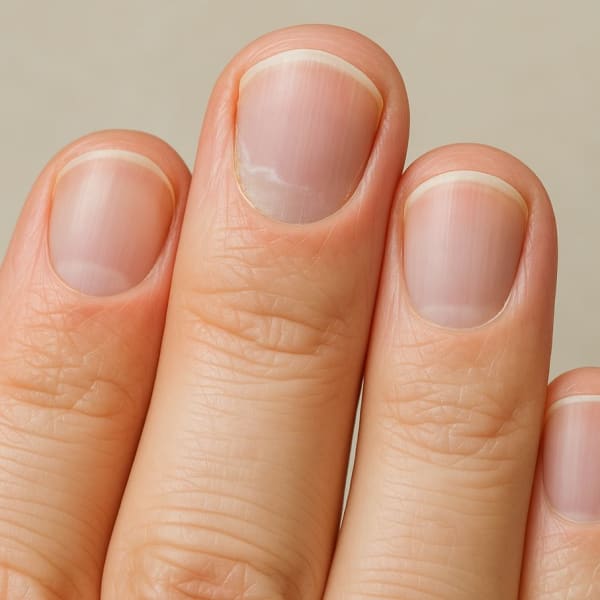
The nail on the middle finger in this image is lifting.
7 min to read
The nail on the middle finger in this image is lifting.
As a professional nail tech, you can determine what the nail is telling you by examining where and how the nail is lifting. Once you look at the evidence, you can see if the cause of the lifting is due to errors in prepping, application, or filing. Shari Finger, owner of Finger’s Nail Studio in W. Dundee, Ill., advises going through “a mental checklist of possible causes and solutions.” Once the cause has been determined, you can take steps to correct the offense and prevent your acrylic nail applications from lifting.
Lifting Caused During the Prepping Process
Evidence: Poor adhesion around the base of the nail at the cuticle.
Ad Loading...
Verdict: Compromised nail surface. This could be caused by one of four things:
Tech failed to remove the natural oils from the nail plate.
Tech or client deposited oil onto the nail plate after it was prepped but before acrylic was applied.
Tech failed to remove the cuticle (the thin layer of dead skin) from the natural nail.
Improper use of primer.
Solution:
Acrylic can’t adhere to oil. Finger says to “lightly file or buff the nail plate and sanitize.” The surface of the nail needs to be free of any shine. The product will lift if it’s applied to a shiny surface.
A tech may prep the nail correctly, but during the application oil can be deposited onto the nail. A client might examine her free hand while you are working, sometimes running her thumb over the natural nail that’s already been prepped. “Oil or residue on the natural nail, whether it’s salad dressing from lunch, hand lotion, or even oil that was accidentally deposited by the tech,” can all cause poor adhesion and result in lifting, says Finger. MaeLing Parrish, dean of education at Hand and Nail Harmony, reminds techs that scented alcohols can also leave a residue that will prevent the acrylic from adhering.
Some clients have very thick cuticles. When you push back the eponychium, a thin layer of skin may remain on the nail surface, but acrylic won’t adhere to this skin. “Be sure to remove the skin from the nail plate prior to removing the shine from the nail surface,” explains Gari-Dawn Tingler, vice president of Hand and Nail Harmony.
Finger suggests you read the primer bottle and follow the manufacturer’s guidelines; every company has a different protocol. “Some companies want the primer to be wet, or matte, or chalky,” says Finger. If you are using a primerless product and are experiencing lifting, Finger recommends you “consider a product where you can control the primer.”
Lifting Caused During the Application Process
Evidence: Lifting near the cuticle; product covers the cuticle.
Ad Loading...
Verdict: Improper ratio of powder and liquid. If the product is runny, it can get out of control and run over the cuticle. When the product gets on the skin, a pocket of air is created under the acrylic in the space around the cuticle. But it isn’t just runny product that is a problem; if the product is too dry it will also lift. You need to use the appropriate ratio during application.
Solution: Contact the manufacturer to find classes in the area where an educator will explain the appropriate ratio of powder to liquid. “Every product has its own consistency,” says Parrish, and new techs may not be familiar with the consistency of the product they are using.
Evidence: Nail retains its full shape, but is separated halfway up the nail plate.
Verdict: The acrylic nail is too long for the natural nail. “When the acrylic is longer than the length of the natural nail,” explains Parrish, “the weight of the acrylic pops the back up.”
Solution: The rule of thumb is to limit the length of the extension to the length of the natural nail. This may cause nail biters a bit of frustration because they leave the salon with barely any free edge — even after having a full set of nails applied. Explain to the client that the natural nail needs to grow a sound base before long extensions are possible.
Ad Loading...
Evidence: Visible separation at the tip of the nail.
Verdict: Natural nail pulls away from the product. “As the natural nail gets dry, it shrinks, it expands, and it pulls away at the tip,” explains Parrish. If a natural nail curls as it grows, it will pull itself away from the acrylic.
Solution: This isn’t your fault necessarily; it’s due to the natural growth of the client’s nail. However, techs who see this type of lifting/separating should file off the loose acrylic, prep the nail, and reapply fresh product.
Lifting Caused During the Filing Process
Evidence: Natural nail is filed away, removing the base the acrylic needs for proper adhesion.
Verdict: Over-zealous filing results in reshaping the natural nail. Sometimes techs remove the sides thinking the nail will appear more narrow. Sometimes the sides are removed when a tech is rushed — she may even be aware of it, but there’s no time to add a small ball to rebuild the side of the nail. Whatever the reason, the acrylic will separate from the natural nail as the natural nail grows to its own shape.
Ad Loading...
Solution: Never compromise the shape of the natural nail. Apply product over the entire nail plate, including the nail along the sidewall.
Evidence: Separation along the sides of the nail.
Verdict: Improper filing could cause side separating/lifting. Sometimes even seasoned techs get acrylic on the skin, especially if the client is a nail biter or if the natural nail has broken below the free edge. When this happens, it’s easy to use the file to push down on the skin to release the acrylic. However, what often happens is, because the acrylic is hard but not set, the product not only releases itself from the skin, but also from the natural nail where it’s just been applied. (Sidewall lifting may also be caused by wiping your brush before guiding the product into place, says Tiffany Greco, a Creative educator and owner of Hair Addix in Carlsbad, Calif. “This reduces the amount of liquid left in the belly of the brush and that liquid is necessary for the product to adhere correctly.)
Solution: Avoid catching the edge of the acrylic with a file when pushing down on the skin. Instead, gently push the client’s skin away from the acrylic with your fingers, and then use the file to remove any excess product.
The Exceptions
It may not be your technique. Two other factors can contribute to lifting problems.
Ad Loading...
Mixing and Matching: Choose a complete product system. Don’t mix and match. Manufacturers develop the steps of their systems to work in conjunction with one another.
Clients Who Pick: Pickers can find any little imperfection... and then have a ball removing the acrylic. Some clients even challenge themselves by trying to get the whole nail off in one piece. Tight, clean work is your best defense. Leave the nail smooth, with no little catches or tiny pills of acrylic under the free edge. Protect yourself from this by prepping the nail correctly, applying a tight, thin coat of acrylic and filing the nail smooth.
Getting Help
An inexperienced tech may not know where the problem is, particularly during the prep. If this is the case, ask a respected colleague to evaluate the lifting. If you are the only tech in the salon, call someone who has a reputation for beautiful work and ask if you can apply a set of nails in front of her to get her feedback on your application. Don’t feel as if you should know this simply because you’ve earned a license. Before states required a license, nail techs were trained by sitting one-on-one through a number of fills, which offered the benefit of immediate and personal feedback. Education doesn’t end with your license. As a new tech, you would do well to take control of your career by finding a mentor to walk you through the practical steps of the trade.
Michelle Pratt is a freelance writer and licensed nail tech based in Johnson City, N.Y.
Uncured gel polish and microscopic e-file dust contain active acrylates that penetrate the skin, triggering permanent contact dermatitis. Learn the chemistry behind these irritants and how to protect your clients and yourself.
The Good Patch is a leading wearable wellness patch brand, offering wellness and skincare patches that support everyday needs including energy, sleep, relaxation and more.
Orthopedic PT reveals three daily exercises plus ergonomic advice that can help salon professionals avoid the aches and injuries caused by standing, bending and repetitive overhead work.
From acrylic monomers to airborne bio-dust, the air inside a nail salon carries risks most professionals never see coming. Aerovex Systems reveals the source-capture and room-purification strategies that are setting a new standard for salon safety.
Working in beauty doesn’t have to hurt. Learn how Somatic Movement helps hairstylists, lash artists, and other beauty pros release tension, improve posture, and extend their careers.
As a spa or salon professional, your clients expect more than just beauty—they expect safety, hygiene, and peace of mind. Fungal infections like Athlete’s Foot and Nail Fungus are more common than you think, especially in environments where tools and footbaths are reused without proper sanitation. This blog covers how to stop these issues before they start, using proven infection prevention strategies for salons and spas.
A federal initiative aimed at studying chemical exposure in nail salons has ended due to staffing and budget changes. Here’s what the project set out to do—and what its conclusion means for salon professionals.
For many people, a pedicure is a relaxing beauty ritual. But what most don’t realize is that this simple service, if done without proper hygiene and sanitation, can cause serious infections and long-term health issues.
Onycholysis is the separation of the nail plate from the nail bed. While it may look painful, it typically isn’t—at least not at first. But without proper care, this common nail disorder can lead to infections, deformities, and long-term damage.
Mckenzie Kool, Psychologist, MC, RPsych provides us with guidance on what may or not be helpful in speaking with someone who has suffered a significant loss.
Clients come to you to feel their best—not leave with a viral souvenir. Warts and cold sores can spread fast in busy salons, but a few smart habits make all the difference. Let’s talk about what’s really lurking in your salon (and how to kick it to the curb).
As Earth Day approaches, The Green Beauty Community Foundation and the Green Spa Network invite beauty pros to step forward and embrace sustainability through the Green Pledge--a powerful initiative designed by and for beauty industry leaders.
Don’t cancel Valentine’s Day altogether, urges Jill Palmquist. Instead, think of it as a (frilly, flowery, Champagne-bubbly) wake-up call to fall deeply in love with your own life.
Life coach and Culture Ambassador of Sam Villa, Andrew Carruthers, outlines how to tell if your burnout is temporary - or if it's time to make a bigger career change.