When you think of "hypoallergenic," yon probably think of makeup. But the term has found its way into the nail industry and is becoming a more common product claim by some nail manufacturers. So what does it mean? The prefix "hypo" means "lower or less than," says Doug Schoon, director of research and development for Creative Nail Design Systems (Vista, Calif.).
"For example, if a particular substance has a tendency to cause a certain number of allergic reactions, a hypoallergenic version reduces that number. There is still a risk of an allergic reaction with a hypoallergenic product, but it is less likely to occur.
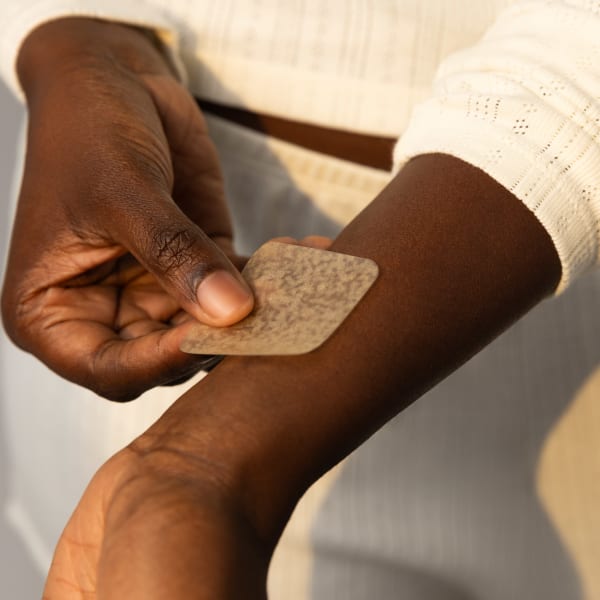
"Depending on a person's sensitivity, anything can cause an allergic reaction with prolonged use," Schoon continues. "For sensitive clients, it usually takes about four to six months of repeated exposure with nail care products to develop an allergic reaction [if a reaction is going to occur."
Currently, the Federal Drug Administration (FDA) has no regulations for cosmetics in defining what can be labeled hypoallergenic. However, says Allen Halper, a compliance officer with the FDA Office of Cosmetics and Colors, "Manufacturers who offer hypoallergenic products should have scientific evidence to substantiate their claim."
"Hypoallergenic is an ill-defined term," says Vincent Deleo, M.D., a dermatologist at Columbia University-Presbyterian Medical Center in New York. "Since there are no regulations in defining it, a hypoallergenic product is whatever the manufacturer wants it to be." For example, fragrances are highly allergenic, and if the manufacturer removes the fragrance from the product, it can be labeled hypoallergenic, explains Deleo.
"The most common allergens in nail products are certain acrylates, [which are found in UV gels]," says Deleo.
Other common allergens found in nail products, which some manufacturers elect to remove so they can label the product hypoallergenic, are vitamin E (alphatocopherol), aloe vera, and parabens, says Edward Young, M.D., a dermatologist based in Sherman Oaks, Calif. "Though the product may not cause an allergic reaction to the nail or around the nail bed," he continues, "the client may touch the product to her eye or another body part and have a reaction."
Richard K. Scher, M.D., NAILS' Nail Doctor, says, "If the product comes in contact with the nail plate only and never touches the skin, even if a person is allergic to it, she will not get a reaction because the nail plate contains no live cells or blood vessels. But in applying almost every type of nail product, the nail technician is bound to get .small traces on the client’s skin, which may cause a reaction. And, if there are splits or breaks in the nail, the product can get into the nail bed, which may then become irritated."
Formaldehyde causes the highest incidence of allergic reactions, says Dr. Seller. For this reason, many manufacturers have produced formaldehyde-free products, such as nail polish.
Says Schoon, "Nail polish cannot cause an allergic reaction, but it can trigger a pre-existing allergic reaction that people usually get from nail hardeners." Why nail hardeners? Because they may contain up to 3% of the allowable free formaldehyde by law, says Schoon. In comparison, nail polish containing toluene sulfonamide formaldehyde resin contains .0015% of free formaldehyde.
"All of our nail care products are formaldehyde and toluene-free as well as hypoallergenic. We've removed the chemicals deemed ... to be potentially reactive," says Lewis Bercovitch, president and CEO of Divan Professional Nail Systems (Novato, Calif.), which has a product that supports to be hypoallergenic. Bercovitch admits that a client can still have an allergic reaction to a hypoallergenic product, but it is unlikely, he says.
"At this point, hypoallergenic is a marketing term," says Deleo.
Hypoallergenic claims are aimed at the end-user, since it's the client who benefits most.
Regardless of the claim, when buying hypoallergenic product don't assume that your client is not susceptible to a possible allergic re action. Take the same precaution as you would with any other nail product to ensure your clients safety, as well as your own.