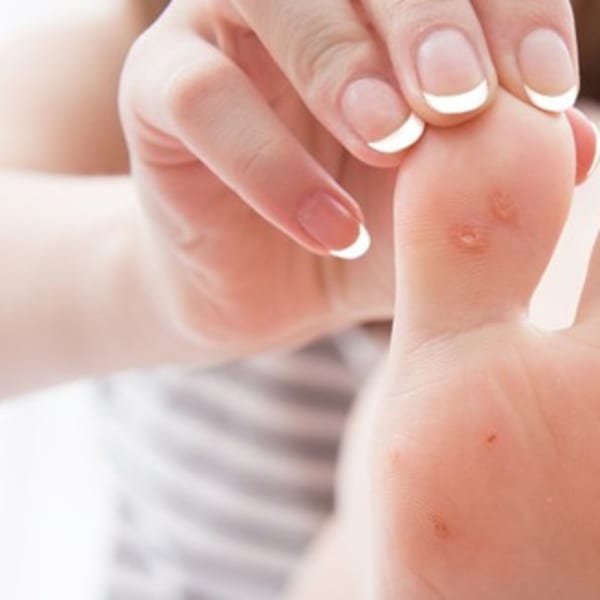
Athlete’s foot and eczema may produce the same symptoms, but their causes and treatments are very different.
by Suzette Hill
December 1, 1993
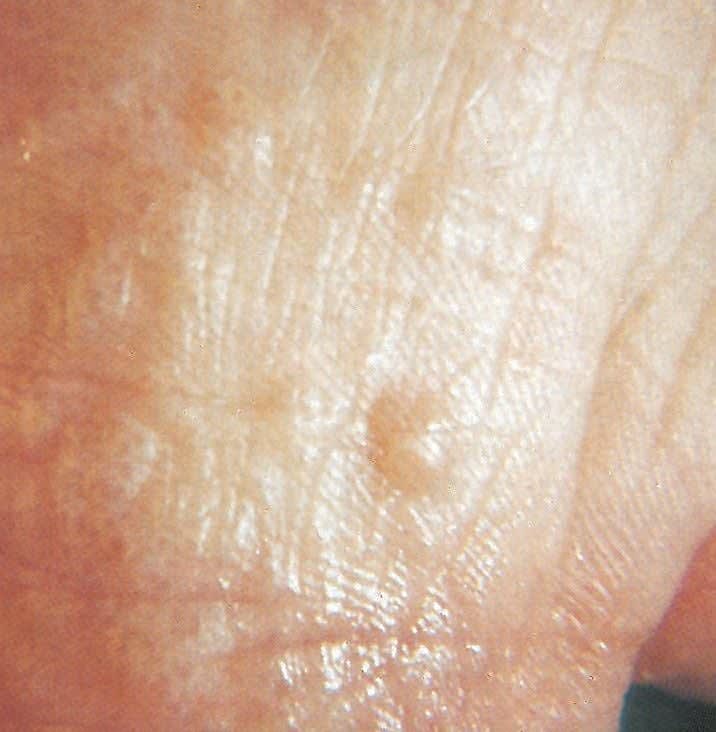
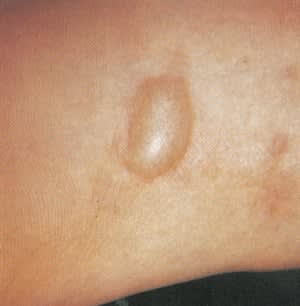
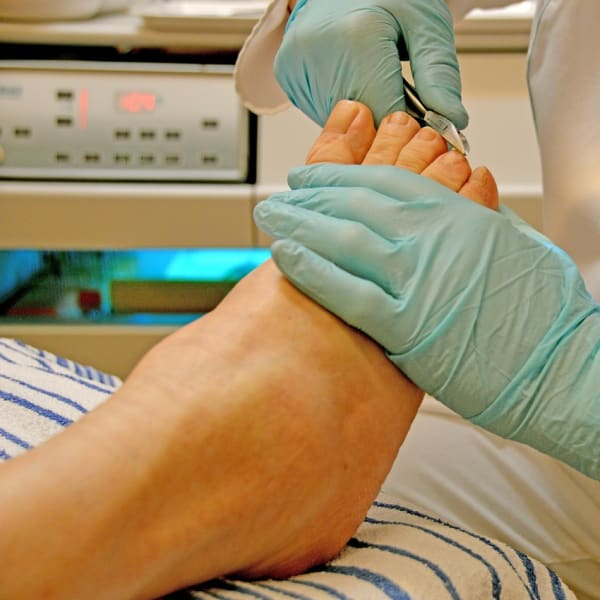
Chronic eczema (this photo) and chronic athlete's foot (other photo) can both exhibit scaly, blisterd skin with little redness or itching. Note how the two conditions appear almost identical.
5 min to read
Chronic athlete's foot
Eczema and athlete’s foot are two common skin conditions that nail technicians regularly see in the course of servicing clients. Telling the difference between athlete’s foot and eczema is difficult because both conditions can trigger identical symptoms. With either condition, the client may complain of symptoms ranging from thickened, scaly skin with mild redness to red, blistered, and cracked skin that may itch and burn. Even the location of the outbreak doesn’t provide many dues; Eczema is commonly found on the hands and feet; athletes foot most commonly affects the feet, but similar fungal infections can also be found on the hands.
How do you tell the conditions apart? According to Dr. Paul Kechijiam, a New York-based dermatologist and NAILS Magazine’s Nail Doctor, and Dr. Edward Young Jr., a dermatologist in Sherman Oaks. Calif, you don’t. Both doctors say they can’t differentiate the conditions positively without examining skin scrapings under a microscope and doing a culture on the affected area.
Ad Loading...
Two Different Causes
While athlete's foot and eczema may have identical symptoms, they have very different causes. Eczema is a noninfectious, noncontagious, inflamed skin condition that is related to allergies, irritations, and emotional stress.
Athlete’s foot, on the other hand, is an infectious, contagious, inflamed skin condition that is caused by a fungal infection of the skin. Feet are prone to fungal infections because shoes and socks create a warm, damp, and dark environment that is ideal for fungi to grow.
Both conditions can be acute (appearing suddenly, sub-acute, or chronic (persistent or ongoing). In the acute stages, the skin is often blistered, cracked, and red. The skin may ooze, and most sufferers complain of burning and itching. In the chronic forms, the skin may just remain thickened and scaly, with minimal redness and itching.
The location of the symptoms sometimes provides a few clues in determining what you’re dealing with, but both doctors say they usually must do a culture to determine for certain which condition it is. Eczema usually appears elsewhere on the body, rather than just on the feet,” says Kechijian. “However, if you are allergic to a material in your shoes, then it could appear just on the foot. A clue to athlete’s foot is thick, crumbly nails. But eczema can also affect the nails.”
Young says that affected skin between the toes, especially the fourth and fifth toes, usually indicates athlete’s foot, while cracked and red skin on top of the foot or on top of the toes indicates eczema.
Ad Loading...
Know When To Say No
Most technicians know they can’t service clients with athlete’s foot because it is contagious, but many service clients with eczema. Whether the condition can be spread to other clients, however, isn’t your only concern. According to Kechijian and Young, clients with either condition should not be serviced during outbreaks.
“You don’t want to do services on people with athlete's foot because athlete’s foot is contagious. And you don’t want to do services on clients with eczema because the skin can overreact to any mild trauma if the client has eczema,” says Young.
The skin acts as a natural protective barrier between the body and outside elements. If this barrier is broken by cracks in the skin, the individual is more susceptible to irritation and infection.
“With both athlete’s foot and eczema, the skin barrier is broken and the skin is more easily irritated. Some of the lotions and other products you use during a service will irritate the skin, even if they normally wouldn’t,” says Young.
Although either condition can recur, you can do services on clients between outbreaks. Advise clients to keep their feet cool and dry and to wear cotton socks to help keep their feet clear of either condition. For his patients who suffer from hand eczema, Kechijian recommends they wear moisturizing creams to keep the skin softened. Clients with hand eczema should also wear gloves to do housework or at any time their hands will be in contact with chemicals or other irritants.
Ad Loading...
Send Them To A Doctor
If a client has not previously been diagnosed with eczema or athlete’s foot, both Young and Kechijian recommend referring her to a dermatologist so that she gets the correct diagnosis and treatment. Otherwise says Young, she may diagnose herself and treat it in a way that cither makes the condition worse or masks its cause.
Eczema for example, is treated with topical cortisone creams: athlete’s foot is treated with topical antifungal creams. If you apply a cortisone cream to athlete’s foot, the fungal infection will worsen and spread.
Even if the client does correctly guess that she has athlete’s foot and treats it with an over the counter antifungal cream, the condition may not clear and she may end up at the dermatologist’s office anyway “There are many different antifungal medications and some clients will read belter to one than the other,” says Young.
Kechijian agrees: “Say the client uses an antifungal medicine and still the condition doesn’t clear. She goes to see the doctor and he does a scraping but can’t see fungus under the microscope because the medication killed just enough of the infection so that he can’t see it.”
While saving the time and expense of going to the doctor may have an appeal, many over the counter cortisone and antifungal treatments are not strong enough to treat eczema or athlete’s foot successfully. The skin on the palms of the hands and the soles of the feet is very thick, and it usually takes a prescription-strength preparation to penetrate the layers of skin and treat the condition.
Ad Loading...
Both Young and Kechijian advise technicians not to speculate what the condition is or what has caused it. If a client exhibits patches of thickened, scaly skin, recommend she see a physician first to determine what it is. If she already knows its eczema or athlete's foot, explain that the products you use during the service would only irritate the condition and ask her to reschedule when the outbreak has cleared.
Uncured gel polish and microscopic e-file dust contain active acrylates that penetrate the skin, triggering permanent contact dermatitis. Learn the chemistry behind these irritants and how to protect your clients and yourself.
The Good Patch is a leading wearable wellness patch brand, offering wellness and skincare patches that support everyday needs including energy, sleep, relaxation and more.
Orthopedic PT reveals three daily exercises plus ergonomic advice that can help salon professionals avoid the aches and injuries caused by standing, bending and repetitive overhead work.
From acrylic monomers to airborne bio-dust, the air inside a nail salon carries risks most professionals never see coming. Aerovex Systems reveals the source-capture and room-purification strategies that are setting a new standard for salon safety.
Working in beauty doesn’t have to hurt. Learn how Somatic Movement helps hairstylists, lash artists, and other beauty pros release tension, improve posture, and extend their careers.
As a spa or salon professional, your clients expect more than just beauty—they expect safety, hygiene, and peace of mind. Fungal infections like Athlete’s Foot and Nail Fungus are more common than you think, especially in environments where tools and footbaths are reused without proper sanitation. This blog covers how to stop these issues before they start, using proven infection prevention strategies for salons and spas.
A federal initiative aimed at studying chemical exposure in nail salons has ended due to staffing and budget changes. Here’s what the project set out to do—and what its conclusion means for salon professionals.
For many people, a pedicure is a relaxing beauty ritual. But what most don’t realize is that this simple service, if done without proper hygiene and sanitation, can cause serious infections and long-term health issues.
Onycholysis is the separation of the nail plate from the nail bed. While it may look painful, it typically isn’t—at least not at first. But without proper care, this common nail disorder can lead to infections, deformities, and long-term damage.
Mckenzie Kool, Psychologist, MC, RPsych provides us with guidance on what may or not be helpful in speaking with someone who has suffered a significant loss.
Clients come to you to feel their best—not leave with a viral souvenir. Warts and cold sores can spread fast in busy salons, but a few smart habits make all the difference. Let’s talk about what’s really lurking in your salon (and how to kick it to the curb).
As Earth Day approaches, The Green Beauty Community Foundation and the Green Spa Network invite beauty pros to step forward and embrace sustainability through the Green Pledge--a powerful initiative designed by and for beauty industry leaders.
Don’t cancel Valentine’s Day altogether, urges Jill Palmquist. Instead, think of it as a (frilly, flowery, Champagne-bubbly) wake-up call to fall deeply in love with your own life.
Life coach and Culture Ambassador of Sam Villa, Andrew Carruthers, outlines how to tell if your burnout is temporary - or if it's time to make a bigger career change.