Caused by dehydration, brittle nails are the bane of the modern woman. Put to rest the old wives’ tales of gelatin and calcium supplements while teaching clients the tips and tricks that really work.
by Staff
August 1, 2002
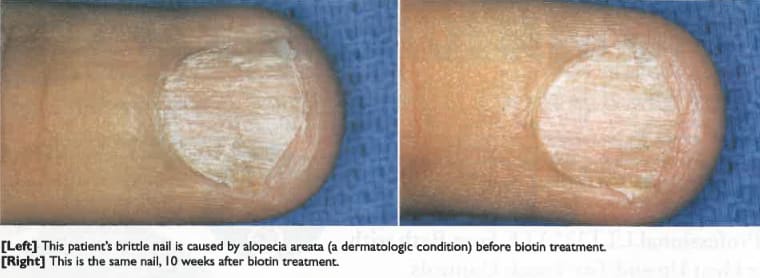
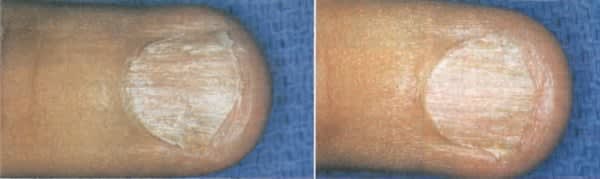
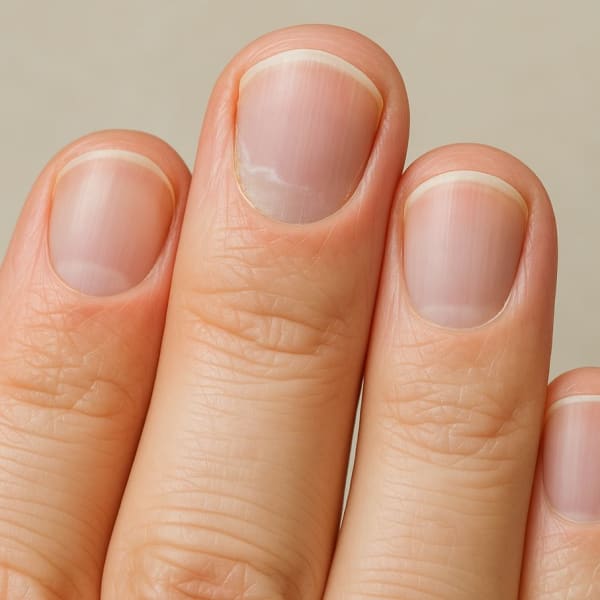
[left] This patient's brittle nail is caused by alopecia areata (a dermatologic condition) before biotin treatment. [right] Same nail 10 weeks after biotin treatment.
8 min to read
[left] This patient's brittle nail is caused by alopecia areata (a dermatologic condition) before biotin treatment. [right] Same nail 10 weeks after biotin treatment.
Brittle, splitting, peeling, and cracking nails — they’re enough to drive a woman crazy. Make that one in five women, which is how many dermatologists estimate suffer from this collection of symptoms called brittle nail syndrome (also referred to as onychoshizia by the medical community).
Brittle nails are sometimes linked to health conditions such as hypothyroidism and menopause. Some medications, including diuretics used to treat high blood pressure, also can promote brittle nails, as can deficiencies in iron and vitamins A, C, and B6. The condition also sometimes accompanies skin disorders such as eczema, lichen planus, and psoriasis.
Ad Loading...
Even with all these possible causes, it’s safe to assume your client’s brittle nails are most likely caused by external factors such as excessive handwashing or wet work. According to the American Osteopathic College of Dermatology (AOCD), internal disease or vitamin deficiencies are rarely the cause of brittle nails. “One tip is that if the fingernails split but the toenails are strong, then an external factor is the cause,” states the AOCD.
Regardless of contributing factors, explains Richard Scher, M.D., professor of dermatology and head of the section for diagnosis and treatment of nail disorders at Columbia University-Presbyterian Medical Center in New York, dehydration lies at the root of all brittle, splitting, and fragile nails. “The average amount of moisture in a normal nail plate is 18%,” Dr. Scher explains. “When the moisture dips below this level, the nails become brittle.”
Brittle nails can occur at any age, but the condition is more common in children with eczema and in older women. “Both the skin and the nails become drier with age,” says Dr. Scher. “Also, with older people there is actually as much as a 30%-40% reduction in the nail growth rate. This means that the nail material at the free edge is older, and therefore drier. Reduced or poor circulation to the fingers further accentuates the drying effect.”
It seems contradictory that wet work can dehydrate nails, but Dr. Scher explains that it’s constant wetting and drying that weakens the nail structure. “Frequent handwashing causes the nail cells to swell and contract repeatedly,” he says. “It is as if a piece of wood is bent back and forth many times — eventually it will break. The same thing happens to the nails.”
Low humidity and dry heat tends to worsen the condition, as does cold weather.
Ad Loading...
“Cold weather can wreak havoc on your client’s hands and nails,” says Dr. Scher. “Special care must be taken during the winter months to combat the associated nail problems.” Nail techs can recommend liberal use of moisturizers and gloves during cold snaps.
Call in the Reinforcements
As complex as its causes, caring for brittle nail syndrome is relatively simple. Start by urging clients to wear gloves when using cleaning agents and detergents. Next, educate them on protecting their nails from trauma and resisting the temptation to use them as tools.
The AOCD recommends combating brittle nails by soaking the nails in water for five minutes each day and then generously applying an AHA-or lanolin-based lotion. They also should reapply the lotion every time their hands get wet.
Urge clients to minimize water exposure by wearing gloves to perform household chores.
Ad Loading...
Debunk the nail-strengthening myths of gelatin and calcium. Neither do anything to strengthen the nails, regardless of whether they’re taken as supplements or applied in fortified nail treatments. “Calcium is not in nails,” explains Zoe Diana Draelos, M.D., a cosmetic dermatologist in High Point, N.C.
As for gelatin, says Dr. Scher, “People have always looked for an easy way to strengthen the natural nail plate. Nails are made of a protein ... and a deficiency of protein can show up as soft, fragile, or brittle nails. Since gelatin is a form of protein, the logic is that the protein would help to strengthen nails.” However, no proof exists that gelatin does anything to strengthen nails.
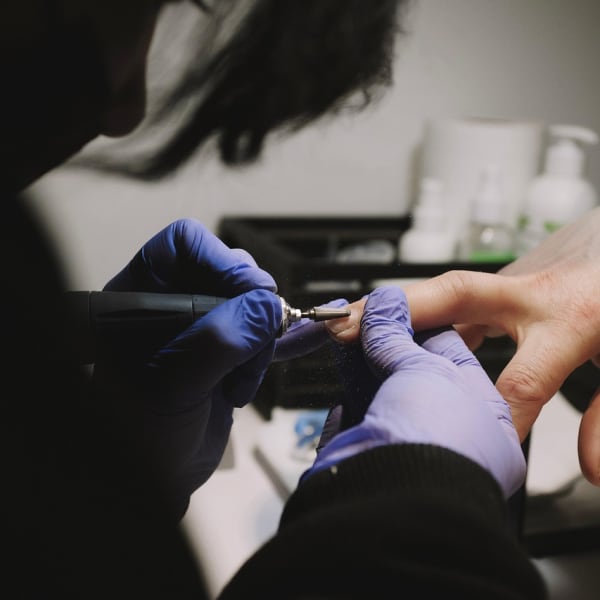
As far as what the nail tech can do, Dr. Scher cautions against excessive mechanical manipulation. Exert only the gentlest pressure on the cuticles and nail plates with implements such as cuticle pushers to avoid damaging the nail matrix. Also, avoid contact with the nail plate with all but the finest-grit files to avoid further shredding and delamination of natural nail layers. By the same token, make liberal use of buffers. The gentle friction will stimulate blood circulation in the capillary-rich nail matrix and bed.
Next, recommend nail treatments and polish as temporary reinforcements. The protection they offer is fairly minimal because water can be absorbed into the nails from the underside and any other exposed portion of the natural nail, but Dr. Scher says treatments do appear to helpminimize shredding and breaking.
Some nail techs and clients swear by formaldehyde-based nail treatments, but Dr. Draelos says they ultimately make nails even more brittle. “They’re not a good idea,” she says.
Ad Loading...
Caution clients that polish is more likely to chip and advise them to apply a fresh coat over existing layers every two to three days. Because polish removers dehydrate the nails, treatmentsand polishes should be removed no more than once a week. Dermatologists recommend acetate-based removers, which are believed to be less dehydrating than acetone-based.
Even with all of these protections, most clients with brittle nail syndrome need to keep their nails short. If clients desire longer nails, artificial enhancements present their best option.
Going for the Cure
Clients who want a miracle cure will want to learn more about biotin, one of the minor B vitamins. Biotin’s role in human health isn’t entirely understood, but studies have shown that the vitamin can thicken weak nails and reduce splitting in as little as six to eight weeks.
Biotin first was used to treat the cracked hooves of thoroughbred racehorses in the 1980s. It proved so successful that a group of Swiss researchers set out to test the theory on women.
Ad Loading...
Thirty-two women participated —10 with normal nails and 22 with brittle nails. Eight of the 22 women with brittle nails took a daily biotin supplement for at least six months, while the other 14 women were administered biotin irregularly throughout the study. The results were impressive: Researchers found that the thickness of the nails in women who took daily supplements increased as much as 25% and that they experienced less splitting. The group who took irregular supplements also enjoyed significant, though far less impressive results: Their nails thickened an average of 7% and they, too, had less splitting.
Under Dr. Scher’s direction, the nail research center at Columbia University in New York City initiated a similar study of biotin. “We were able to confirm their results in two out of three patients, a somewhat lower success rate... but nevertheless impressive,” he says.
Biotin is found in most multivitamins in minute quantities, and it’s also contained in eggs, organ meats, legumes, cauliflower, broccoli, and mushrooms. Researchers don’t understand how biotin works to repair brittle nails and cracked hooves, but Dr. Scher says it appears to be safe, with no known side effects.
Biotin is available without a prescription from health food stores and pharmacies, and Dr. Scher sees no harm in nail technicians discussing biotin with clients. However, he advises nail techs to refer clients to their family doctor for dosage recommendations.
Finally, send clients with brittle nail syndrome home with a copy of a “Caring for Brittle Nails” client handout but only after you book their next appointment in a customized “nail-strengthening regimen” personally designed by their nail care professional.
Ad Loading...
A Client’s Guide: Caring for Brittle Nail Syndrome
If you suffer from brittle nails that tend to split, peel, and crack, know that you’re not alone. According to dermatologists who specialize in nail disorders, 20% of women suffer from brittle nail syndrome.
Many factors can set up the conditions for brittle nail syndrome — including health conditions such as hypothyroidism as well as medications for high blood pressure and deficiencies in iron and some vitamins — but at their root, brittle nails are caused by dehydration of the nail plate.
The normal nail comprises as much as 18% water (in contrast to the body’s 70%). Frequent handwashing or exposure to detergents and other cleaning agents can dehydrate and weaken the nail structure.
“Frequent handwashing causes the nail cells to swell and contract repeatedly” explains Richard Scher; M.D., professor of dermatology and head of the section for diagnosis and treatment of nail disorders at Columbia University-Presbyterian Medical Center in New York “It is as if a piece of wood is bent back and forth many times — eventually it will break. The same thing happens to the nails.”
Ad Loading...
Low humidity and dry heat along with cold weather also can make nails brittle. While there’s no complete cure for brittle nails, there are many steps you can take to protect them and promote healthy growth.
Moisturize your cuticles and nails with an AHA-or lanolin-based lotion after every handwashing. Before bed, soak your nails in warm water for five minutes and liberally apply moisturizer Consider cotton-lined spa gloves for sleeping.
Wear gloves for dishwashing and other “wet work.” Cotton-lined rubber gloves work best. Give your nails a bonus by applying moisturizer before donning your gloves.
Cover up with nail treatments or polish. Avoid formaldehyde-based products because they will further dry out the nail, but other treatments can provide some protection to nails.
Go easy on the polish remover. Choose acetate polish removers over acetone-based ones because they are less drying and limit their use to no more than once a week.
Ad Loading...
Skip the gelatin and calcium supplements in favor of biotin. Researchers say biotin, a minor B vitamin, can strengthen nails by as much as 25% and reduce splitting.
Uncured gel polish and microscopic e-file dust contain active acrylates that penetrate the skin, triggering permanent contact dermatitis. Learn the chemistry behind these irritants and how to protect your clients and yourself.
The Good Patch is a leading wearable wellness patch brand, offering wellness and skincare patches that support everyday needs including energy, sleep, relaxation and more.
Orthopedic PT reveals three daily exercises plus ergonomic advice that can help salon professionals avoid the aches and injuries caused by standing, bending and repetitive overhead work.
From acrylic monomers to airborne bio-dust, the air inside a nail salon carries risks most professionals never see coming. Aerovex Systems reveals the source-capture and room-purification strategies that are setting a new standard for salon safety.
Working in beauty doesn’t have to hurt. Learn how Somatic Movement helps hairstylists, lash artists, and other beauty pros release tension, improve posture, and extend their careers.
As a spa or salon professional, your clients expect more than just beauty—they expect safety, hygiene, and peace of mind. Fungal infections like Athlete’s Foot and Nail Fungus are more common than you think, especially in environments where tools and footbaths are reused without proper sanitation. This blog covers how to stop these issues before they start, using proven infection prevention strategies for salons and spas.
A federal initiative aimed at studying chemical exposure in nail salons has ended due to staffing and budget changes. Here’s what the project set out to do—and what its conclusion means for salon professionals.
For many people, a pedicure is a relaxing beauty ritual. But what most don’t realize is that this simple service, if done without proper hygiene and sanitation, can cause serious infections and long-term health issues.
Onycholysis is the separation of the nail plate from the nail bed. While it may look painful, it typically isn’t—at least not at first. But without proper care, this common nail disorder can lead to infections, deformities, and long-term damage.
Mckenzie Kool, Psychologist, MC, RPsych provides us with guidance on what may or not be helpful in speaking with someone who has suffered a significant loss.
Clients come to you to feel their best—not leave with a viral souvenir. Warts and cold sores can spread fast in busy salons, but a few smart habits make all the difference. Let’s talk about what’s really lurking in your salon (and how to kick it to the curb).
As Earth Day approaches, The Green Beauty Community Foundation and the Green Spa Network invite beauty pros to step forward and embrace sustainability through the Green Pledge--a powerful initiative designed by and for beauty industry leaders.
Don’t cancel Valentine’s Day altogether, urges Jill Palmquist. Instead, think of it as a (frilly, flowery, Champagne-bubbly) wake-up call to fall deeply in love with your own life.
Life coach and Culture Ambassador of Sam Villa, Andrew Carruthers, outlines how to tell if your burnout is temporary - or if it's time to make a bigger career change.