Our panel of experts tackles herpes, the effect of medications on nails, and acrylic lifing.
Question: My client has a fungal infection under on of her big toenails. The nail grows thick and has a distorted shape. She’s trying various antifungal treatments, but what can I do to make her toenails look better while they are healing?
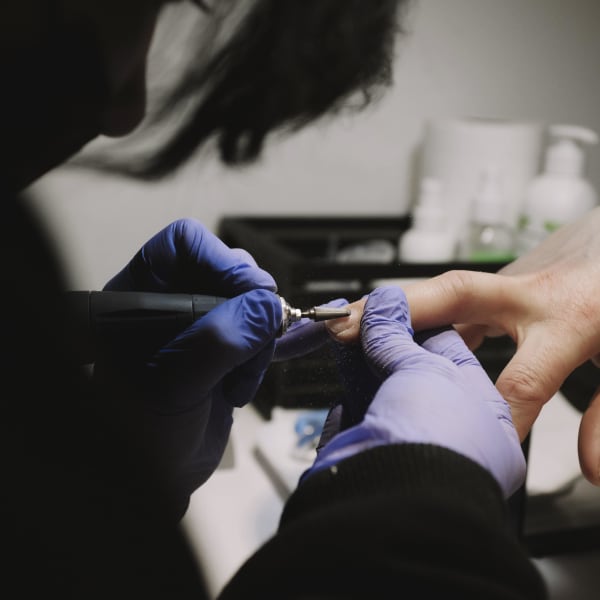
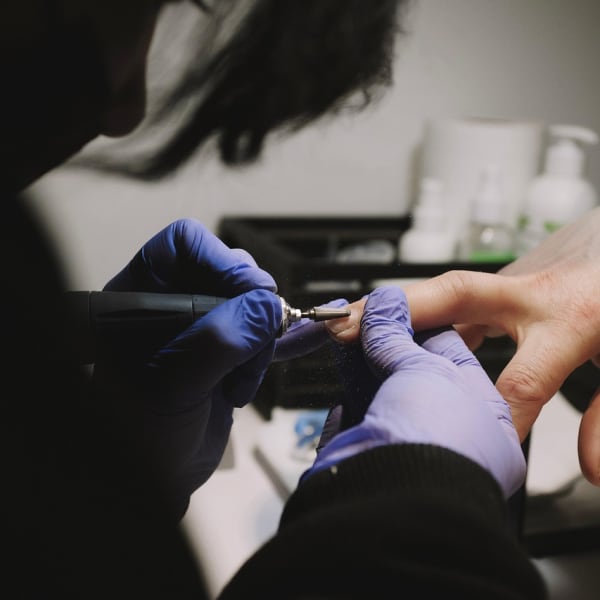
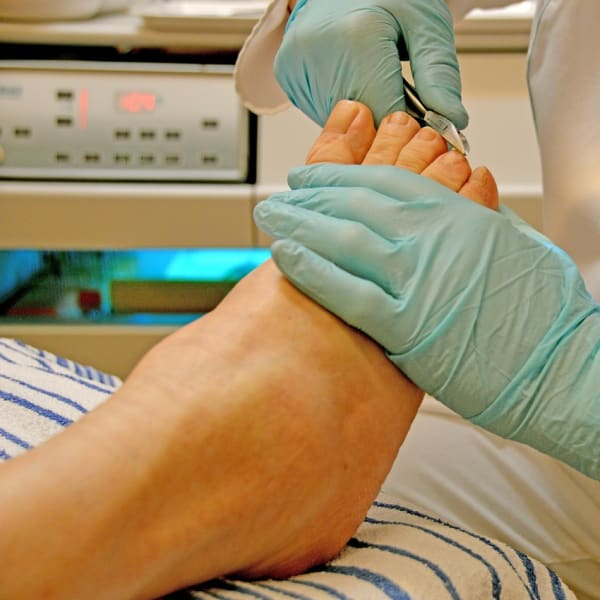
Dr. Mix: You can still do your client a great service in the meantime. Fungal toenails can get as thick as ¼ inch, and they can be very uncomfortable. You can thin the nail plate for the client, for starters. This can make a big difference in your client’s comfort level, even if you take down only a little bit of the thickness. I use an electric file to do this work, and it is very safe as long as you don’t touch any live tissue, especially the eponychium (near the cuticle). I use a pear-shaped, carbide bit that is as coarse as I can find. A coarse carbide bit will take down the thickness of the nail quickly without creating a lot of heat.
When filing down a thickened nail affected with onychomycosis, don’t apply a lot of pressure; let the drill bit do the work. You’ll have to use your judgment on how much thickness to take down. When you start filing, you’ll find there is an outer layer of the fungal nail that is hard, like a shell. Once you file through that, however, the nail plate material is soft and can be crumbly. Use lighter pressure when you get to this softer material, but you can continue to take it down as long as you aren’t filing into the nail bed itself. If the infection is really bad or you don’t feel comfortable taking down the nail, send your client to a podiatrist who can do this work for you. When the nail is taken down, you can continue her pedicure services as usual.
Q: One of my clients is a professional pianist. Her nails peel constantly and her thumbnails break at the sides. I keep them short, but what can I do to stop them from peeling? What can I do that will help without interfering with her piano playing?
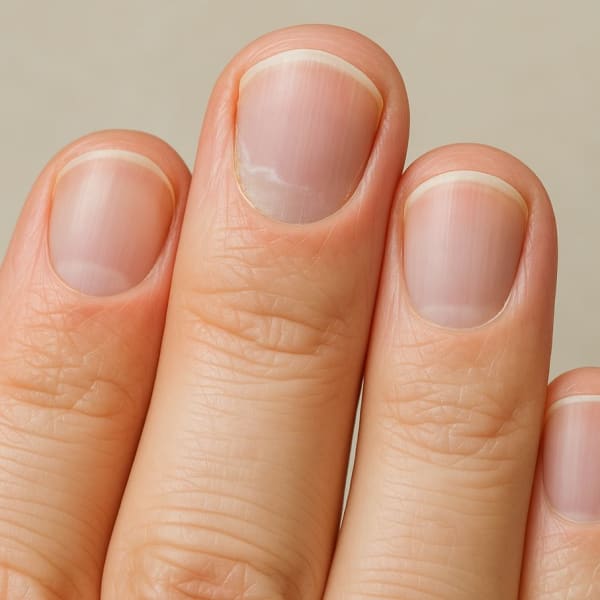
Dr. Rich: The peeling of your client’s nails is called onychoschizia. It occurs for a variety of reasons, the most common of which is dehydration of the nails. Keeping the nail moisturized will probably help somewhat, but it is difficult problem to cure. It sounds like your client has healthy cuticles that are well-attached to the nail plate, so cutting the cuticle is unwise.
Q: I have a problem with acrylics crystallization on just one client. Her hands are very cold and her cuticles are very dry. This doesn’t happen with my other clients, just her. Is the problem with my client or me?
Sunil Sirdesai: It sounds like the problem is probably with just the one client. You can warm your client’s hands by placing a heating pad under your table towel during the acrylic service to warm them.
Lower temperatures slow the rate at which acrylic cures. For every 10 degrees the temperature drops, the cure rate is cut in half. In cold weather, the cure rate is extremely slow and the growing polymeric chain has enough time to arrange itself into a regular pattern (i.e., crystallization). At higher temperatures, this chain grows faster and does not have time to arrange in a neat, regular pattern. All acrylic products polymerize to form amorphous (unordered) patterns. This is important to the flexibility and strength of the artificial nail. Using a drier ball can help prevent crystallization. Remove the entire nail and start again, because if you thin the crystallized acrylic and apply fresh product over it, the nail will still be brittle.
Q: What causes nails to grow into ski-jump nails? Is there any way I can make them stronger, especially at the tips?
Sirdesai: Ski-jump nails are usually genetic. They can also be caused, however, by long-term nail biting. Many times, ski-jump nails are simply weakened nails, particularly at the free edge. You can use a nail strengthener on your client’s nails and send her home with a bottle. If she’s a nail biter, you can help her quit the habit by applying artificial nails; tips with acrylic overlays work best.
Q: What is “nail herpes”? A salon owner told me that there have been seven cases of nail herpes diagnosed by dermatologists in a city near mine. The doctor said it is the same as genital herpes but occurs under the free edge of the nail, causing the soft tissue to crumble as it detaches from the nail plate.
Dr. Rich: It is possible to develop herpes simplex around the nail. This virus that affects nails is the same virus that causes cold sores and genital herpes. To contract herpes simplex, one must come into contact with an active herpes lesion. Herpes shows up as painful blisters on the skin. It may recur and it always come back at the same location on the finger. There are several excellent medications that can treat an outbreak of herpes and can even be used as a preventative for people who have frequent outbreaks.
Dr.MacDougall: Herpetic whitlow is commonly seen in medical and dental personnel, but anyone can get it. Aside from its location around the fingertip, there is nothing unusual about its behavior that is different than oral or genital herpes. The inflammation that it causes can be enough to trigger the crumbling you observed. The initial, or primary, infection is characterized by pain, redness and swelling at the site of the infection, as well as occasional redness and swelling up the arm or in the lymph nodes in the armpit.
These individuals’ sores are highly contagious from the time of the first onset of symptoms until the last blister dries and forms a crust. Scrupulous disinfection, before, during, and after working on this client is essential to prevent spreading the virus further.
Q: Several readers have sent letters about the effects on artificial nails of female hormones and related conditions. I know many nail technicians find that lifting is more prevalent in women just before or during menstruation, and sometimes during pregnancy. Do the presence of hormones or prenatal vitamins in the body have any effect on the oiliness of her nail plates or other such reasons that might cause lifting?
Sirdesai: Many nail technicians report this phenomenon. Nails, just like hair, are affected by medications and hormone fluctuations. Heart medication, for example, is a diuretic. Diuretics cause the body to dehydrate, which can temporarily distort the original shape of the fingers and the nail beds. The artificial nail is unable to distort along with the nail bed, and stress points start appearing between the nail plate and the artificial nail. As these stress points start appearing, eventually the mechanical energy will force the acrylic and the nail plate to separate. You may wish to inform pregnant and menopausal clients that abnormal lifting of acrylic is a possibility.