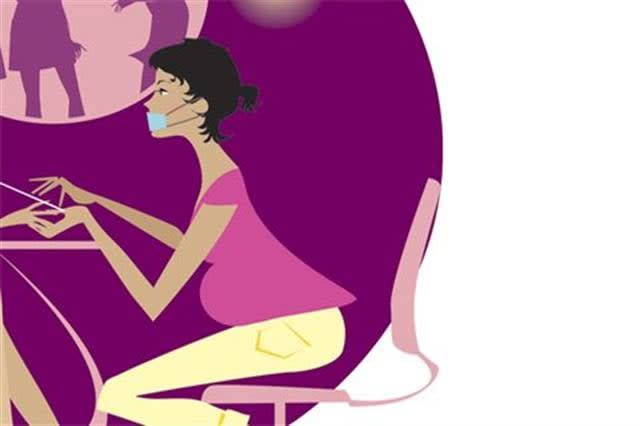
The Environmental Protection Agency (EPA) lists products such as acetone, ethyl meth-acrylate, and toluene as ingredients that have the potential to cause adverse health effects due to overexposure. These ingredients, and many others on the list, can find their way into salons through products we use multiple times a day: nail polish, glue, gel, acrylic, and polish remover. Most techs take steps to ensure their health is not compromised, but the issue of safety becomes more pressing when a tech is pregnant.
Pregnancy changes a person’s perspective, and often a time of celebration is followed by evaluation. We evaluate what we eat and drink, if we’ll continue to smoke or be around people who do, and what we expose our bodies to, such as coloring our hair, tanning, and even medication. It’s natural that we would also take a look at the salon environment with fresh eyes. We may think, “If drinking wine and inhaling second-hand smoke could be bad for me and my baby, doesn’t it follow that inhaling chemical vapors for eight hours a day may pose a risk as well?”
Ad Loading...
It was these and other concerns that prompted the Division of Occupational Medicine at the University of Connecticut Health Center, along with the Connecticut Pregnancy Exposure Information Service, to undertake a study to evaluate nail salons. In the interest of reducing stress in any pregnant readers, I’ll cut to the chase: the study’s summary finds the salon environment to be safe for pregnant women, including for techs who are exposed to the environment for a full work day. However, there are notable concerns for the pregnant tech, and some practical precautions should be taken.
“When we look at environmental exposure, we need to think in terms of precaution,” says Mark Roth, a teratogen information specialist with the Pregnancy Risk Network in Binghamton, N.Y. (A “teratogen” is an agent, such as drugs, medications, or other chemicals, that is able to disrupt or cause birth defects to an embryo or fetus.) It’s difficult to get specific data for salons, says Roth, because each one will have varying amounts of compounds in the air. Therefore, we need to stick with general guidelines in how to reduce risk.
Roth reminds us that we can come into contact with environmental agents in one of three ways: through the skin, through inhalation, or through ingestion. Techs can focus on these three areas of contact to reduce chemical exposure.
Skin Contact
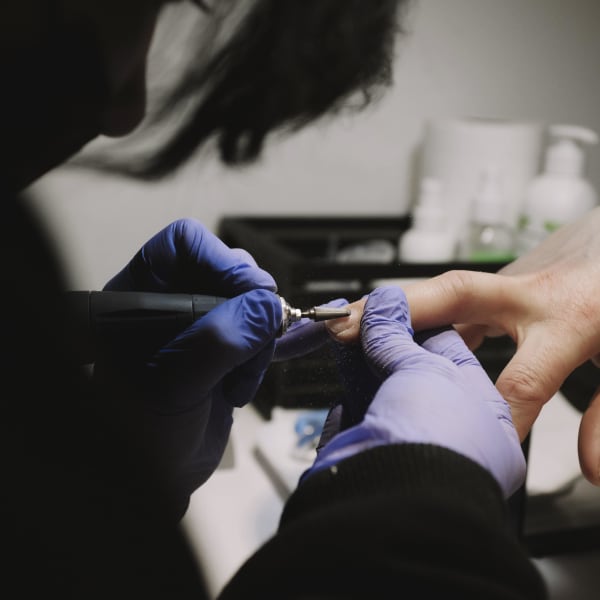
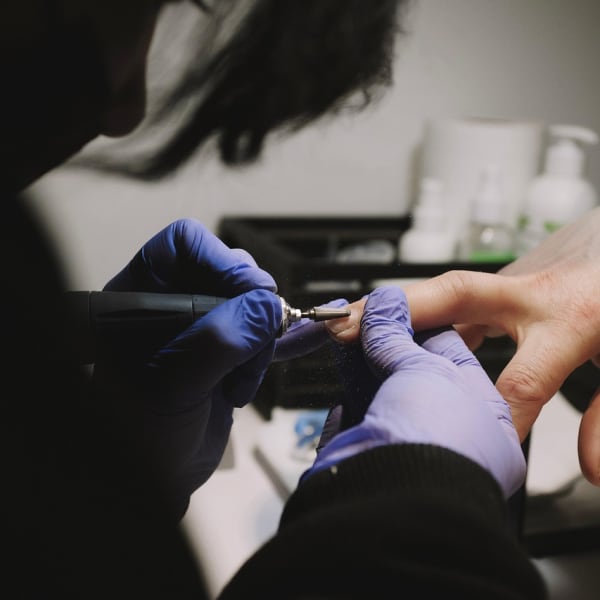
It’s important to prevent salon chemicals from coming into contact with our skin. Techs often take exceptional care in keeping product off their clients’ hands, but may become lax in minimizing contact with their own skin. Precautions can include simple steps such as washing hands before and after every service, to advanced safety precautions, such as wearing gloves whenever you apply or file product. When applying acrylic, remember that the product dries enough to file it in only a few minutes, but it could take up to 24 hours to fully cure. Because of this, the shavings, dust, and particles that are created can cause a reaction to the skin hours after it’s “dried.” Protect your skin by wearing clothes that cover your arms and lap fully so flying dust and particles don’t land and sit on bare skin.
Evaluate how you work to reduce coming into contact with product. For example, some techs place a disposable paper towel on top of a cotton cloth, replacing the paper towel between each customer. While this may be comfortable for the client, it keeps a liquid-soaked towel on the table all day that could come into contact with your skin. Instead, use only the disposable towel, throwing it away and cleaning the table after every client. Another precaution to take, suggested in a 21-page booklet released by the EPA titled Protecting the Health of Nail Salon Workers, is to transfer product to small, covered containers instead of working from larger containers, so that less vaporizes into the air when it’s open.
Ad Loading...
Finally, read your Material Safety Data Sheets (MSDS) and ingredient lists. And, when possible, switch to products that are free of potentially hazardous ingredients. Some easy ones to avoid are dibutyl phthalate (DBP) and toluene, as so many manufacturers have removed these ingredients from their polishes. This isn’t possible with all salon products, but when it is, make the switch, and let the clients know you’re making choices that are better for your health — and for theirs.
Ingestion
Nobody thinks you’re going to snack on nail shavings. But you might unintentionally consume dust, particles, or liquid if you eat or drink at your desk. In some states, it’s illegal to eat or have uncovered food at the desk, but hunger can make you do crazy things. When a client leaves to wash her hands, techs might snack on chips, take a quick bite of a sandwich, or drink from an open cup. Product can easily be transferred from hands to food, causing you to unknowingly ingest product. Avoid any chance of this by scheduling breaks where you can get away from the desk to eat.
Inhalation
The easiest ways for techs to become overexposed to the chemicals in the salon is through inhalation. Masks can provide excellent protection from inhaling dust and particles, but they do nothing to protect from vapors. Even N95-rated masks protect only from dust, often providing a false sense of protection for the user.
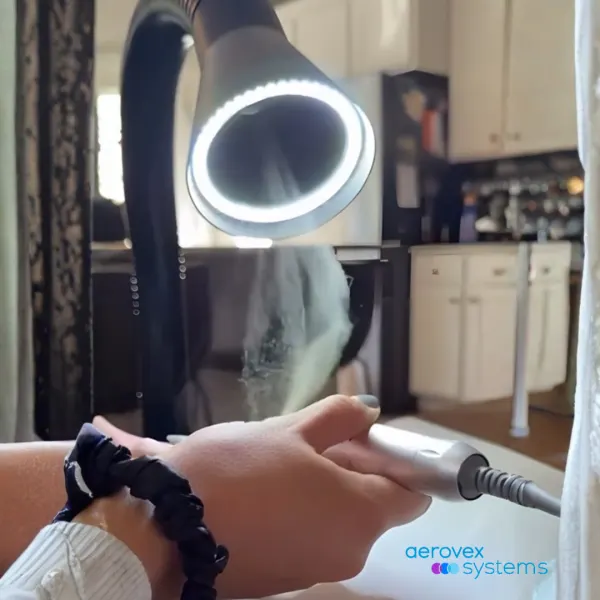
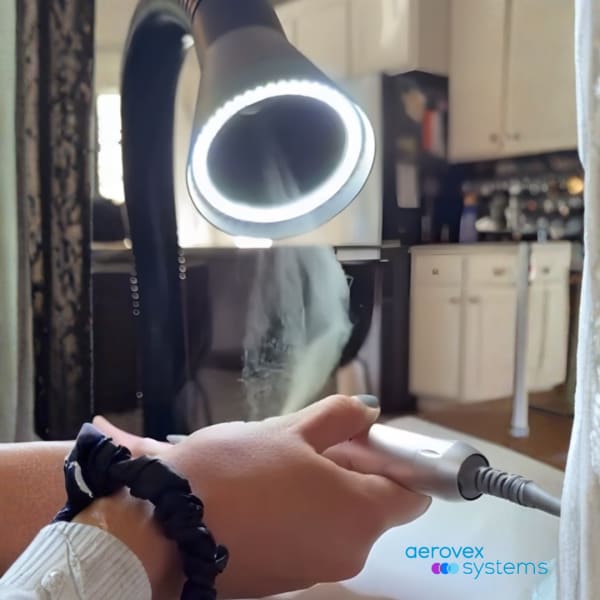
To protect against inhaling vapors, you must move the vapors away from the desk and out of the salon. Doug Schoon, chief scientific advisor for CND, has a saying that should be the precautionary mantra of every tech: Circulation is not ventilation. That means, you don’t want fans moving the air around, you want vents capturing the vapors and redirecting them out of the salon. Vents should be as close to the work site as possible, even built into a table, and then vented to the outside.
Other ways to reduce the vapors in the air include keeping a tight lid on waste containers and emptying the containers a couple of times a day. Cover all product after the application step is complete and each night before you go home. Finally, allow fresh air into the salon whenever possible.
Ad Loading...
Techs should know and follow these practical precautions whether they are pregnant or not. However, it’s especially important during pregnancy for a couple of reasons. First, the National Institute for Occupational Safety and Health (NIOSH) released a report that states “certain workplace chemicals have had reproductive effects in animals.” The list includes “developmental disorders, spontaneous abortion, low birth weight, and various other disorders.” Their study didn’t test chemical exposure on humans, but the results of the study are a sober reminder that what is in the air can find its way into our bodies.
“The chemicals used in a nail salon are not likely to cause a problem to your pregnancy at the low air levels that have been measured in most nail salons,” states the study provided by the University of Connecticut Health Center. “However, if you do feel ill or dizzy or ‘drunk’ while working in your salon, you should reduce your exposure to the chemicals you use — this is a warning sign that solvent levels in the air might be high.”
That brings us to a second reason techs should be especially cautious while pregnant: Many salon chemicals are allergens, that is, they can cause allergies to flare. When the level of allergens in the air is high, or when those allergens come into contact with the body, the body could have an allergic reaction. Along with the symptoms listed above, the allergens in the air could cause headaches or irritated skin; they may even cause a tech to experience a flare-up of asthma. A non-pregnant woman would be able to take medicine to combat and control these issues, while a pregnant woman may be restricted to which medications she can use.
No study has been released that suggests the chemical level in a salon atmosphere poses a threat to a pregnant woman or her baby, even if that woman is working in the salon for her full workday. But be proactive. Schedule breaks during the day and get outside for some fresh air. Listen to your body. If you notice you react differently to salon products now that you’re pregnant, discuss the changes with your doctor. Download the Fact Sheet for Doctors (see sidebar) and bring it with you to your next appointment. Together you can combine your professional knowledge and your doctor’s medical background to create a plan that gives you the confidence that you’re working in an environment that is safe for you and your baby.
More Information and Resources
Ad Loading...
> To read the results of the report from the Division of Occupational Medicine at the University of Connecticut Health Center, go to http://www.mothertobaby.org/other-education-materials-and-links-s13109. You can find a fact sheet for the nail tech and one to give to the doctor.
Uncured gel polish and microscopic e-file dust contain active acrylates that penetrate the skin, triggering permanent contact dermatitis. Learn the chemistry behind these irritants and how to protect your clients and yourself.
The Good Patch is a leading wearable wellness patch brand, offering wellness and skincare patches that support everyday needs including energy, sleep, relaxation and more.
Orthopedic PT reveals three daily exercises plus ergonomic advice that can help salon professionals avoid the aches and injuries caused by standing, bending and repetitive overhead work.
From acrylic monomers to airborne bio-dust, the air inside a nail salon carries risks most professionals never see coming. Aerovex Systems reveals the source-capture and room-purification strategies that are setting a new standard for salon safety.
Working in beauty doesn’t have to hurt. Learn how Somatic Movement helps hairstylists, lash artists, and other beauty pros release tension, improve posture, and extend their careers.
As a spa or salon professional, your clients expect more than just beauty—they expect safety, hygiene, and peace of mind. Fungal infections like Athlete’s Foot and Nail Fungus are more common than you think, especially in environments where tools and footbaths are reused without proper sanitation. This blog covers how to stop these issues before they start, using proven infection prevention strategies for salons and spas.
A federal initiative aimed at studying chemical exposure in nail salons has ended due to staffing and budget changes. Here’s what the project set out to do—and what its conclusion means for salon professionals.
For many people, a pedicure is a relaxing beauty ritual. But what most don’t realize is that this simple service, if done without proper hygiene and sanitation, can cause serious infections and long-term health issues.
Onycholysis is the separation of the nail plate from the nail bed. While it may look painful, it typically isn’t—at least not at first. But without proper care, this common nail disorder can lead to infections, deformities, and long-term damage.
Mckenzie Kool, Psychologist, MC, RPsych provides us with guidance on what may or not be helpful in speaking with someone who has suffered a significant loss.
Clients come to you to feel their best—not leave with a viral souvenir. Warts and cold sores can spread fast in busy salons, but a few smart habits make all the difference. Let’s talk about what’s really lurking in your salon (and how to kick it to the curb).
As Earth Day approaches, The Green Beauty Community Foundation and the Green Spa Network invite beauty pros to step forward and embrace sustainability through the Green Pledge--a powerful initiative designed by and for beauty industry leaders.
Don’t cancel Valentine’s Day altogether, urges Jill Palmquist. Instead, think of it as a (frilly, flowery, Champagne-bubbly) wake-up call to fall deeply in love with your own life.
Life coach and Culture Ambassador of Sam Villa, Andrew Carruthers, outlines how to tell if your burnout is temporary - or if it's time to make a bigger career change.