Seemingly a rite of passage for anyone over 40, presbyopia (near-sightedness) can be a game-changer for nail techs. Learn simple ways to adjust to the inevitable so you’re not side-lined at work.
by Staff
December 2, 2013
3 min to read
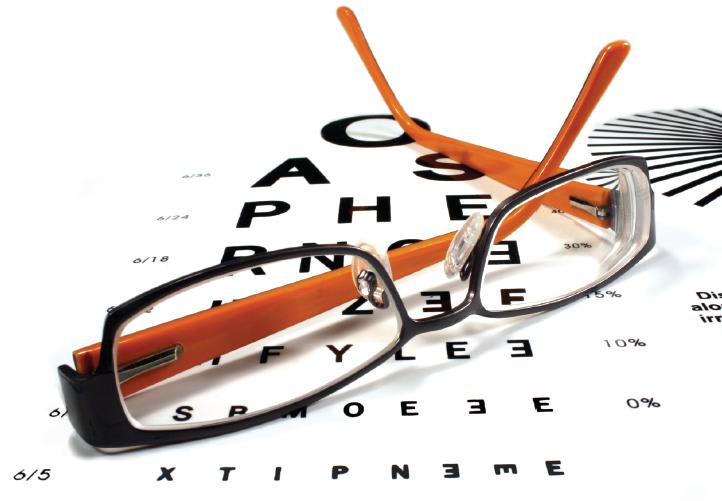
As we age, our bodies seem to betray us: aches and pains, unfamiliar weight distribution, sagging and wrinkles. Our eyes are not exempt from the aging process. In fact, a condition called “presbyopia” is referred to as “aging eyes.” This condition causes objects viewed up close, such as your clients’ nails, to become blurred.
Presbyopia is different from hyperopia, or far-sightedness, which is the ability to view distant objects clearly. Hyperopia also blurs close objects, but it’s due to an imperfection in the eyeball or the lens rather than age.
Ad Loading...
SYMPTOMS
Sufferers of presbyopia are likely to be confused at first. Tasks that seemed natural (peering at a blemish in the mirror, trying to remove a splinter, clipping cuticles, or shaping nails) periodically seem troublesome. You can’t quite focus and, at first, you wonder if you’re tired or your contacts are dirty. As it continues, you realize this is what you’ve been warned of; your eyesight isn’t what it used to be. Symptoms will progress and may include headaches and tired eyes. It’s likely you will find yourself resting or rubbing your eyes and moving objects (or your head) further away to compensate for the blurred vision.
CAUSES
Nearly everyone, given time, will develop presbyopia. Even those with hyperopia and myopia (near sightedness) will notice a change in their eyesight as they age. Their original condition will combine symptoms with presbyopia, making it necessary to adjust their prescription to correct the additional symptoms.
Similar to a camera lens, an eye lens expands and contracts to focus. The muscles that surround the eye move the lens in order to accomplish this. As we age, the muscles lose their elasticity and the lens loses its flexibility. The result is an inability to focus so vision is blurred.
Ad Loading...
AT-HOME PREVENTION/MANAGEMENT
It’s time to find a set of readers. You can choose easily accessible and inexpensive ones from any drugstore, or you can get a prescription from your eye doctor. For nail techs, choose the weakest correction that allows you to see your clients’ nails clearly. You may need a different set for reading, since you hold a book at a different distance than a client’s hand. As the condition worsens, change the corrective prescription.
MEDICAL INTERVENTION
Rather than purchase readers over the counter, you could consult an eye doctor for the prescription. If you already wear contact lenses or glasses, the doctor can prescribe lenses that function as multi-focal or bi-focal correction. That means the top of the lens (either the contact lens or the eyeglass lens) will correct distant vision while the lower section will correct blurriness for objects up close. Another option is to be outfitted with one lens that corrects presbyopia and another to correct a secondary condition of myopia or hyperopia. The body learns which eye to use to focus for each task.
Surgery is also an option, though success varies. One surgery, called keratoplasty, shrinks the corneal tissue with radio-frequency, improving nearsightedness. However, the benefits of this surgery are only temporary. A second option, LASIK, can correct one lens to see objects up close, and the other for objects in the distance. Doctors have had recent breakthroughs in understanding presbyopia and have developed additional options, including corneal inlays, but are waiting for FDA approval for these new methods.
Ad Loading...
This article is not intended to replace the advice of a doctor.
Uncured gel polish and microscopic e-file dust contain active acrylates that penetrate the skin, triggering permanent contact dermatitis. Learn the chemistry behind these irritants and how to protect your clients and yourself.
The Good Patch is a leading wearable wellness patch brand, offering wellness and skincare patches that support everyday needs including energy, sleep, relaxation and more.
Orthopedic PT reveals three daily exercises plus ergonomic advice that can help salon professionals avoid the aches and injuries caused by standing, bending and repetitive overhead work.
From acrylic monomers to airborne bio-dust, the air inside a nail salon carries risks most professionals never see coming. Aerovex Systems reveals the source-capture and room-purification strategies that are setting a new standard for salon safety.
Working in beauty doesn’t have to hurt. Learn how Somatic Movement helps hairstylists, lash artists, and other beauty pros release tension, improve posture, and extend their careers.
As a spa or salon professional, your clients expect more than just beauty—they expect safety, hygiene, and peace of mind. Fungal infections like Athlete’s Foot and Nail Fungus are more common than you think, especially in environments where tools and footbaths are reused without proper sanitation. This blog covers how to stop these issues before they start, using proven infection prevention strategies for salons and spas.
A federal initiative aimed at studying chemical exposure in nail salons has ended due to staffing and budget changes. Here’s what the project set out to do—and what its conclusion means for salon professionals.
For many people, a pedicure is a relaxing beauty ritual. But what most don’t realize is that this simple service, if done without proper hygiene and sanitation, can cause serious infections and long-term health issues.
Onycholysis is the separation of the nail plate from the nail bed. While it may look painful, it typically isn’t—at least not at first. But without proper care, this common nail disorder can lead to infections, deformities, and long-term damage.
Mckenzie Kool, Psychologist, MC, RPsych provides us with guidance on what may or not be helpful in speaking with someone who has suffered a significant loss.
Clients come to you to feel their best—not leave with a viral souvenir. Warts and cold sores can spread fast in busy salons, but a few smart habits make all the difference. Let’s talk about what’s really lurking in your salon (and how to kick it to the curb).
As Earth Day approaches, The Green Beauty Community Foundation and the Green Spa Network invite beauty pros to step forward and embrace sustainability through the Green Pledge--a powerful initiative designed by and for beauty industry leaders.
Don’t cancel Valentine’s Day altogether, urges Jill Palmquist. Instead, think of it as a (frilly, flowery, Champagne-bubbly) wake-up call to fall deeply in love with your own life.
Life coach and Culture Ambassador of Sam Villa, Andrew Carruthers, outlines how to tell if your burnout is temporary - or if it's time to make a bigger career change.