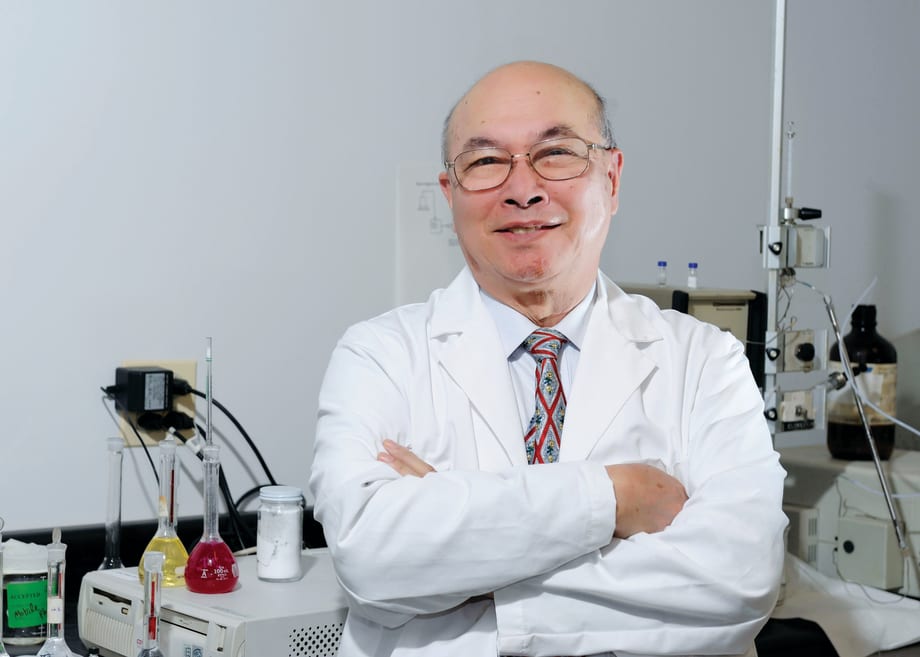
In an in-depth interview with NAILS, pharmaceutical scientist Dr. Win L. Chiou discusses his nearly-50-year-long quest to beat toenail fungus and why he thinks he’s finally done it.
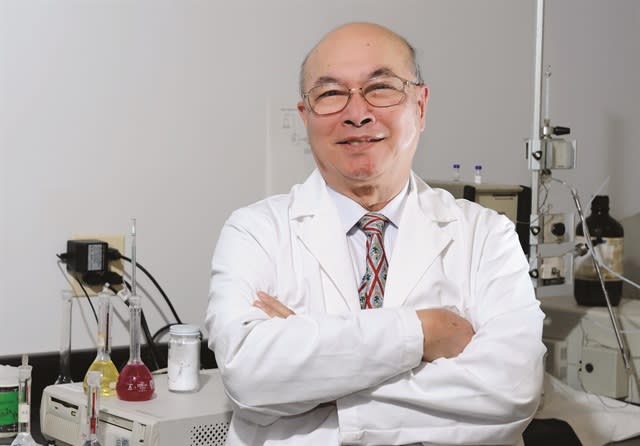
The creator of a new antifungal treatment called Dr. Win’s Fungal Nail Therapy, Dr. Win L. Chiou has some pretty impressive credentials. A former FDA advisor, professor, and director of graduate studies of pharmacy at the University of Illinois at Chicago, Dr. Chiou is currently the president of Winlind Skincare. Even before earning his Ph.D. in pharmaceutical chemistry from the University of California San Francisco in 1969, he began his pursuit of an effective antifungal treatment.
We wanted to understand why Dr. Chiou has devoted so much of his professional life to finding a cure for this surprisingly tricky condition. We began by asking him for some background on the prevalence of nail fungus.
Ad Loading...
Do you know what percentage of the population deals with nail fungus at some point in their lives?
Chiou: I would guess about half of the population deals with nail fungus — or onychomycosis — at some point, but based on what’s been reported or cited in the literature, fungal nail infection occurs in about 10% to 20% of the general population. Primarily, older people are more susceptible to nail fungus. However younger people, especially those with a temporarily weakened immune system, can be just as susceptible. The recurrence rate ranges from 10% to 50%, depending on what studies you look at.
Your research on antifungal treatments dates back about 50 years to your days as a graduate student. What is it about nail fungus that you find so intriguing?
In 1968, Dr. Chiou was a graduate student researching the absorption of griseofulvin products.
Chiou: I was intrigued by nail fungus because historically it was so difficult to treat, especially in light of the fact that most topical bacterial infections can be treated effectively with drugs. Topical nail fungus treatments are, by and large, poorly effective, even after months of daily application. For the two recently FDA-approved drugs, Kerydin and Jublia, their mean cure rates after about one year of daily use were reported to be less than 10% and 20%, respectively. For the most commonly prescribed antifungal oral antibiotic, terbinafine, more commonly known as Lamisil, its mean cure rate is about 70% after one year of daily administration. However, it can cause hepatotoxicity, or liver injury. A major disadvantage of all three drugs is that they cannot be taken during pregnancy.
To date, medical doctors throughout the world have been frustrated by this problem, so as a scientist, it has been both intellectually challenging, and personally rewarding, knowing that the medical community is looking for a fast-acting, effective solution to nail fungus with no or few side effects. It’s true that I’ve been at this for a long time — since my graduate school days, when I invented an antifungal antibiotic called Gris-PEG.
Ad Loading...
Can you tell us a little more about Gris-PEG and its development?
Chiou: Gris-PEG is a 40-year-old antifungal antibiotic containing the active ingredient griseofulvin, which was discovered in the culture broth of certain species of the mold Penicillium. The medication works by stopping the growth of fungi. I developed a technique to increase absorption of griseofulvin when taken orally. This approach is still the most widely used one to increase drug absorption.
I used myself as a guinea pig to test my formulation, and even prepared an intravenous product for injection into my body! Today this would never be done, but there’s a longstanding tradition of medical self-experimentation, with some of mankind’s biggest scientific breakthroughs occurring through this process.
It seems like progress in developing drugs to treat nail fungus has been very slow. Why is it so hard to treat?
Chiou: Well, for the last five decades, nobody has created a drug that can do two things at once: quickly penetrate nails and rapidly kill the fungus growing inside the nail and on the skin. This is true for both topical and oral medications. If you look at most of the antifungal drugs on the market today, they are fungistatic, meaning they can only inhibit the growth of fungus in nails and skin. They are not fungicidal, meaning they cannot quickly and effectively kill fungus. Thus, their therapeutic action is very slow. Another reason for the slow action is that these drugs have a difficult time penetrating the nails. The drugs often bind to keratin, the key composition of nails, which markedly reduces the drug efficacy for nail infection treatments.
Ad Loading...
So why exactly is it so hard for topical antifungals to penetrate the nail?
Chiou: Most antifungal drugs today are hydrophobic, or highly water-insoluble, but the composition of the human nail plate, or nail bed, is hydrophilic, meaning it readily absorbs water. As a result, it is difficult for these antifungal drugs to effectively penetrate the nail because their hydrophobic qualities are working against them in a hydrophilic environment.
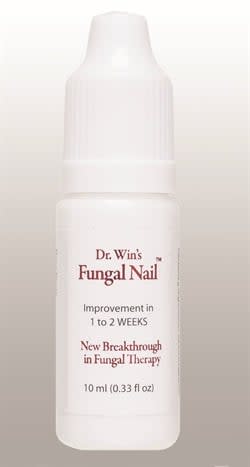
How does your product, Dr. Win’s Fungal Nail Therapy, get around this? I understand you can even apply it over polish.
Dr. Win’s Fungal Nail Therapy is an effective and low-cost antifungal treatment currently sold only in salons.
Chiou: Dr. Win’s possesses both hydrophilic and hydrophobic characteristics, so it can rapidly penetrate nails to kill the fungus. Yes, you can apply it over nail polish without losing efficacy, and, at the same time, without compromising your nail polish.
Dr. Win’s is sold over-the-counter, correct? How effective is it?
Ad Loading...
Chiou: The product can kill more than 99.9% of two major fungal species responsible for nail infection in one-minute lab tests, making it both quick and effective. These dramatic results are possible because Dr. Win’s is fungicidal (it actually kills the fungus) rather than fungistatic. Right now, it is only available for sale at nail salons. The product is 99% natural and virtually without any side effects.
What was the most exciting moment for you as you researched an effective fungal treatment?
Chiou: I felt most excited when some of my early stage test subjects for Dr. Win’s could actually feel or see their improvement, such as a reduction in pain or a change in nail discoloration, in one or two days after initial application, and that some of the subjects’ nails could be cured or nearly cured of nail infection in about two weeks. It was a wonderful surprise.
Now that you’ve had success in the nail fungus arena, what’s next? What areas of research interest you most right now?
Chiou: I am currently trying to commercialize an all-natural, multi-functional product called Dr. Win’s Pedi Pill. The idea is that by simply dropping a tiny capsule, a pill, if you will, into a tub of water, the pill can very efficiently and effectively exfoliate and cleanse the feet, nails, cuticles, and tub, by itself, without the need for a nail tech. In addition, it can provide skin softening and rejuvenation benefits.
Uncured gel polish and microscopic e-file dust contain active acrylates that penetrate the skin, triggering permanent contact dermatitis. Learn the chemistry behind these irritants and how to protect your clients and yourself.
The Good Patch is a leading wearable wellness patch brand, offering wellness and skincare patches that support everyday needs including energy, sleep, relaxation and more.
Orthopedic PT reveals three daily exercises plus ergonomic advice that can help salon professionals avoid the aches and injuries caused by standing, bending and repetitive overhead work.
From acrylic monomers to airborne bio-dust, the air inside a nail salon carries risks most professionals never see coming. Aerovex Systems reveals the source-capture and room-purification strategies that are setting a new standard for salon safety.
Working in beauty doesn’t have to hurt. Learn how Somatic Movement helps hairstylists, lash artists, and other beauty pros release tension, improve posture, and extend their careers.
As a spa or salon professional, your clients expect more than just beauty—they expect safety, hygiene, and peace of mind. Fungal infections like Athlete’s Foot and Nail Fungus are more common than you think, especially in environments where tools and footbaths are reused without proper sanitation. This blog covers how to stop these issues before they start, using proven infection prevention strategies for salons and spas.
A federal initiative aimed at studying chemical exposure in nail salons has ended due to staffing and budget changes. Here’s what the project set out to do—and what its conclusion means for salon professionals.
For many people, a pedicure is a relaxing beauty ritual. But what most don’t realize is that this simple service, if done without proper hygiene and sanitation, can cause serious infections and long-term health issues.
Onycholysis is the separation of the nail plate from the nail bed. While it may look painful, it typically isn’t—at least not at first. But without proper care, this common nail disorder can lead to infections, deformities, and long-term damage.
Mckenzie Kool, Psychologist, MC, RPsych provides us with guidance on what may or not be helpful in speaking with someone who has suffered a significant loss.
Clients come to you to feel their best—not leave with a viral souvenir. Warts and cold sores can spread fast in busy salons, but a few smart habits make all the difference. Let’s talk about what’s really lurking in your salon (and how to kick it to the curb).
As Earth Day approaches, The Green Beauty Community Foundation and the Green Spa Network invite beauty pros to step forward and embrace sustainability through the Green Pledge--a powerful initiative designed by and for beauty industry leaders.
Don’t cancel Valentine’s Day altogether, urges Jill Palmquist. Instead, think of it as a (frilly, flowery, Champagne-bubbly) wake-up call to fall deeply in love with your own life.
Life coach and Culture Ambassador of Sam Villa, Andrew Carruthers, outlines how to tell if your burnout is temporary - or if it's time to make a bigger career change.