Age spots — discoloration of the skin due to sun damage — provide an excellent opportunity for you to educate your clients about treatment options, suggest products and services, and begin treatment in the salon.
by Harvey Abrams, M.D.
August 1, 2003
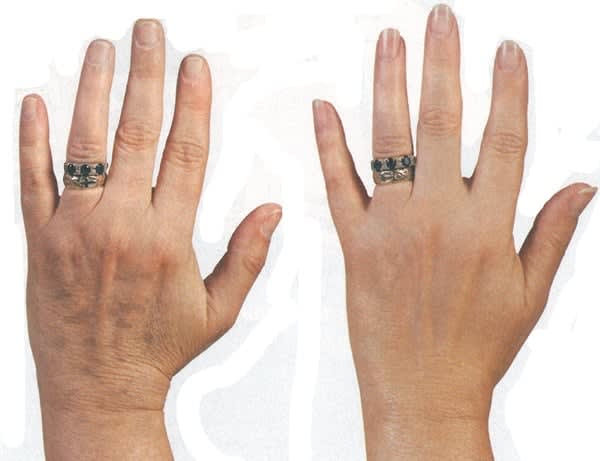
The hand at the left has been exposed to the sun one too many times and has many visible age spots. After being treated with Cuccio Naturale's Lemo Skin lightening Serum, the same hand at right is noticeably smoother and age spots have virtually disappeared.
5 min to read
The hand at the left has been exposed to the sun one too many times and has many visible age spots. After being treated with Cuccio Naturale's Lemo Skin lightening Serum, the same hand at right is noticeably smoother and age spots have virtually disappeared.
Question: My nail clients often complain they hate the way their hands look. They appear old due to brownish spots on the back of them. Are they liver spots and what can I do to get rid of them?
Answer: Those splotches on the back of the hands are indeed commonly known as “liver spots” although they have no connection to the liver. They are due to prolonged exposure to the ultraviolet light either from the sun or from tanning parlours. Also called age spots and sun spots, these permanent discolorations of the skin are telling proof of years of accumulated sun damage.
Ad Loading...
You probably see them on your clients’ hands every day. They begin appearing on the skin after age 40 and it is estimated that 90% of women over the age of 60 have one or more of these sun spots. More than anything, these spots give away a person’s age and your clients would rather see them gone.
Age spots provide an excellent opportunity for you to educate your clients about treatment options, suggest products and services, and start their treatment right then and there in the salon.
Reassurance
Many women are concerned by age spots when they appear. The first thing you can do to help your client is to reassure her that, although caused by sun exposure, sun spots are benign and no cause for worry.
Age spots vary in colour from tan to dark brown, in size from a small dot to the size of a quarter, and in number from one to dozens, sometimes covering most of the back of the hand and forearm. Medically known as solar lentigines, they are usually flat but sometimes feel slightly elevated and rough on the surface.
Ad Loading...
Although they may look similar to moles, age spots are very different. Moles are genetically predetermined, while age spots are the result of sun exposure throughout life.
The brownish colour is due to the sun’s ultraviolet rays over time causing an increase in the number of the pigment producing cells of the skin known as melanocytes. Melanocytes produce melanin, which determines the skin’s colour. The more melanocytes and melanin produced, the darker the colour of the sun spots.
The good side to these unsightly blemishes is that they are always benign with no chance of becoming skin cancer. They are also preventable and treatable.
Offer an Ounce of Prevention
The only way to prevent age spots is to use sunblock, avoid the sun, and wear protective clothing before the age of 40. An ounce of sunblock prevention is worth a pound of cure.
Ad Loading...
Effective treatments do exist to remove or lighten the spots, but additional sun exposure will cause the spots to return. It’s essential to protect your skin against new age spots and prolong the result of treatment by wearing sunblock on all exposed areas of the body every day, even in winter.
Women should get into the habit of applying sunblock on their hands every morning and carrying a small tube of sunblock m their purse to reapply after washing their hands.
It is an excellent idea for the nail professional to end a nail treatment by massaging sunblock onto the back of her client’s hands and educating her about the importance of using sunblock If your salon does not offer purse-size tubes of hand sunblock for sale, you are missing out on an excellent opportunity to help both your client and your bottom line.
Treatment Options
There are several over-the-counter and doctor-prescribed treatments to remove age spots. Most treatments do not act quickly. Just like nails, it takes time for the skin to replenish itself.
Ad Loading...
Fade Creams: Many over-the-counter products are available to lighten the skin. For instance, 2% hydro-quinone is a common bleaching agent (as are vitamin C and vitamin A in the form of Retinol). These creams will gradually lighten age spots and even out skin tone over a couple of months.
Retinoids: Prescription-strength vitamin A creams such as Retin-A and Renova will fade discoloration while stimulating the growth of new, healthy cells. They are sometimes used with prescription-strength bleaching creams for a stronger bleaching effect. Retinoids can be drying and harsh for some skin types, require a trip to the doctor’s office, and take two to three months to see results.
Chemical Peels: Dermatologists have developed a variety of liquids known as chemical peels that will effectively smooth and firm skin and gradually lighten age spots. The peel treatment can be done during a lunch hour, and there is no recovery time. A series of several peels done once every week or two are required for optimal results.
Laser: Lasers can also remove most traces of age spots and discoloration, usually in one treatment. Laser treatments are expensive, often painful, and usually require more than one trip to the doctor’s office.
The combination of chemical peels, bleaching cream, and sunblock is a highly effective and economical treatment for age spots. Professional in-salon hand treatments are now available that allow nail professionals to offer their clients the same safe and effective treatment performed in dermatologists’ offices. Where a dermatologist would charge $250 to $300 per treatment, nail professionals can offer these treatments for $25 to $30.
Ad Loading...
Hand peels are usually done in a series of four to six treatments performed at regular one- to two-week intervals. For optimal results, your client should also purchase a bleaching cream to use each night and a sunblock to wear during the day. Adding these treatments and products to your menu of salon services raises the level of your services, distinguishes your salon from the crowd, and keeps satisfied clients coming back.
Dr. Abrams is a practicing dermatologist and cosmetic surgeon, as well as the founder and medical director of Wilshire Aesthetic Medical Associates in Los Angeles. Visit www.skinskin- inc.com for more information on his line of hand and nail care products for the salon.
Uncured gel polish and microscopic e-file dust contain active acrylates that penetrate the skin, triggering permanent contact dermatitis. Learn the chemistry behind these irritants and how to protect your clients and yourself.
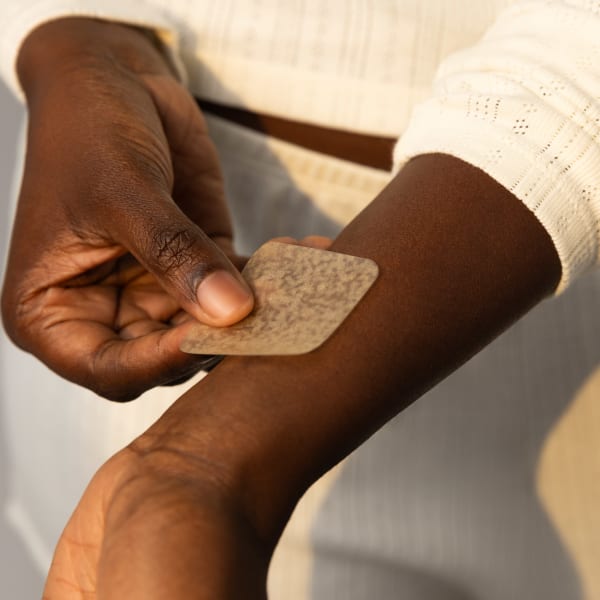
The Good Patch is a leading wearable wellness patch brand, offering wellness and skincare patches that support everyday needs including energy, sleep, relaxation and more.
Orthopedic PT reveals three daily exercises plus ergonomic advice that can help salon professionals avoid the aches and injuries caused by standing, bending and repetitive overhead work.
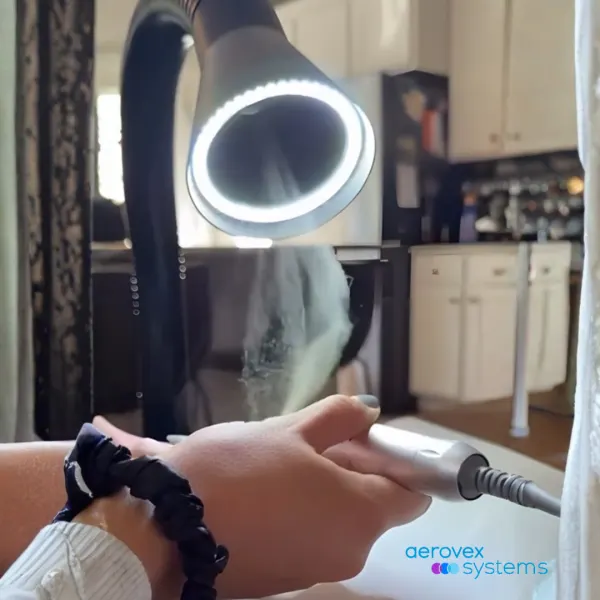
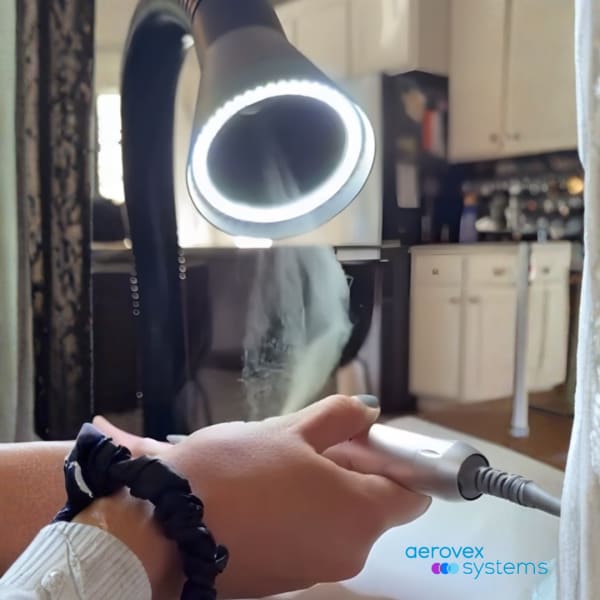
From acrylic monomers to airborne bio-dust, the air inside a nail salon carries risks most professionals never see coming. Aerovex Systems reveals the source-capture and room-purification strategies that are setting a new standard for salon safety.
Working in beauty doesn’t have to hurt. Learn how Somatic Movement helps hairstylists, lash artists, and other beauty pros release tension, improve posture, and extend their careers.
As a spa or salon professional, your clients expect more than just beauty—they expect safety, hygiene, and peace of mind. Fungal infections like Athlete’s Foot and Nail Fungus are more common than you think, especially in environments where tools and footbaths are reused without proper sanitation. This blog covers how to stop these issues before they start, using proven infection prevention strategies for salons and spas.
A federal initiative aimed at studying chemical exposure in nail salons has ended due to staffing and budget changes. Here’s what the project set out to do—and what its conclusion means for salon professionals.
For many people, a pedicure is a relaxing beauty ritual. But what most don’t realize is that this simple service, if done without proper hygiene and sanitation, can cause serious infections and long-term health issues.
Onycholysis is the separation of the nail plate from the nail bed. While it may look painful, it typically isn’t—at least not at first. But without proper care, this common nail disorder can lead to infections, deformities, and long-term damage.
Mckenzie Kool, Psychologist, MC, RPsych provides us with guidance on what may or not be helpful in speaking with someone who has suffered a significant loss.
Clients come to you to feel their best—not leave with a viral souvenir. Warts and cold sores can spread fast in busy salons, but a few smart habits make all the difference. Let’s talk about what’s really lurking in your salon (and how to kick it to the curb).
As Earth Day approaches, The Green Beauty Community Foundation and the Green Spa Network invite beauty pros to step forward and embrace sustainability through the Green Pledge--a powerful initiative designed by and for beauty industry leaders.
Don’t cancel Valentine’s Day altogether, urges Jill Palmquist. Instead, think of it as a (frilly, flowery, Champagne-bubbly) wake-up call to fall deeply in love with your own life.
Life coach and Culture Ambassador of Sam Villa, Andrew Carruthers, outlines how to tell if your burnout is temporary - or if it's time to make a bigger career change.