Reflexology is a massage technique that is gaining popularity in salons. It differs from traditional massage by releasing pressure points instead of rubbing muscles.
I don’t know about you, but the term “reflexology” intimidates me. It sounds so much more technical than the simple and approachable “massage.” When I see reflexology advertised in a salon window or listed as an add-on in the salon menu, I imagine the tech has sat under the tutelage of an ancient Chinese sage and is aware of hidden chi secrets. Secrets I am not privy to. So it came as a surprise to learn that reflexology describes a specific technique of massage; it’s not a practice that requires its own certification or license. Reflexology is a technique in the same way that hot stone, Swedish, or deep-tissue is a technique.
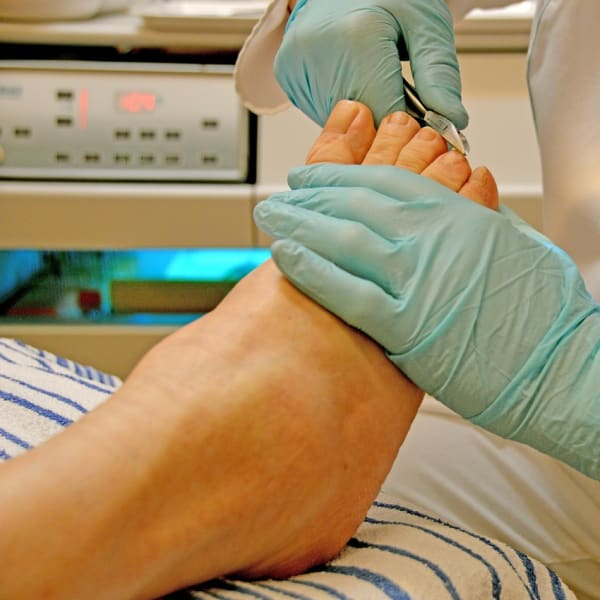
That’s good news for nail techs and clients, too. By learning the purpose and procedure of reflexology, techs can expand their service offerings and tailor the massage portion of a pedicure as a client needs. Ramona French describes foot reflexology as a “detailed foot massage where techs work every inch of the foot slowly, looking for places where the tissue feels as though there are little crystals under the skin.” The idea is to massage those crystals until they disappear. “They aren’t actually crystals,” explains French, “most likely they are muscle spasms or small deposits of scar tissue.”
Ad Loading...
As a former massage school owner, French has taught massage for 28 years and has written textbooks on Swedish, deep-tissue, lymph drainage, and acupressure massage. She is also the author of the book, “A Guide to Lymph Drainage Massage” published by Milady. French says foot reflexology is beneficial because it offers a soothing, relaxing way to relieve the stress in our bodies. “Stress triggers the fight-or-flight reaction,” explains French. “That reaction causes hormones to be released in our body, which causes our systems to race and wears out our organs. Foot reflexology can bring a person to a ‘rest-and-digest’ state, which stops those hormones from being released.” The benefits to the body can continue for hours, says French.
In the salon, techs can offer foot reflexology as an alternative to the massage already included during a pedicure service, or they can offer it as an add-on for an additional fee. To learn foot reflexology, French suggests making an appointment for a reflexology foot massage in order to experience the benefits first hand. Refer to a chart of the foot to learn the muscles, tendons, and bones of the feet. Next, read books and watch videos to gain a comprehensive understanding of the theory behind reflexology, especially how pressure points in the foot are believed to gauge health in other areas of the body. Releasing pressure in a particular area of the foot is believed to accelerate health in a corresponding organ. A reflexology chart will outline which part of the foot is associated with other areas of the body. Finally, practice on friends to get honest feedback about the pressure you apply and how well you find the problem areas.
Before working on clients, be cautious to protect yourself and others by examining the foot for any cuts, abrasions, blisters, or athlete’s foot. French says techs may need to use gloves, or even bandage certain areas, as in the case of blisters. “A tech may even need to refuse a massage if there is an open cut. Never massage over abrasions,” French warns.
Once you’re ready, be systematic in your approach. Though every tech will personalize the steps of a foot reflexology massage, French shares her step-by-step instructions:
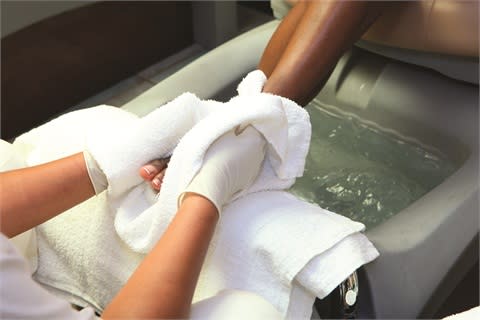
Step 1. Wrap a steamed towel around the foot. Squeeze and rub the foot gently with the towel as you remove it.
Ad Loading...
Step 2. Apply lotion or massage oil onto the foot in long, smooth strokes, moving to a kneading motion at the heel and ball of the foot. This is a general introduction to let the client know you’re ready to begin working.
Step 3. Begin the massage by using your thumb to “march” in tiny steps across the entire foot. The movement is a rocking motion with the tip of the thumb, pressing gently into the foot to feel if there is any area where you can detect the “crystals.” Watch the client for signs of discomfort, which is often expressed through wincing or pulling away.
Step 4. Once you have “marched” with your thumb over the entire foot, it’s time to massage the toes. Start at the medial side of the big toe and rock the tip of the thumb into the toe as you move your hand around the toe in a pattern that outlines it. Massage the “neck” of the big toe. Massage between the big toe and the second toe and then work around the second toe as if outlining it. Continue with the other toes, outlining the toe, moving down the neck, and pressing between and into the web between each toe. Any time you feel the client react with pain, back off on the pressure and gently massage that point until the client indicates it feels better. The tech should feel a change in the tissue, which should become softer, more elastic, and warmer.
Step 5. After the toes are done, work across the bottom of the foot in systematic rows. Start with the fleshy part of the foot under the big toe, rocking the tip of the thumb in a circular motion, and move across the foot to the smallest toe. When you reach the end of that “row,” move a half-inch down and repeat the massage across the new row. Continue moving down the foot a half-inch at a time until you get to the bottom edge of the foot, then use the circular thumb pressure in a pattern that outlines the heel and edge of the foot.
Step 6. Once the bottom of the foot is complete, move to the dorsum of the foot (the top of the foot where we typically tan). Rub your thumbs (or fingers if the thumbs need a rest) gently between the metatarsal bones, working from the toes to the ankles, not the reverse.
Ad Loading...
Step 7. You’ve just spent time pressing and massaging the points on the bottom of the foot, and then you moved to the bones on the top of the foot. Now it’s time to put it all together. Using your fingers and your thumbs to cup the foot, work in long, systematic movements to massage from the tendon under the arch (also called the spine of the foot) to the outside edge of the foot. Be sure to also work the area around the ankle.
Step 8. Work the achilles tendon by placing your fingers on one side and your thumb on the other to massage the entire tendon at once.
Step 9. Finish the massage with big, sliding movements in lines and circles across the whole foot. Also massage the lower legs with both hands, using the same motion.
Uncured gel polish and microscopic e-file dust contain active acrylates that penetrate the skin, triggering permanent contact dermatitis. Learn the chemistry behind these irritants and how to protect your clients and yourself.
The Good Patch is a leading wearable wellness patch brand, offering wellness and skincare patches that support everyday needs including energy, sleep, relaxation and more.
Orthopedic PT reveals three daily exercises plus ergonomic advice that can help salon professionals avoid the aches and injuries caused by standing, bending and repetitive overhead work.
From acrylic monomers to airborne bio-dust, the air inside a nail salon carries risks most professionals never see coming. Aerovex Systems reveals the source-capture and room-purification strategies that are setting a new standard for salon safety.
Working in beauty doesn’t have to hurt. Learn how Somatic Movement helps hairstylists, lash artists, and other beauty pros release tension, improve posture, and extend their careers.
As a spa or salon professional, your clients expect more than just beauty—they expect safety, hygiene, and peace of mind. Fungal infections like Athlete’s Foot and Nail Fungus are more common than you think, especially in environments where tools and footbaths are reused without proper sanitation. This blog covers how to stop these issues before they start, using proven infection prevention strategies for salons and spas.
A federal initiative aimed at studying chemical exposure in nail salons has ended due to staffing and budget changes. Here’s what the project set out to do—and what its conclusion means for salon professionals.
For many people, a pedicure is a relaxing beauty ritual. But what most don’t realize is that this simple service, if done without proper hygiene and sanitation, can cause serious infections and long-term health issues.
Onycholysis is the separation of the nail plate from the nail bed. While it may look painful, it typically isn’t—at least not at first. But without proper care, this common nail disorder can lead to infections, deformities, and long-term damage.
Mckenzie Kool, Psychologist, MC, RPsych provides us with guidance on what may or not be helpful in speaking with someone who has suffered a significant loss.
Clients come to you to feel their best—not leave with a viral souvenir. Warts and cold sores can spread fast in busy salons, but a few smart habits make all the difference. Let’s talk about what’s really lurking in your salon (and how to kick it to the curb).
As Earth Day approaches, The Green Beauty Community Foundation and the Green Spa Network invite beauty pros to step forward and embrace sustainability through the Green Pledge--a powerful initiative designed by and for beauty industry leaders.
Don’t cancel Valentine’s Day altogether, urges Jill Palmquist. Instead, think of it as a (frilly, flowery, Champagne-bubbly) wake-up call to fall deeply in love with your own life.
Life coach and Culture Ambassador of Sam Villa, Andrew Carruthers, outlines how to tell if your burnout is temporary - or if it's time to make a bigger career change.