Protect your eyesight by changing the way you look at the workplace.
by By Suzette Hill
April 1, 1991
6 min to read
Riddle: What do you depend on most, yet worry about least? Answer: Your eyesight. It’s very easy to take your sight for granted, and even endanger it by neglecting common sense precautions to protect it.
Do you know how to avoid eye strain? How to alleviate it? How to protect your eyes from chemical burns? What to do if a clipping files into your eye?
Ad Loading...
There are simple precautions you can follow to protect your eyes from workplace hazards. And, if accidents do happen, you can minimize the damage by acting quickly.
RELIEVE THE STRAIN
Eye fatigue, pain behind the eyes, burning, tearing, blurred vision, dry eyes, and sensitivity to light are all symptoms of eyestrain---a condition caused by overexertion of the eye muscles.
Eyestrain causes no permanent vision damage, assures Dr. Lincoln Manzi, an ophthalmologist in Westminster, California. However, in the salon, where you spend your day holding clients hands close to your face, eyestrain can be uncomfortable when minor, or painful and debilitating when severe.
The eyes ability to focus is controlled by the ciliary muscle, which is connected to the eye’s lens. This muscle contracts when the eye focuses on objects close to it. If you focus on one object at a fixed distance for a long period of time, the muscle eventually spasms from overuse. When you relax or let your eyes rest, the muscle stops contracting but the spasms may continue, causing prolonged discomfort.
Ad Loading...
Most people try to ignore these signs, perhaps fearing they may need glasses. While corrective eyewear may solve the problem for some technicians, many are simply suffering from eyestrain.
Manzi recommends an eye examination if your eyes bother you continuously, to make sure you have no serious vision problems. Rule out physical disorders first because the sooner treat of the fewer problems you’re likely to face in the long run. Such conditions as nearsightedness, farsightedness, muscle imbalances, and other eye deficiencies will not go away merely by changing your habits, so check with your doctor to eliminate the possibility of a more serious eye disorder.
Once your eyes get a clean bill of health, assess your working conditions. Since prolonged up close work fatigues your eyes, taking frequent short breaks during the service will prevent straining. You don’t need to leave the client, just look out the window or across the room and focus on a distant object. Make a habit of doing this every few minutes to rest the ciliary muscle.
It may sound simplistic, but don’t forget to blink. You may be concentrating on your work so intently that you forget to blink, an action that is necessary so your eyes can rest and get moisture.
Other working conditions may also contribute to eye fatigue. For example, fluorescent lighting flickers and makes your eyes work harder, says Manzi. Most salon lighting is also suspended from the ceiling, some distance from your work area. Since incandescent lighting is much gentler on your eyes than fluorescent, add a desk lamp to brighten your individual work area. Manzi suggests using a cool halogen bulb so the light won’t heat your work area.
Ad Loading...
If your eyes continue to trouble you, look to your leisure time activities. Do you read between clients or do needlework? Cut back on these activities during regular workdays. Use the time between clients to rest your eyes. Even a 5-minute walk will rest your eyes from close-up work. Getting a good night’s sleep will also do wonders---for your entire well-being.
If you experience a lot of discomfort, Manzi suggests using a warm towel compress over your eyes to help relax the muscles. You can also take over-the-counter pain relievers, such as acetaminophen. Red eyes and a dry or gritty sensation can also be relieved with over-the-counter artificial tears. Discomfort and pain are subjective terms, but you should see doctor if the pain distracts you from your work. He cautions that extreme discomfort should be discussed with a doctor to eliminate other more serious causes.
WHAT GOES IN, MUST COME OUT
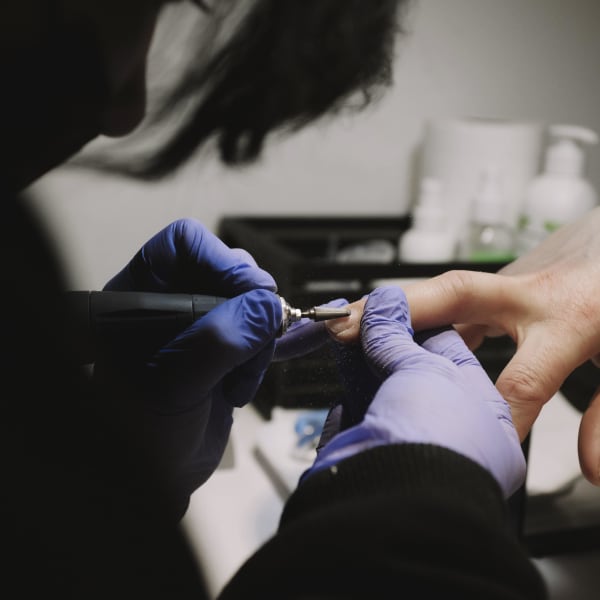
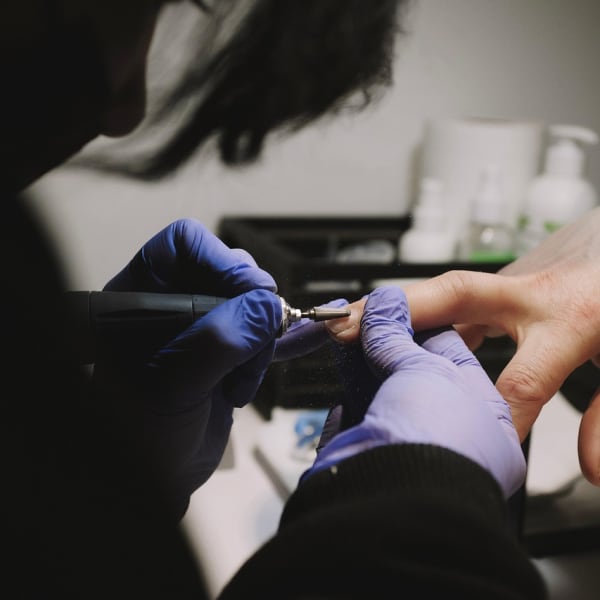
Besides the constant strain of detail work, eyes can be harmed by airborne particles in the salon---flying clippings, filing dust. Hand-held drills and nippers can send objects flying into your eyes. These particles can scratch, lacerate, or even puncture your eye. Wearing lightweight protective goggles can deflect harmful foreign objects away from the eye.
“I’ve never seen that happen,” you say. “Most particles are just dust, and that’s never bothered me.” Probably not, but it only takes one misguided object to damage your sight. Even dust particles can irritate eyes, causing discomfort. And particles don’t have to be large to scratch your eye.
Ad Loading...
If you do get something in your eye, don’t rub it. Rapid blinking, plus the eye’s natural tearing, will wash most objects out. Rubbing will not remove the object; in fact, it will actually make things worse. If the object is lodged under your lid, rubbing moves it back and forth across the eye, increasing the risk of scratches and lacerations. If the particle is embedded, it may only be pushed deeper into the eye.
If the object doesn’t rinse out by itself, try rolling your eye while opening and closing the lids. Gently pull the upper lid down and away from the eye and turn the lid out toward you. If you see the object, gently wipe it away with a clean cotton swab.
If the object stubbornly remains in the eye, call an eye specialist. The object may be embedded in the eye, or just lodged in an area where you can’t reach. An eye specialist can numb the area so the object can be located and retrieved easily.
If one eye is irritated, teary, or sensitive to light for longer than one day, consult an eye doctor. Though no more than mildly irritating, the discomfort could indicate that something is lodged on the cornea, an extremely delicate area of your eye. Your sight could be damaged if the eye is not quickly treated.
Wearing goggles protects your eyes from chemicals that may get splashed. Goggles also protect the sensitive skin around the eye. Even clear plastic or safety glass in fashionable frames will protect your eyes from many hazards, says Manzi.
Ad Loading...
If any chemical enters your eye, immediately rinse the eye out with cool, flowing water. Rinse liberally for 15 minutes, holding your eye open to make sure it’s completely flushed. If you can’t access running water, hold your eye open and splash water into it. Pat---don’t rub---the eye dry after rinsing and call an eye specialist. Have the chemical on hand so the doctor will know what she’s treating.
But what if the chemical doesn’t hurt or sting? It doesn’t matter. Some chemicals may not immediately affect your vision or cause pain, but given 30 minutes they can cause irreparable damage.
There is no such thing as a minor accident when you’re protecting something so precious as your sight. Protect your eyes from hazards in the salon, and know what to do if an accident does occur.
Uncured gel polish and microscopic e-file dust contain active acrylates that penetrate the skin, triggering permanent contact dermatitis. Learn the chemistry behind these irritants and how to protect your clients and yourself.
The Good Patch is a leading wearable wellness patch brand, offering wellness and skincare patches that support everyday needs including energy, sleep, relaxation and more.
Orthopedic PT reveals three daily exercises plus ergonomic advice that can help salon professionals avoid the aches and injuries caused by standing, bending and repetitive overhead work.
From acrylic monomers to airborne bio-dust, the air inside a nail salon carries risks most professionals never see coming. Aerovex Systems reveals the source-capture and room-purification strategies that are setting a new standard for salon safety.
Working in beauty doesn’t have to hurt. Learn how Somatic Movement helps hairstylists, lash artists, and other beauty pros release tension, improve posture, and extend their careers.
As a spa or salon professional, your clients expect more than just beauty—they expect safety, hygiene, and peace of mind. Fungal infections like Athlete’s Foot and Nail Fungus are more common than you think, especially in environments where tools and footbaths are reused without proper sanitation. This blog covers how to stop these issues before they start, using proven infection prevention strategies for salons and spas.
A federal initiative aimed at studying chemical exposure in nail salons has ended due to staffing and budget changes. Here’s what the project set out to do—and what its conclusion means for salon professionals.
For many people, a pedicure is a relaxing beauty ritual. But what most don’t realize is that this simple service, if done without proper hygiene and sanitation, can cause serious infections and long-term health issues.
Onycholysis is the separation of the nail plate from the nail bed. While it may look painful, it typically isn’t—at least not at first. But without proper care, this common nail disorder can lead to infections, deformities, and long-term damage.
Mckenzie Kool, Psychologist, MC, RPsych provides us with guidance on what may or not be helpful in speaking with someone who has suffered a significant loss.
Clients come to you to feel their best—not leave with a viral souvenir. Warts and cold sores can spread fast in busy salons, but a few smart habits make all the difference. Let’s talk about what’s really lurking in your salon (and how to kick it to the curb).
As Earth Day approaches, The Green Beauty Community Foundation and the Green Spa Network invite beauty pros to step forward and embrace sustainability through the Green Pledge--a powerful initiative designed by and for beauty industry leaders.
Don’t cancel Valentine’s Day altogether, urges Jill Palmquist. Instead, think of it as a (frilly, flowery, Champagne-bubbly) wake-up call to fall deeply in love with your own life.
Life coach and Culture Ambassador of Sam Villa, Andrew Carruthers, outlines how to tell if your burnout is temporary - or if it's time to make a bigger career change.