I have a client with eggshell nails. They are flat and curve around the ends of her fingers, causing her nails to pull away from the enhancements. What can I do to keep this from happening?
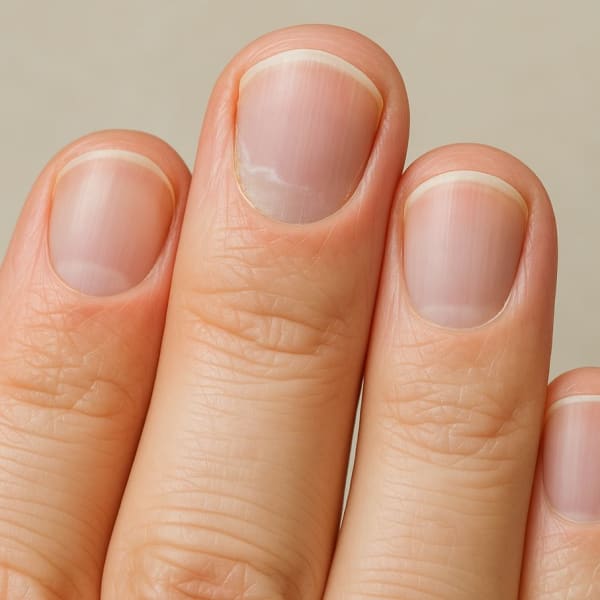
Barb Wetzel: Eggshell nails are very thin and fragile nails; most of the time the free edge curves dramatically due to this fragility, and the curvation is worsened when exposed to water or drying chemicals (usually upward rather than downward, in my experience). The free edge of these nails can split, shred, and fray easily. If this is a new condition for her nails, then she should seek medical advice before proceeding with any type of nail enhancement.
You must use extreme care with this client. A properly applied and maintained overlay with minimal length can be very helpful. I would recommend applying sculptured gel nails rather than using tips or acrylic products. Gels are more flexible than acrylics, making freeedge separation less likely. Tips with nail adhesive are a problem because the adhesive will break down in water and over time lead to free edge separation as well.
The key is to keep the enhancement product light and flexible so as not to distress the natural nail underneath. With the proper addition of arches to the nail beds, the nails can take on a more aesthetically appealing look in addition to length and strength.
Pam Karousis: You will have to experiment to determine which technique works the best with this client’s nails. You may have to trim away the excess free edge and use a nail tip. This may have to be repeated every few appointments to keep the natural nail from growing out enough to pull away. You could also try using a small drop of nail glue under the free edge to keep the natural nail bonded to the sculpture.
Keeping the nail moisturized with a good cuticle oil should also help. Remind your client to wear rubber gloves whenever she is in water to keep the nail from pulling away from the sculptured nail.
Is there any way of getting gels off other than buffing them?
Wetzel: First I have to ask why you want to remove them. Gels, done properly, do not need to be completely removed if the client decides to quit having her nails done professionally. They can simply be filed thin, and then allowed to grow off.
Several manufacturers offer “soakable” gels (such as CalGel, BioSculpture, and Pro Finish), so if you insist on a gel that can be soaked off, you can try one of those brands. The majority of gels on the market do not soak off, however, and they do need to be filed off should you want them removed completely. Gels are softer than acrylics, and so they file off much more easily than acrylics do.
[Editor’s note: See “Take Them All Off” in NAILS’ October 2000 issue for more detailed information on removing gels.]
What causes deep crack lines in the heels and how do I treat them?
Dr. Roth: Generally, these cracks occur when people wear backless shoes where the heel is not held firmly in the shoe. The friction from the shoe causes thickening and cracking of the heel skin. The other common cause is fungus.
The usual treatment of this problem is to use a pumice stone after a shower or bath to reduce the thickened skin, and then use a strong emollient cream covered with plastic wrap and a sock at night until the problem gets better.
I have noticed in my clinical practice that many times thickening of the heels is directly related to athlete’s foot infections. Just as athlete’s foot gets into the toenails and the nails get thicker, the same thing happens to the heels. The first treatment I would recommend is reducing the callus. Second, I would try a topical antifungal cream, such as Lamisil or Tinactin. If neither of these treatments are effective, your client should see a podiatrist to debride the thickened skin, which helps control this problem. If the problem is severe, your client may require routine podiatric care.
What causes thicker nails on older women’s toes? What is the best way to cut these types of nails?
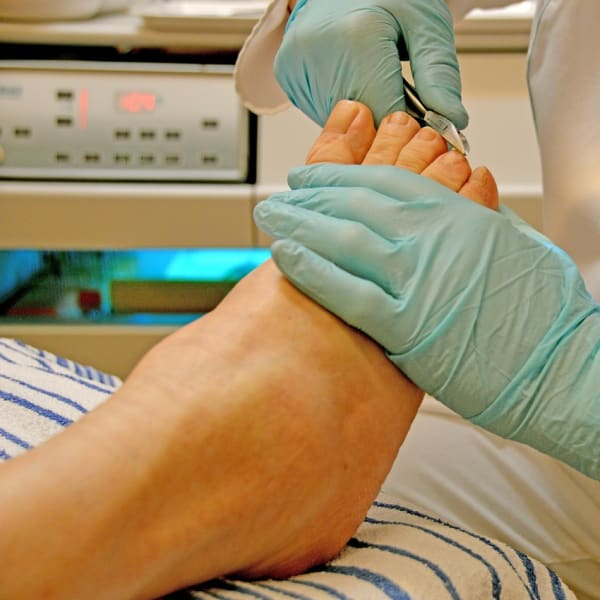
Dr. Youner: Thicker nails are either caused by old trauma (such as an object falling on the toe) or fungus. The nail matrix is actually damaged, so the nail grows “dystrophically” (thickened, yellowish, and curved). To keep clients with this type of nails comfortable, I suggest using a coarse emery board and gently thinning the nail. If these nails are not treated, the skin underneath can grow upward, creating a nightmare when you try to cut the nail normally. Also, a uric acid cream of a high concentration can soften the nail significantly, allowing the technician to gently scrape more off. (Higher concentration creams are available only by prescription, while lower concentrations — such as LacHydrin 8% — can be found over the counter.) It may benefit the client to first see a podiatrist for the thickened nail care and then go to the pedicurist.