The Help Desk Science & Medicine Panelists:
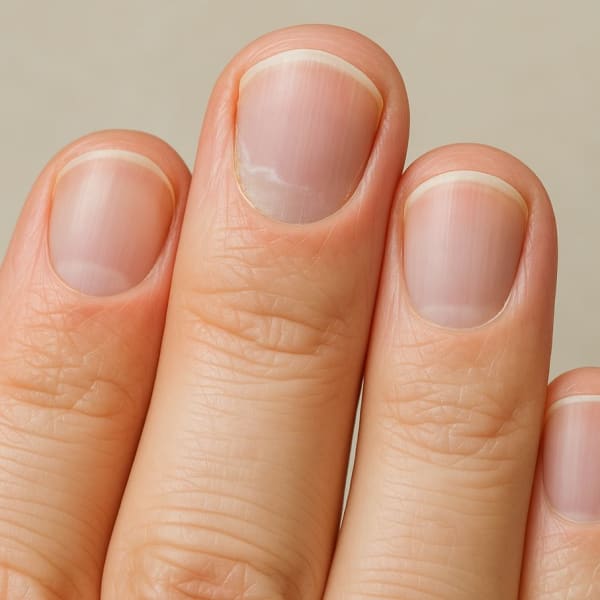
I have a client whose nails are lifting from the nail bed, but only about a quarter of the way. There is no sign of infection or fungus (both confirmed by her doctor). They grow just fine, but then they start to lift again. She had an acrylic overlay on for about two weeks and when that acrylic came off, the nails were perfect. Soon after that, they started lifting again. She is using a nail strengthener and is on several medications. She also takes vitamins.
Dr. Rich: Lifting of the nail plate from the nail bed is called onycholysis. There are many causes of onycholysis, including trauma to the nail, allergic reaction to products, excessive water/detergent exposure, psoriasis, thyroid abnormalities, and anemia. Certain medications that are photosensitizing can result in photo-onycholysis when the client is exposed to sun. (Ask your client’s doctor if this is the case with any of her medications.) Sometimes onycholysis is further complicated by the presence of yeast under the involved nails.
It is difficult to know why your client has onycholysis. Encourage her to use gloves when doing wet work chores and gardening and keep her nails short so they don’t project past the tip of the finger. This is so that the nails will not be subjected to multiple microtraumas during the day, which will delay the reattachment as the nails grow out. Long nails also act as a lever and put stress on the portion of the nail that is still attached. Also be cautious about cleaning under the nails too vigorously so as not to disrupt the delicate nail bed cells as the nails is trying to attach as it grows in.
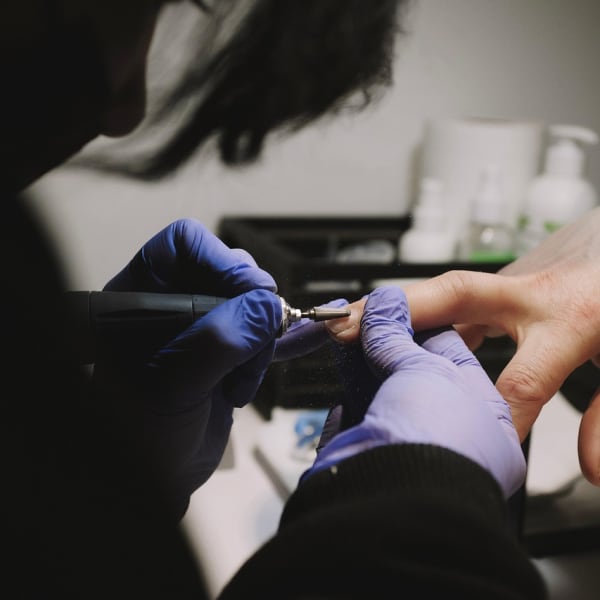
How do you help restore the nails bed after a drill has been used on it leaving “rings of fire’?
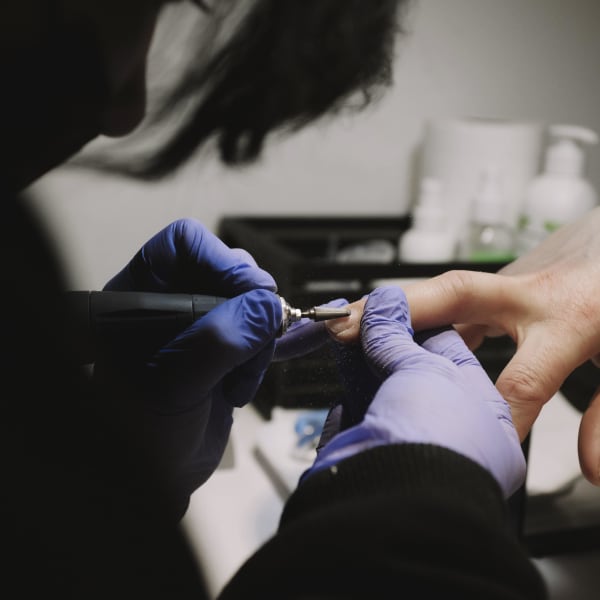
Lynnette Madden: First off, note that “rings of fire” can also be created by over-filing by hand. In either case, these nails are very sensitive and sometimes will not hold product because of the damage. You need to discuss what the client wants and the timeframe she is looking to work with. If your client is willing to go without product on her nails for a few months, you could recommend using a strengthener on her nails during the interim. Have the client put one coat of strengthener on her nails daily for a week, the remove the product and repeat for another week. She should also be using a good cuticle oil to help keep her nails plasticized (flexible)
If the client is not willing to “go without,” I would either use two coats of resign on her nails at bimonthly appointments or switch her to gels. She will still need to use a good cuticle oil daily.
In my 21 years of doing nails, I’ve had about eight people become allergic to acrylic monomer. However, in the past year I’ve had six clients become allergic. I’ve been using the same product for about five years and have had no problem until recently. I contacted the manufacturer to see if they knew of any problems and they didn’t. I understand how allergic reactions work, but I am very perplexed at the high incidence of it I’m having lately. Please help.
Doug Schoon: Allergic reaction can occur with any type of enhancement products. The vast majority of client allergies are caused by nail technician repeatedly exposing the client’s skin to the enhancement product.
Prolonged or repeated skin contact is most often the cause. Allergies usually occur after four to six months of repeated exposure. The result is often red, dry, cracked, or irritated skin around the cuticle area. If ignored, the symptoms can progress to form small water blisters. The second most common cause of client allergies is using too wet of a mix ratio. If your bead is too wet, clients can become allergic. Too wet of a mix ratio usually causes the nail bed beneath the plate to itch or feel “warm.” Using too large of a brush is sometimes the culprit. Larger brushes increase the chance of accidentally contacting the skin. A very large brush also holds excessive amounts of monomer, which can cause nail technicians to work too wet.
What is the main difference between a classic pedicure and a spa-type pedicure?
Madden: Basic or classic pedicures are what you probably learned in school. Shape the nails and cuticle area, slough the feet and/or legs, massage calves and feet, and finish with an invigorating peppermint-type lotion.
A spa-type pedicure goes further with exfoliation and pampering of the client. You want to appeal to all her senses. For instance, for a peaches and cream pedicure, you could use a peach-scented candle or diffuser in the pedicure area. Milk (cream) will help exfoliate the skin and sliced peaches in the pedi-bath will make the client feel very relaxed. You could offer a glass of peaches with whipped cream in a cup while she is having her pedicure. The massage with the spa-type pedicure should be longer that with the plain pedicure, or you could just use different massage techniques. Either way, you should charge more for the spa-type pedicure.