Though psoriasis most often affects skin, it can affect nails as well. By understanding the symptoms you may help a client seek treatment before it gets out of hand.
by Richard K. Scher, M.D.
August 1, 1997
4 min to read
Psoriasis is a condition that affects the skin of approximately 5-8 million people in the United States. This disorder usually manifests itself on the skin, but a significant percentage of patients also have it on their nails. The cause of psoriasis is completely unknown. In some cases, it is only the nails that are affected by psoriasis. When this is the case, it is very common that the psoriasis is misdiagnosed as a fungal infection, simply because many physicians do not think of diagnosing just the nails as affected by psoriasis when the skin appears normal.
It is understood by doctors, however, that both physical and mental trauma can be an aggravating factor.
Ad Loading...
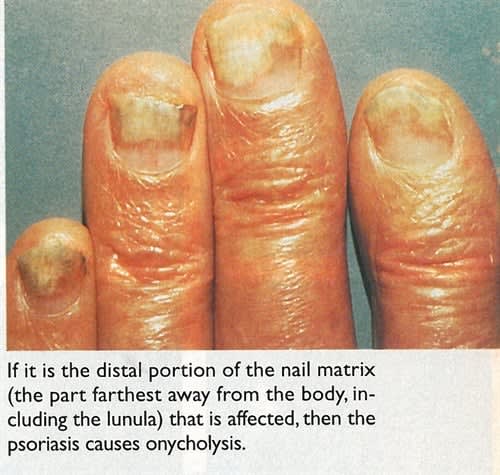
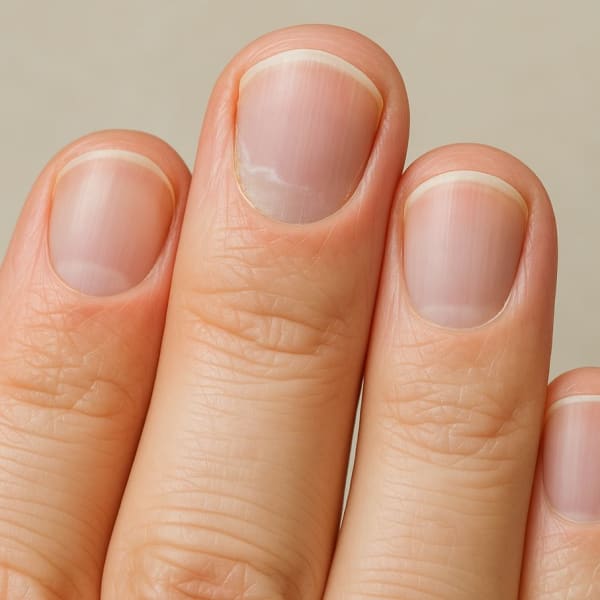
When psoriasis affects the nail matrix, three possible manifestations can show up. If it is the most proximal portion of the matrix that is affected (that portion closest to the body), psoriasis shows up as little dents on the surface of the nail plate (like pock marks or pits). When the middle portion of the nail matrix is affected, the clinical sign is a white spot, also referred to as leukonychia. If it is the distal portion of the nail matrix that is affected (the part farthest away from the body and including the lunula), it causes onycholysis (separation of the nail plate from nail bed).
If the nail psoriasis is severe enough that all three parts of the nail matrix are affected (which is rather uncommon), the nail plate usually crumbles and can be lost completely. If the psoriasis affects the nail bed rather than the matrix, the appearance is a reddish-brown discoloration of the nail bed. This condition is referred to as the oil drop sign because it looks as though there is a small drop of oil beneath the nail plate, although it is sometimes called “the salmon patch.”
Nail psoriasis occurs frequently with a type of arthritis of the fingers, called psoriatic arthritis. With psoriatic arthritis, there is usually swelling and redness of the fingertip or toe. Another common manifestation of psoriasis of the nail bed is splinter hemorrhages. These are little, tiny bleeding spots underneath the nail plate in the nail bed, which look like little splinters.
There are many different treatments for nail psoriasis. The simplest, although admittedly, the least effective, are local cortisone creams, ointments, lotions, or gels. Topical medications don’t penetrate the nail well. In fact, the same is true for a new treatment for skin psoriasis called calcipatriol, which is a derivative of vitamin D, not a steroid.
The most effective treatment for nail psoriasis is intralesional injections of cortisone in the skin around the cuticle and on the sides of the nail plate. Intralesional injections work best when they’re done after the nail is sprayed with a freezing spray to minimize discomfort. Ultraviolet treatment, which has been effective for skin psoriasis, has been used but is less effective on nails because UV light does not get through the nail to work where it is needed.
Ad Loading...
Very strong medications, such as methotrexate and retinoids, have been used with some success for very severe cases of nail psoriasis.
It is very important for nail technicians to learn to recognize psoriasis, because when nail psoriasis is treated by a physician and kept under control, the manicuring process and beautifying of the nails can be done much more effectively. Since physical trauma can aggravate or worsen nail psoriasis, nail technicians should avoid over-vigorous manipulation of the nails (excessive pushing back of the cuticles or cutting, for example) on psoriatic patients. When working on a client who has nail psoriasis — which is certainly all right to do — it is important to remember to treat those nails gently and without trauma. Psoriasis is not a contagious disorder so a nail technician’s main concern should be to make the client comfortable.
Manicuring psoriatic clients is fine, but acrylic nails are not advisable. There is some evidence that acrylics can aggravate nail psoriasis, even though the objective is to camouflage or hide the nail abnormality. There is no problem, however, with the use of simple products such as nail polish. Nail technicians, therefore, are in an especially good position to recognize this condition when it occurs and provide good advice to their clients on how to proceed regarding having their nail psoriasis treated.
Uncured gel polish and microscopic e-file dust contain active acrylates that penetrate the skin, triggering permanent contact dermatitis. Learn the chemistry behind these irritants and how to protect your clients and yourself.
The Good Patch is a leading wearable wellness patch brand, offering wellness and skincare patches that support everyday needs including energy, sleep, relaxation and more.
Orthopedic PT reveals three daily exercises plus ergonomic advice that can help salon professionals avoid the aches and injuries caused by standing, bending and repetitive overhead work.
From acrylic monomers to airborne bio-dust, the air inside a nail salon carries risks most professionals never see coming. Aerovex Systems reveals the source-capture and room-purification strategies that are setting a new standard for salon safety.
Working in beauty doesn’t have to hurt. Learn how Somatic Movement helps hairstylists, lash artists, and other beauty pros release tension, improve posture, and extend their careers.
As a spa or salon professional, your clients expect more than just beauty—they expect safety, hygiene, and peace of mind. Fungal infections like Athlete’s Foot and Nail Fungus are more common than you think, especially in environments where tools and footbaths are reused without proper sanitation. This blog covers how to stop these issues before they start, using proven infection prevention strategies for salons and spas.
A federal initiative aimed at studying chemical exposure in nail salons has ended due to staffing and budget changes. Here’s what the project set out to do—and what its conclusion means for salon professionals.
For many people, a pedicure is a relaxing beauty ritual. But what most don’t realize is that this simple service, if done without proper hygiene and sanitation, can cause serious infections and long-term health issues.
Onycholysis is the separation of the nail plate from the nail bed. While it may look painful, it typically isn’t—at least not at first. But without proper care, this common nail disorder can lead to infections, deformities, and long-term damage.
Mckenzie Kool, Psychologist, MC, RPsych provides us with guidance on what may or not be helpful in speaking with someone who has suffered a significant loss.
Clients come to you to feel their best—not leave with a viral souvenir. Warts and cold sores can spread fast in busy salons, but a few smart habits make all the difference. Let’s talk about what’s really lurking in your salon (and how to kick it to the curb).
As Earth Day approaches, The Green Beauty Community Foundation and the Green Spa Network invite beauty pros to step forward and embrace sustainability through the Green Pledge--a powerful initiative designed by and for beauty industry leaders.
Don’t cancel Valentine’s Day altogether, urges Jill Palmquist. Instead, think of it as a (frilly, flowery, Champagne-bubbly) wake-up call to fall deeply in love with your own life.
Life coach and Culture Ambassador of Sam Villa, Andrew Carruthers, outlines how to tell if your burnout is temporary - or if it's time to make a bigger career change.