Q: I have been a nail technician for three years, and I have a terrible problem with my own nails. They are extremely thin, and they peel, chip, and never grow past the end of my finger. I have applied acrylic to my nails because they are in such terrible shape; I don't want my clients to see what they really look like. In trying to take care of this, I wear gloves with every client, and I take a good daily vitamin with extra calcium. My nails are so thin they sometimes hurt, and the end of the nail beds are red. One contributing factor might be my severe back problem; I had surgery four years ago, and it still acts up. I am always on medication (Flexeril, Darvocet, Indocin, and water pills). When I am wearing acrylics, they constantly lift and my own nail plates seem to pull away from the nail bed. The nails appear to have fungus when actually they don't. What is causing this, and what can I do to fix my nails?
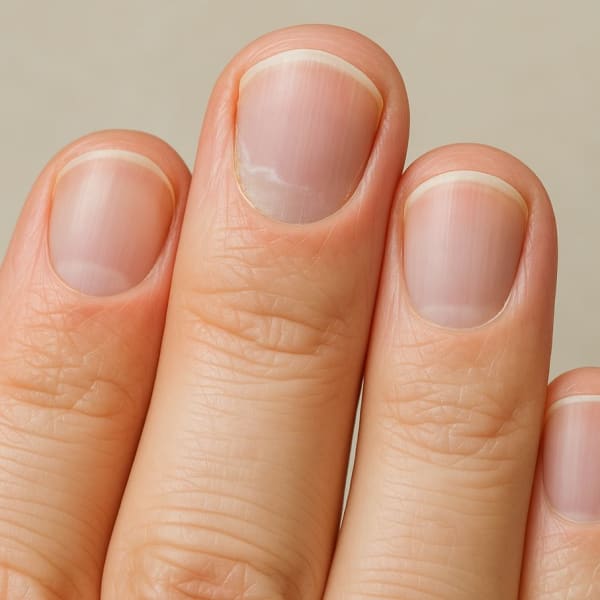
A: The description of your nails fits that of brittle nail syndrome. Nails in this condition tend to be thin, peel, chip, and crack as yours do. In addition, they fail to grow to a significant length. This is due to dehydration of the nail plate and is much like having "dry skin of the nails." Wearing gloves is an excellent idea, as is taking a multi-vitamin with minerals. A good biotin supplement may be helpful. Also, it is advisable to keep your nails well-moisturized.
There are many causes of brittle nail syndrome, particularly if your nail beds hurt and are red. You ought to consider that it might be an allergic reaction to a nail product. I would not recommend the use of acrylics because this can surely aggravate the problem. The lifting up of the nail plates from the nail bed could be due to excess moisture accumulation or an allergic reaction.
I do not believe a direct link exists with your back problem, although a few medical disorders may result in brittle nails, such as an underactive thyroid, for example. A careful evaluation of your general health would be a very good idea.
Some medications do affect the nails. Since you are on several, this is something for you to look into with the doctor prescribing them.
Q: Can a client's location affect how her nails grow?
One of my clients has worn acrylic extensions on her nails for several years. She used to live in Florida, and her nail technician there used a drill on her nails. Since then, her nails have stopped growing. They grow about three-quarters of the way out on her nail beds and stop. There has been no new growth for several years. What has happened to her nails, and how can I get them to grow? Also, can she wear extensions? I put fiberglass wraps on her nails last week and they all fell off in just a few days. Is this problem related to her nail bed problem?
A: Nails do not stop growing. Some nails appear to stop growing when in fact they may grow at an abnormally slow rate. In addition, if they grow out only a certain distance on the nail bed and no farther it is not because there is no growth; rather, some people have nails that are more fragile than normal. They break readily and do not grow past the nail bed.
There is no known way to make nails grow faster or longer; however, intake of multi-vitamins and minerals along with biotin supplements has been reported to help some people. Extensions may be worn if your client is not allergic to the product. However, a periodic rest without any nail products may also be helpful.
I cannot explain the loss of the fiberglass nails, but I do suggest a dermatologic evaluation if there is a nail bed problem.
Q: I am a nail technician, and for about a year I have had headaches at work. I thought it was just stress, but one Friday I got a very painful migraine headache at the salon and I swelled up. I stayed in bed all weekend. Four days later, I still had the headache. I am scared to go to my doctor. I am using a 3M respirator to work and am looking for a ventilation hood to use at my station. What could be the problem?
A: Your symptoms may be due to acrylic allergy Inhalation of the fumes at work might possibly result in the symptoms you describe. I feel your medical complaints are very significant and should certainly be evaluated by a physician. It is also possible that the headache and swelling may be due to other causes therefore a visit to your doctor is definitely indicated. She will probably perform some blood tests and allergy tests to determine if it's an allergy or if yon are suffering from overexposure.