Q: My client seems all of a sudden allergic to fiberglass. Why?
A friend has been wearing fiberglass nails for approximately two to three years without any problems, then she discovered a dry, flaky irritation beneath and around her nostrils. She went to her doctor who said he suspected she was allergic to the disinfectant she used to clean her tanning rooms. She stopped cleaning the rooms herself, but still her condition worsened. She developed a severe headache and nausea. Then, while brushing her teeth one morning, she discovered her gums were receding. Her dentist told her sometimes this happens as people age. My friend is only 38 so I find this hard to believe. The technician who was doing my friends nails had sold her the fiberglass products so she could maintain her nails at home. My friend asked me to do a fill and I told her that, as I had just started nail school, I hadn’t learned how to apply fiberglass yet, but I would try if she talked me through it. The moment I opened the thin glue to set the fiberglass, tears streamed from her eyes. She told me that happened all the time, and it also caused her eyes and the inside of her nose to burn. When I relayed this information to my instructor at school, she said it sounded like a severe internal allergic reaction, and that my friend should remove the product immediately and find a different system.
A: It sounds as if you made a correct analysis in the ease of your friend. From the symptoms you described, you advised her correctly that the fiberglass material should not be used and she should be under the care of a physician until all symptoms have cleared. There are many treatments, such as antihistamines or steroids, for more severe, cases. To prevent her symptoms, she will have to avoid the product altogether. If this is done, there are usually no permanent after-effects.
Q: Could menstruation be causing my client's inability to wear enhancements?
I haven’t been able to find the right type of artificial nail application for a particular client. I first tried a solar acrylic product and for the first few days her nails were fine, but then the acrylic slowly fell off. I switched to another product and the same thing happened. After that, I tried a no-light gel system. Again, her nails were fine for the first few days, then they cracked and crumbled off. Next, I applied a nail wrap, and that fell off as well. Now I have ordered a get with light system and don’t know what I’ll do if this fails also. My client says she isn’t on any medication. Do you know what can cause this problem? What about putting a nail application on while she is on her menstrual cycle? Does that have any effect?
A: Since all artificial nails, regardless of type, must use some form of acrylic material, it would appear that your client may be sensitive to that basic ingredient. If that is the case, you will probably not succeed in finding a variety of product that is well tolerated by your client. If your final attempt with the gel light system fails, it may be necessary for your client to abandon artificial nails at this time. I do not believe that the time of the menstrual cycle has any effect.
Q: My client's nail ripped off. Will it grow back?
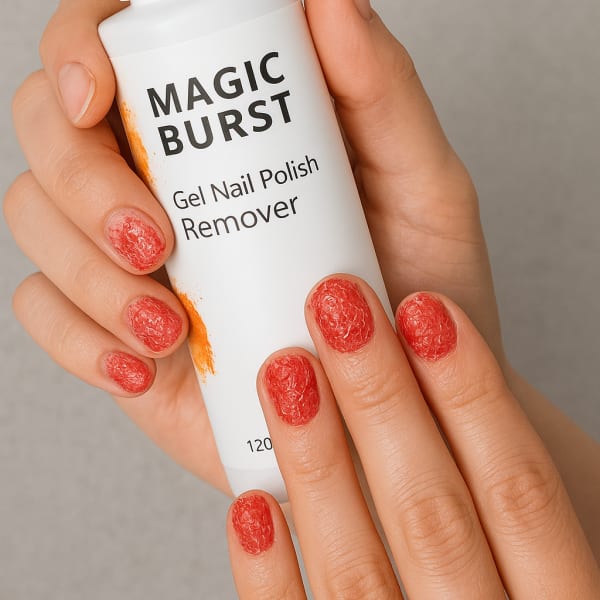
A long-time client, who gets tips with an acrylic overlay, recently came in for her regular fill appointment. The week before her appointment, she had torn off her pinkie fingernail by catching it on a door. Her entire nail ripped off the nail bed along with the partial tip. Some of the nail that was under the cuticle (at the matrix) was ripped out as well. At the fingertip area, the nail bed already has replaced some layers of nail. The cuticle has “fused” itself to the nail bed. The upper corner of the cuticle seems to have a small piece of nail still attached. My client said that when the nail ripped, it was hanging at this point so she pulled it off. My client said her nail bed drained a white clear fluid (no pus) for a couple of days. She applied Neosporin and wrapped her pinkie with a bandage. The nail is not infected. I advised my client to see her doctor but she refused. I did not treat or apply anything to the nail. Please let me know what I should advise my client to do and if it is likely that her nail will grow back.
A: You advised your client wisely by suggesting she see her doctor. It seems, judging from your letter, that a significant trauma injured the nail unit. Whether or not the nail will grow back cannot be determined at this time. It depends on the growth of the damaged nail center (matrix), and the scarring secondary to the injury. Surely, if your client follows your suggestion and seeks medical treatment, the chances of getting back a normal, healthy nail will be increased.