I have an elderly client who I do natural nail manicures on, but when she wears polish for a month or so, white spots appear in the middle of several nails on each hand. These are not from trauma. When the polish is left off, the white spots disappear. Should she continue to wear polish?
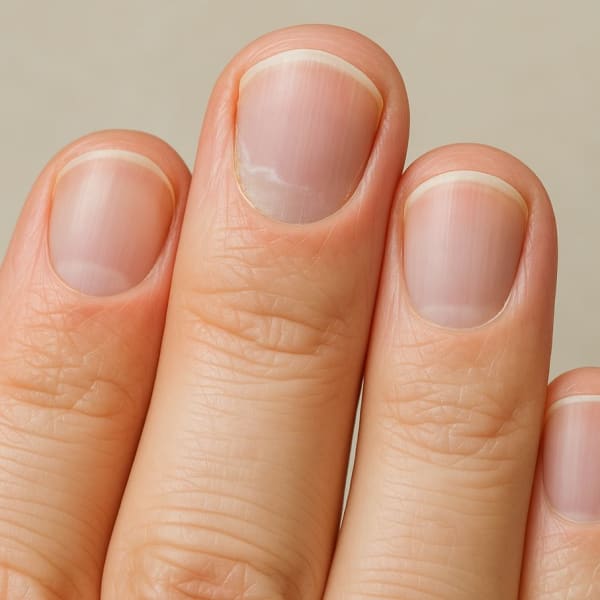
Many things can cause white spots on the nails. There is a type of fungus that occurs on the surface of the nails called white superficial onymychosis. However, his almost exclusively occurs in toenails and does not sound like what your client has. Trauma can also cause white spots on the nails, but I agree that this most likely does not come from trauma based on the history that is given, namely that thy disappear when the polish is left off. Most likely these spots, which are called punctuate leuconychia are due to a particular sensitivity to the nail enamel. There are some individuals whose nails have keratins that are particularly sensitive to nail products. It sounds to me like this client is one of those individuals. There are a number of things that you can try although it sounds like you’ve already done a good job trying. Switching brands may sometimes solve the problem. Try applying an extra colorless base coat to protect the nail plate from the colored nail enamels that follow. Sometimes that works.
I would also definitely recommend toluene- and formaldehyde-free products with acetone-free remover. If nothing else works, it may be that your client will have to remove her polish intermittently or periodically to give the nails a rest from the nail products and thereby avoiding the development of these white spots. This is not something that you need to be concerned about. If it were related to a systemic disorder such as heart disease or diabetes, it would not disappear so quickly and so readily when the polish is removed. So heart disease or diabetes are most likely not responsible for the spots. It is perfectly OK for this client to continue to wear polish, but I would try to use the restrictions that I mentioned previously.
I have a client with an overgrowth of cuticle, and very cracked skin on her sidewalls. And her nails keep splitting. I have been giving her manicures for more than a year, keeping her nails short mostly because they won’t grow. Is there anything that I can do to treat this?
This is a combination of dry skin or mild eczema associated with brittle nails. The skin must be kept well moisturized. It is best to push the cuticle back not with metal or wooden instruments, but with a moist towel or washcloth, after soaking for about 10 minutes to soften the cuticles. This will cause less damage in patients with very dry skin. Sometimes if the dry skin becomes severe enough, a cortisone cream may be required to heal the cracked skin. An over-the-counter cortisone cream is satisfactory but should only be used intermittently when the cracking is fairly severe. Keeping the nails short is actually a good idea because when they are shorter they are less subject to trauma, which increases the splitting of the nails. It is not true that nails do not grow. They always grow, although in some people they grow more slowly than in others, particularly in older age groups. It may appear that the client’s nails do not grow, but they are just growing at a much slower rate.
About three weeks ago, my regular client developed bumps and a rash below the cuticles on her fingers. Her doctor told her she contracted strep from contaminated implements, but I clean my implements after every use and none of my other clients have complained of this. Is it possible that she got strep from something else?
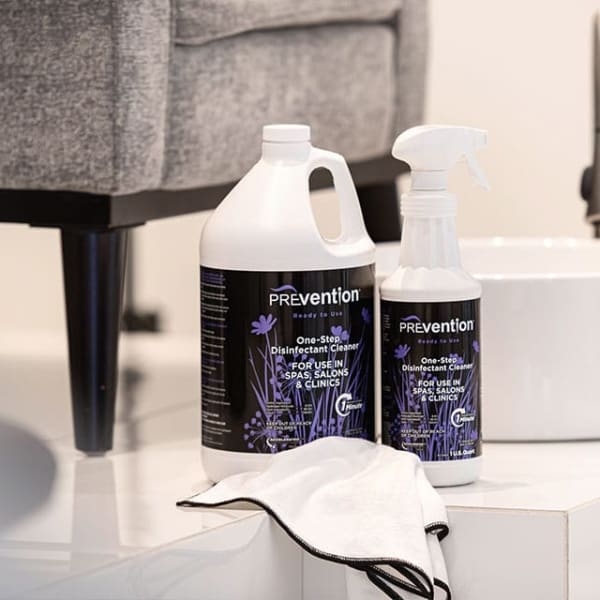
Based upon the history of your client, it seems to me that it would be more likely that the client developed an allergy to the acrylic material rather than an infection of the skin due to contaminated implements. It is possible, however, that if a person gets an allergic reaction on the skin and around the nails with a rash, then a secondary strep infection could develop because the skin is now open the not completely normal. However, this would not be due to contaminated implements. If you clean your instruments properly after every use and sterilize them, then it is not very likely that your client developed an infection from your implements in the first place. It should be added that simply cleaning the instruments is not adequate. They must be properly disinfected after each use.