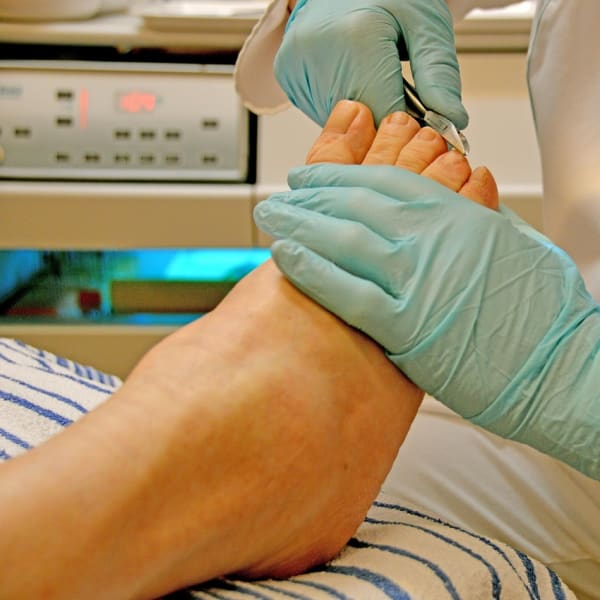
The most important thing to remember when doing an acrylic fill is to not nip product if you don’t need to, says Nadine Galli, district coordinator for OPI Products (North Hollywood, Calif.), because nipping can damage the nail. When doing an acrylic fill, Galli nips only product that is visibly lifting. Next, she files down the product with a medium-grit file, being careful not to file the natural nail. “If the product is tight against the nail, then file it down instead of nipping,” she advises. “The biggest mistake I see technicians make is to try and pry the product off with their nippers.”
If she sees lifting once she begins filing, Galli uses her nippers to gently remove the artificial product. “If you force it, you will crack the rest of the nail as well as remove layers of the natural nail.” she explains. “I think technicians tend to over-nip because they are not taught properly. Some technicians place their nippers under the product then pull up, which is incorrect and can cause more lifting. You need to use your nippers as if they were scissors and cut off any lifting product rather than pulling up.”
If Galli notices a crack in the artificial nail but no lifting, she’ll file the cracked area down and fill it in with product.
Juli Miller-Chen, a nail technician at Canyon Fitness Salon in Canyon Lake, Calif., and educator for IBD (Gardena, Calif.) also agrees that nippers should be used sparingly and only if the artificial product is loose or lifting. When doing a fill, she files the fill line flush with the natural nail. “Nipping product off the cuticle area can also cause a visible fill line.” she says.
When Miller-Chen notices a crack in the artificial nail, she applies a drop of quick-dry nail glue in the crack to stop it from cracking further and to secure it if it occurs in the natural nail. Then she carefully nips away the excess artificial product from around the crack. Next, she files down the entire nail. If the crack is in the stress area, it will alter the level of the nail surface where the product meets the natural nail, so to level out the surface, she applies a nail tip, then fills it in with product. If a crack appears around the cuticle, she files the area completely flush with the natural nail so she can do the fill.