Spoon nails are a common nail abnormality that can be easily overlooked because the mildest cases are hard to recognize. But be observant; early detection can alert clients to the early stages of a more serious medical condition.
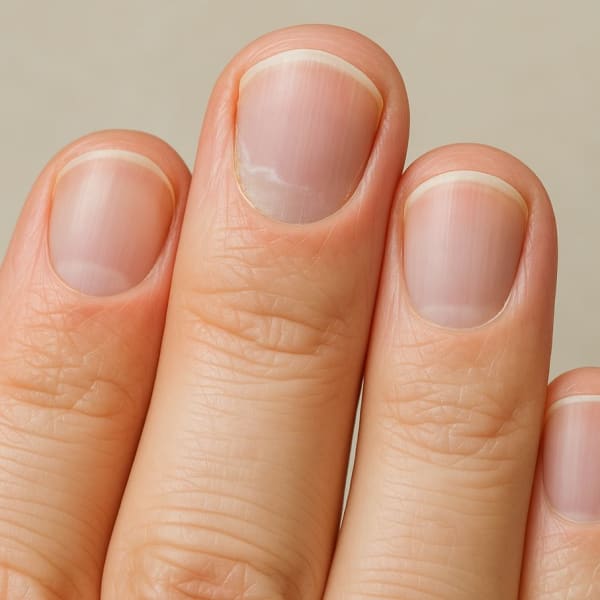
koilonychia: an abnormality of the nail that causes the nail to be flat or concave and the outer edges of the nail to flare out; also known as spoon nails.
5 min to read
koilonychia: an abnormality of the nail that causes the nail to be flat or concave and the outer edges of the nail to flare out; also known as spoon nails.
We’ve all heard that the fingernails are the windows to our health. This means nail technicians may be the first to notice signs of health problems in clients. Your professional perusal could alert clients to conditions they wouldn’t ordinarily take note of. Of course you can’t make an actual diagnosis, but if you see something abnormal, you can urge your client to see her doctor.
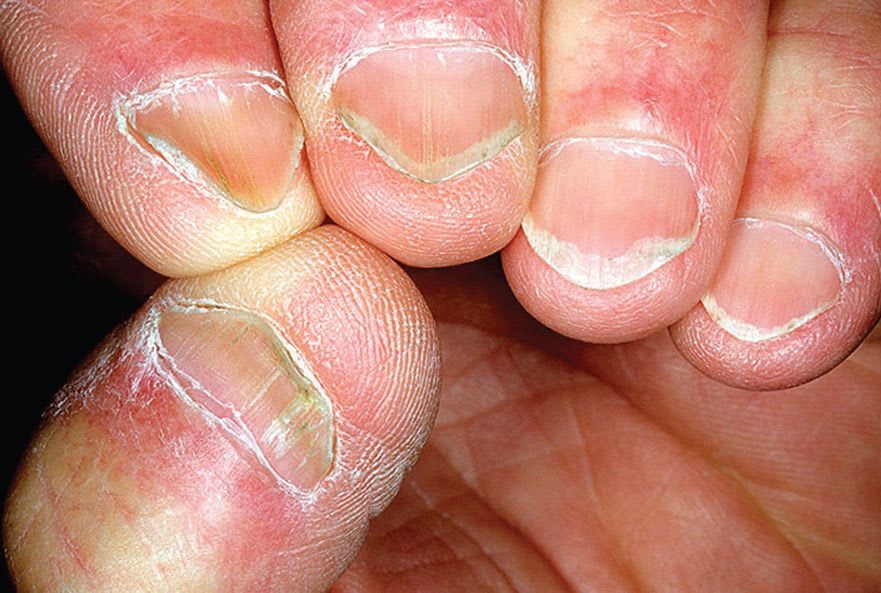
A good case in point is with an abnormality called koilonychia, or spoon nails. Spoon nails are a condition where the nail bed is flat or concave and dips or waves are visible on the surface of the nail. The dips and waves are actually in the nail bed — but since the natural nail is attached to the bed, the abnormality affects the nails. This condition is often harmless to clients, but it could be an indication of a more serious health problem. By being aware of the overall health of each client’s nails, you’ll have a baseline to refer to if you suspect a client has developed spoon nails.
Ad Loading...
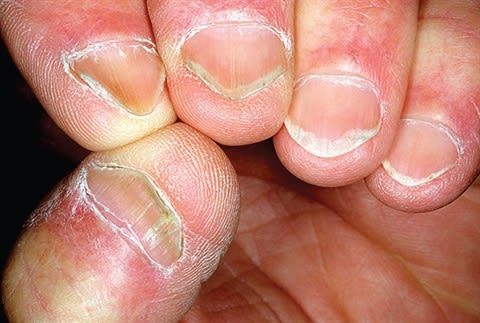
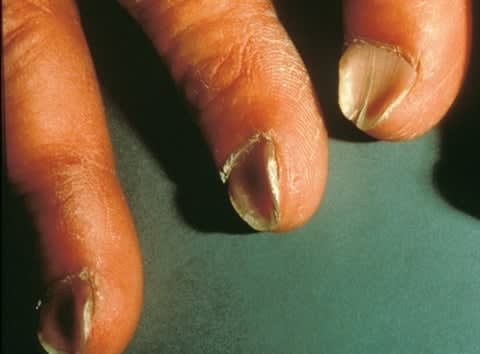
In mild cases of koilonychia, nails appears to have a wavy texture — just a soft roll to the nail plate. The nails will be healthy and strong, and the surrounding skin won’t be compromised. In more severe cases, the nails have a spoon-like indent in the middle, and the center of the indent will be deep enough to hold a few drops of water. Often the nail is split vertically down the center. At times, the sides of the nails fl are out, the skin under the nail can become very dry, cracked, or split, and the hyponychium can thicken.
In severe cases of koilonychia, the nails have a spoon-like indent in the middle. Often the nail is also split vertically down the center.
The causes of spoon nails vary. The condition can be hereditary. When this is the case, multiple nails will be affected with some sort of a concave dip. The indent will grow out, but the new nail will have the same indents. Sometimes spoon nails are due to a client continually picking, biting, or rubbing her nails. When that is the case, only the nails the client has damaged will show signs of koilonychia. The damaged nail will grow out and a healthy nail will grow in its place if the client hasn’t damaged the matrix (root) of the nail when she picked.
Severe trauma to the matrix of the nail can also cause koilonychia. This is probably the easiest form of spoon nail for the tech to identify, because only one nail will be damaged, and the client will be able to remember an isolated incident when it happened (since more than likely it caused severe pain). In this case, the nail may or may not grow back normal. If the nail begins to split as it grows out, suggest the client see a doctor before continuing to cover the nail with an enhancement. The split nail could trap bacteria or fungus, and applying product over the area may cause harm.[PAGEBREAK]
A poor diet can also cause spoon nails. When a person’s diet lacks iron, she becomes anemic. Anemia is a major cause of spoon nails. This is where the keen eye of the tech can help alert a client to a deeper problem. Techs who notice a normally healthy nail begin to pit in the middle or flare at the edges can gently ask clients if they’ve ever been tested for iron deficiency. If the client isn’t aware of an iron deficiency, but complains of being unusually tired, suggest she see her doctor to get her iron tested.
A final, though rare, cause of spoon nails could be a systemic problem, such as lung or heart problems, or even cancer.
Ad Loading...
The treatment for koilonychia varies for every patient. Doctors will evaluate the nail and get a patient’s history to determine the cause of the disorder — whether it’s hereditary, dietary, a result of trauma, or systemic. The doctor may opt for no treatment, knowing the deformed nail will grow out; she may recommend an iron supplement, or she may order more tests to determine if there is a deeper cause. Treatment can also include an emollient that softens the nail and the surrounding skin to prevent splitting and cracking.
WHAT’S A TECH TO DO?
Dr. Parker Gennett, a podiatrist in Vestal, N.Y., suggests techs have clients with spoon nails get a baseline exam. Be aware that when koilonychia is in the advanced stages, it is possible for bacteria to get lodged in the split nail or in the open, cracked skin. Sometimes trapped bacteria or fungus will turn the area yellow or green. Do not apply product over any compromised skin or over a spoon nail that is cracked in the middle, regardless of whether any discoloration is evident. Water can easily get trapped and bacteria can grow, even with careful preparation. Protect yourself and the client by refusing to apply product when a spoon nail and the surrounding skin is cracked.
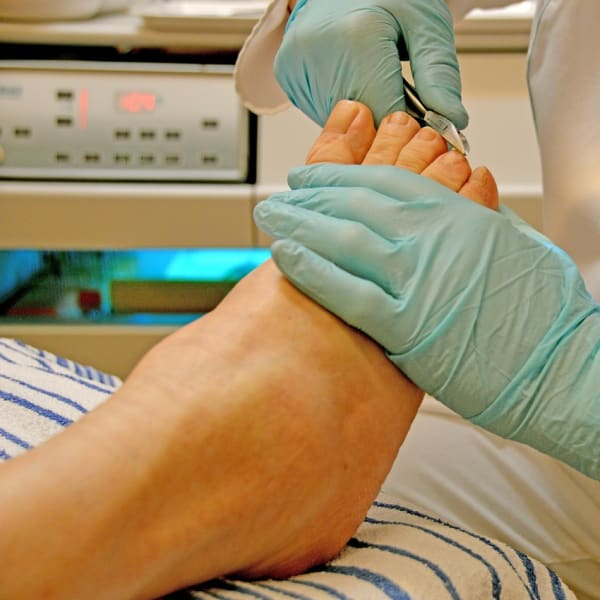
Dr. Gennett warns against applying an enhancement to beautify a toenail affected with koilonychia. Because toenails are likely to be covered with shoes, and they are evaluated less frequently, they are at a greater risk to trap water and develop an infection.
Once the doctor has determined there is no risk involved in enhancements, techs can apply an overlay to even out and correct the concave nail. Be sure to prep the area that is indented carefully — it’s easy to miss a spot on an uneven nail, and that puts the client at risk for lifting. During the application step, be sure to press firmly on the concave area, filling in completely the small dips of the nail. When that area grows out to the free edge, you will notice the acrylic is thicker where the client’s nail was concave. With careful prep and application, techs can make wavy, uneven spoon nails look like they have beautiful natural curves.
Uncured gel polish and microscopic e-file dust contain active acrylates that penetrate the skin, triggering permanent contact dermatitis. Learn the chemistry behind these irritants and how to protect your clients and yourself.
The Good Patch is a leading wearable wellness patch brand, offering wellness and skincare patches that support everyday needs including energy, sleep, relaxation and more.
Orthopedic PT reveals three daily exercises plus ergonomic advice that can help salon professionals avoid the aches and injuries caused by standing, bending and repetitive overhead work.
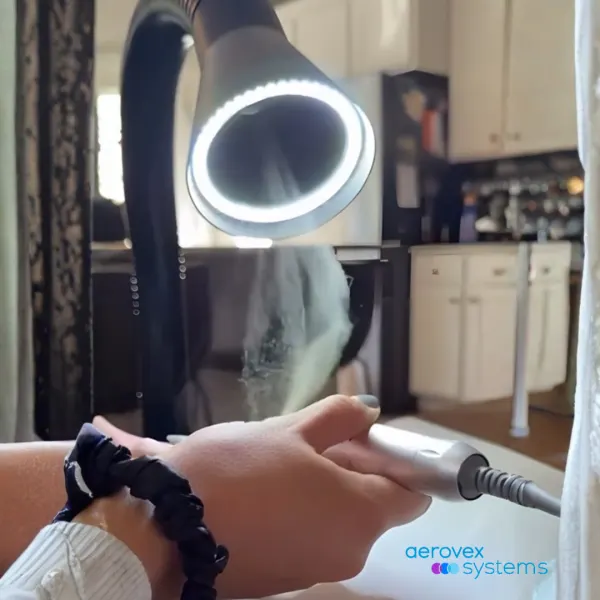
From acrylic monomers to airborne bio-dust, the air inside a nail salon carries risks most professionals never see coming. Aerovex Systems reveals the source-capture and room-purification strategies that are setting a new standard for salon safety.
Working in beauty doesn’t have to hurt. Learn how Somatic Movement helps hairstylists, lash artists, and other beauty pros release tension, improve posture, and extend their careers.
As a spa or salon professional, your clients expect more than just beauty—they expect safety, hygiene, and peace of mind. Fungal infections like Athlete’s Foot and Nail Fungus are more common than you think, especially in environments where tools and footbaths are reused without proper sanitation. This blog covers how to stop these issues before they start, using proven infection prevention strategies for salons and spas.
A federal initiative aimed at studying chemical exposure in nail salons has ended due to staffing and budget changes. Here’s what the project set out to do—and what its conclusion means for salon professionals.
For many people, a pedicure is a relaxing beauty ritual. But what most don’t realize is that this simple service, if done without proper hygiene and sanitation, can cause serious infections and long-term health issues.
Onycholysis is the separation of the nail plate from the nail bed. While it may look painful, it typically isn’t—at least not at first. But without proper care, this common nail disorder can lead to infections, deformities, and long-term damage.
Mckenzie Kool, Psychologist, MC, RPsych provides us with guidance on what may or not be helpful in speaking with someone who has suffered a significant loss.
Clients come to you to feel their best—not leave with a viral souvenir. Warts and cold sores can spread fast in busy salons, but a few smart habits make all the difference. Let’s talk about what’s really lurking in your salon (and how to kick it to the curb).
As Earth Day approaches, The Green Beauty Community Foundation and the Green Spa Network invite beauty pros to step forward and embrace sustainability through the Green Pledge--a powerful initiative designed by and for beauty industry leaders.
Don’t cancel Valentine’s Day altogether, urges Jill Palmquist. Instead, think of it as a (frilly, flowery, Champagne-bubbly) wake-up call to fall deeply in love with your own life.
Life coach and Culture Ambassador of Sam Villa, Andrew Carruthers, outlines how to tell if your burnout is temporary - or if it's time to make a bigger career change.