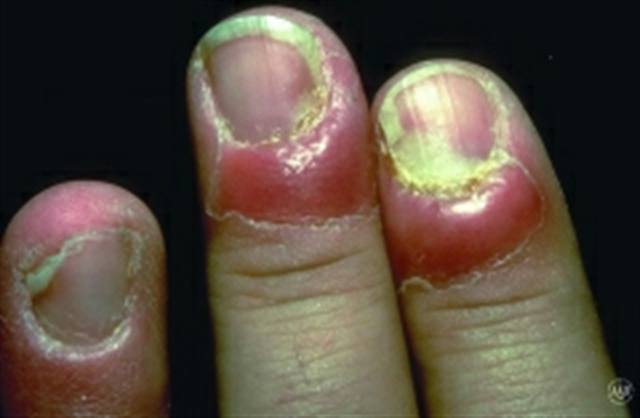
Paronychia may start off as a small annoyance, but it can turn into a big problem. Early detection and treatment are best defense against this potentially painful infection.
par-i-’nik-eaa breakdown in the seal between the skin and the nail plate that results in an infection.
“There are two types of paronychia: acute and chronic,” says Dr. C. Ralph Daniel, clinical professor of dermatology at the University of Mississippi Medical Center in Jackson, Miss. Both are caused when “the seal between the fold and the nail plate is broken and infection gets in,” says Daniel. Which bacteria enter the broken seal is one of the factors that determines if the condition is acute or chronic.
Ad Loading...
Many outside factors can be the cause of acute paronychia, including improper manicuring. Just imagine the number of ways the seal between the skin fold and the nail plate can be broken: a cuticle stick that is pushed under the skin fold can break the seal, cuticles can be clipped incorrectly, and even removing thick cuticles from the nails before applying product could result in damage to the seal. Clients could innocently break the seal themselves, and without understanding the problems that puncturing the seal can cause, it could go untreated for days as it worsens. “The other day I put my hand in my pocket, and I stuck myself with a golf tee,” says Daniel. “Even something like that could have broken the seal.” Once the seal is broken, it’s easy for infection to get in from dirt, food, nail-biting, etc. The possibility for infection is everywhere.
The factors that would cause chronic paronychia vary slightly. While the condition is the same, in that a broken seal is still the culprit, the agents that break the seal are different. Contact moisture, from, for example, hands that are in the water too often, can cause the seal to break, says Daniel. Cosmetics, harsh soap, or even frequent handling of raw foods could also damage the seal. Daniel gives the example of a bartender as a person who could be at risk for chronic paronychia.
Techs can tell the difference between chronic and acute paronychia because acute paronychia will be accompanied by pain and swelling within a couple of days of an injury. Pus could be present at the site of the infection. Clients should be able to remember a recent trauma that caused pain to that nail. It’s important that the condition be treated quickly before it worsens. Daniel suggests cleaning the area with water, treating it with Polysporin, and keeping it covered 24 hours a day. The nail should look normal after three or four days. Dr. Daniel says he recommends Polysporin over Neosporin because the paronychia responds better to the combination of the two components in Polysporin rather than the triple antibiotics of Neosporin.
If paronychia doesn’t clear up in a couple of days, and certainly if a tech sees paronychia in two consecutive appointments, refer the client to a doctor. Paronychia may have to be tested for cultures. Yeast could be present in the infection, and the doctor may need to write a prescription to treat the yeast in addition to the area of infection. This may even involve an oral medication if the doctor feels that the yeast is a systemic problem. “There are two schools of thought on how to treat chronic paronychia,” says Daniel. “European doctors seem to prefer to treat only the inflammation and infection. American doctors often opt to treat the yeast along with the inflammation.” Either way, Daniel says, he puts patients on a “strict irritant and moisture avoidance regiment” to combat paronychia. He tells patients to avoid nail cosmetics and keep the area dry and covered. In some cases, he suggests patients wear cotton gloves with waterproof gloves over them to avoid getting the hands wet during cleaning or washing dishes.
WHAT’S A TECH TO DO?
Ad Loading...
It’s easy to think “it’ll never happen to me,” but the truth is that it is possible a tech could break the seal between the skin flap and the nail plate during a routine nail appointment. Maybe we are behind so we work too quickly, or maybe our implement slips when we push the cuticle back. It’s unlikely, but not impossible. If you suspect that you have broken the seal (and the client will probably jerk her hand away and let out an exclamation), choose caution in order to protect yourself and the client. Clean the area, but don’t apply new product to that nail. If the client is pain-free over the next few days, she can return before her next scheduled appointment so you can fill her nail. It may be embarrassing to you and frustrating to the client, but it’s better to be safe. By applying product or buffing the nail, which could allow dust into the broken skin, you could introduce an irritant that causes an infection.
The same caution should be taken if the client comes into the salon complaining of pain at her cuticle and reliving a story of how she hurt herself. If the client complains of pain, or if you see swelling, do not apply product to that nail. Instead, recommend she apply Polysporin to the infection and keep the area covered and dry. Suggest she see a doctor if the pain and swelling do not go away. If fever results, it is imperative she see her doctor.
Techs who enjoy the challenge of problem nails may be tempted to clean the area of infection for the client and gently manicure the nail so that the nail looks better when the client leaves. Avoid the temptation. Paronychia is not a condition that should be treated lightly. If an infection doesn’t heal properly, big problems can result, possibly even systemic — whole body — infections. You can soak the finger in warm water, dry it, offer a bandage, and recommend the client keep the area dry and covered; however, if the client says the condition hasn’t improved in a couple of days it’s time to see a doctor.
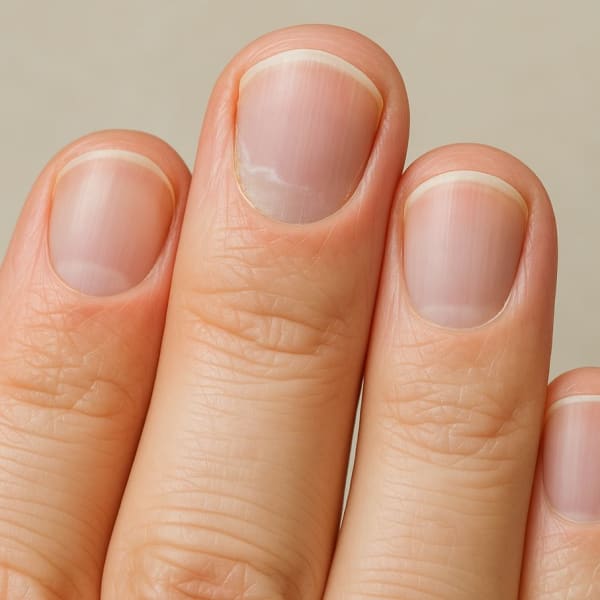
PHOTOGRAPH REPRINTED WITH PERMISSION FROM THE AMERICAN ACADEMY OF DERMATOLOGY. ALL RIGHTS RESERVED.
Uncured gel polish and microscopic e-file dust contain active acrylates that penetrate the skin, triggering permanent contact dermatitis. Learn the chemistry behind these irritants and how to protect your clients and yourself.
The Good Patch is a leading wearable wellness patch brand, offering wellness and skincare patches that support everyday needs including energy, sleep, relaxation and more.
Orthopedic PT reveals three daily exercises plus ergonomic advice that can help salon professionals avoid the aches and injuries caused by standing, bending and repetitive overhead work.
From acrylic monomers to airborne bio-dust, the air inside a nail salon carries risks most professionals never see coming. Aerovex Systems reveals the source-capture and room-purification strategies that are setting a new standard for salon safety.
Working in beauty doesn’t have to hurt. Learn how Somatic Movement helps hairstylists, lash artists, and other beauty pros release tension, improve posture, and extend their careers.
As a spa or salon professional, your clients expect more than just beauty—they expect safety, hygiene, and peace of mind. Fungal infections like Athlete’s Foot and Nail Fungus are more common than you think, especially in environments where tools and footbaths are reused without proper sanitation. This blog covers how to stop these issues before they start, using proven infection prevention strategies for salons and spas.
A federal initiative aimed at studying chemical exposure in nail salons has ended due to staffing and budget changes. Here’s what the project set out to do—and what its conclusion means for salon professionals.
For many people, a pedicure is a relaxing beauty ritual. But what most don’t realize is that this simple service, if done without proper hygiene and sanitation, can cause serious infections and long-term health issues.
Onycholysis is the separation of the nail plate from the nail bed. While it may look painful, it typically isn’t—at least not at first. But without proper care, this common nail disorder can lead to infections, deformities, and long-term damage.
Mckenzie Kool, Psychologist, MC, RPsych provides us with guidance on what may or not be helpful in speaking with someone who has suffered a significant loss.
Clients come to you to feel their best—not leave with a viral souvenir. Warts and cold sores can spread fast in busy salons, but a few smart habits make all the difference. Let’s talk about what’s really lurking in your salon (and how to kick it to the curb).
As Earth Day approaches, The Green Beauty Community Foundation and the Green Spa Network invite beauty pros to step forward and embrace sustainability through the Green Pledge--a powerful initiative designed by and for beauty industry leaders.
Don’t cancel Valentine’s Day altogether, urges Jill Palmquist. Instead, think of it as a (frilly, flowery, Champagne-bubbly) wake-up call to fall deeply in love with your own life.
Life coach and Culture Ambassador of Sam Villa, Andrew Carruthers, outlines how to tell if your burnout is temporary - or if it's time to make a bigger career change.