subungual (sub-UN-gwul): situated under the fingernail or toenail
hematoma (he-ma-TOE-ma): a mass of blood
A subungual hematoma is a collection of blood that forms under a fingernail or a toenail. Damage occurs to the nail and the skin beneath the nail, and the lacerated skin begins bleeding. The blood pools under the nail and can cause severe pain and intense pressure. At times, soaking the finger in ice water relieves the pain. However, if the pain becomes intolerable, it’s necessary to puncture a small hole through the nail to allow the blood a way to drain. Relief from the pressure is immediate.
Subungual hematomas are caused by injury to the nail. Most commonly this happens in two ways: either through blunt trauma or through repetitive pressure. Examples of blunt trauma would include hitting the finger with a hammer, slamming a finger in the car door, or dropping a heavy object on the toe. Repetitive pressure is often the result of regular activities, such as running, hiking, tennis, or soccer. Most often, the hematoma caused by the repetitive pounding of these activities can be attributed to shoes being too small rather than to any dangers of the sport.
In the best case scenario, a minor hematoma forms below the nail, and aside from the initial pain and a slight pressure common with all bruises, no real injury occurs. A small hematoma may be visible under the nail, but there is no threat of the nail falling off. If pressure occurs under the toenails during or after exercise, it can often be relieved by taking a couple of days off from the activity and using the time to go out and purchase a larger pair of shoes.
In many cases, however, a subungual hematoma is more than a minor bruise. As the blood pools under the nail, the finger becomes warm and pressure builds. Often the nail will need to be punctured to drain the blood. The basic procedure is simple. The nail is submerged in ice water to numb the area. Once dried, the area is sanitized. To create a way for the blood to drain, a needle (or even a paper clip) is heated to red hot and then used to puncture the nail with steady pressure. This is done very carefully to avoid breaking through the nail and touching the already damaged skin below. As soon as the nail is punctured, blood is released and the pressure subsides.
The hole provides a doorway that allows bacteria to get under the nail, so it’s important to keep the nail dry and clean. As a new nail grows in, the damaged nail will grow out.
While the treatment to relieve the pressure is easy to do at home, many people opt to have a doctor perform the procedure. This provides more assurance against infection and may include a prescription for a topical antibiotic.
What’s a Tech to Do?
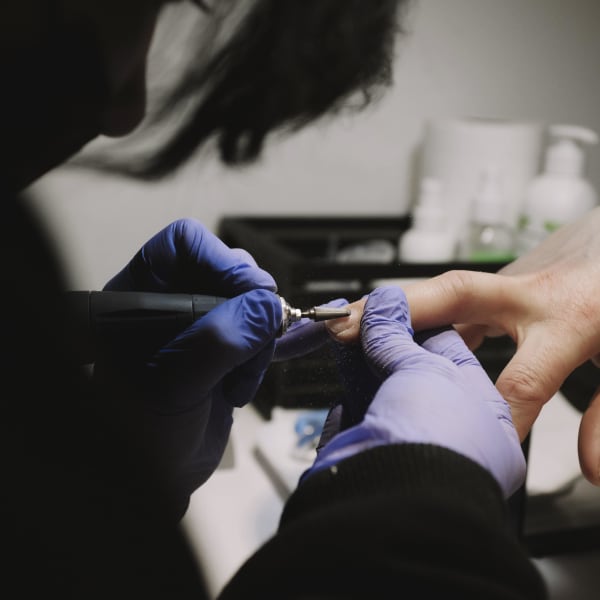
A bruised nail is not a pretty sight and techs may be tempted to use their best skills to beautify the nail. But caution is in order. If you feel heat when you touch a client’s finger, or if the client complains of pain, refer her to a doctor.
Assuming the client arrives with a subungual hematoma that is no longer causing her pain, the first thing a tech should do is shorten the nail and remove any product. Even as the nail is growing out, don’t cover the area with product because with the subungual hematoma, the nail has actually pulled away from the nail bed. Applying product over this could trap bacteria between the nail plate and the nail bed, especially if the nail has been punctured to drain the blood. So one option for the tech is to shorten the nail, remove the product, and wait for the nail to grow out.
Many clients will ask that the loose nail be removed so that the dried blood can be washed away. Depending on how recent the injury, this could be a viable option for a tech. If the area is not tender, gently clip all unattached nail away and then clean the nail bed. It’s likely that not all of the nail will come off. In some cases, the client’s free edge remains, and some of the nail close to the free edge or along the sides is still adhered. You won’t want to apply an enhancement product over the exposed skin, so it’s important to explain to the client how her nail is likely to look if she decides to remove the damaged portion.
There are times when an injury causes damage to the matrix and the new nail that grows in will have ridges or waves. If the matrix isn’t damaged, the nail will grow in just as it was before the injury. This could take anywhere from six to 18 months. As soon as the skin of the nail bed heals and new nail growth reaches the free edge, it’s safe to apply enhancement product.
Be aware that you may be the first call or the first stop the client makes to get an opinion on her subungual hematoma. If the injury is recent and the pressure is still causing her pain, you might be tempted to relieve her angst by heating up a pin or paper clip and puncturing the nail yourself. Under no circumstances should you do this at the salon. Once the nail is punctured, bacteria can get in under the nail. If you punctured the nail in the salon, the client may see you as liable. Instead, educate the client on how to relieve the pressure herself or refer her to a doctor.