This year, a flurry of nail salon news coverage in New York, Connecticut, and California spurred legislators to sponsor a host of new rules for nail salon owners and workers. Little was said, however, about complying with existing state laws on infection control within the salon.
When it comes to mainstream media, the topic of what constitutes a clean, healthy salon rotates year to year between hot and non-existent. But in our world, maintaining the highest standards of cleanliness, which includes thorough disinfection of all non-porous surfaces, and a healthy environment for ourselves and our clients is a newsfeed that never stops.
Ad Loading...
A growing list of experts, manufacturers, professional organizations, and committed nail techs and salon owners are busy not only in advocating consistent and easy-to-understand clean salon standards, but they are also behind some promising new tools that nail techs can use to keep their clients protected from any unwanted infections.
Why Sanitation Is a Dirty Word
Everyone wants to have a sanitary environment to feel safe in, but what exactly does that mean? Everything and nothing, according to Leslie Roste, RN, who is national director of education at BlueCo Brands. “Sanitation is a ‘claimless claim,’ “ Roste says. “It’s been used as a blanket to cover everything from removing top-level debris to actual disinfection.”
On the positive side, Roste maintains that techs following the proper state guidelines for disinfection are doing much more than maintaining sanitary standards. “You’re actually killing viruses — you’re doing more than you think!” Roste is working with many state boards and encouraging them to remove the word sanitation from their rules or make the proper distinction between disinfection, sanitation, and sterilization.
In the coming year, look for more state boards replacing the term Sanitation Rules with Disinfection Rules and replacing confusing or outdated language with clear, concise wording.
Am I Doing This Right?
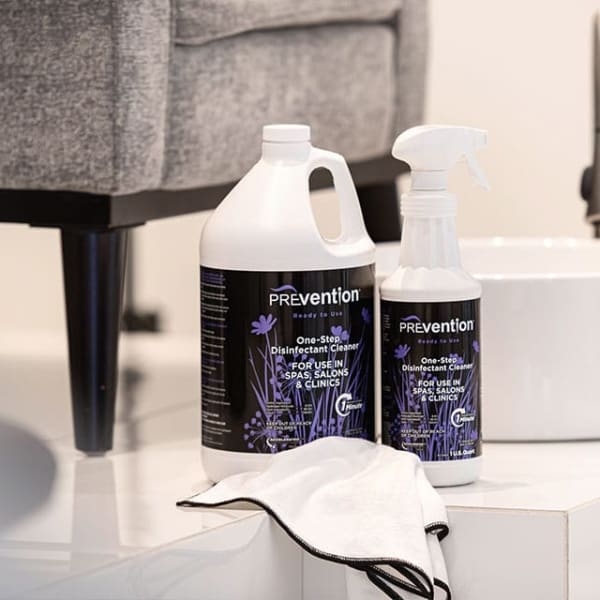
Using disinfection products correctly is a vital key to their effectiveness. Liquid disinfectants will indicate the proper dilution ratio as well as the length of contact time required for best results. One way nail professionals can hone their skills with proper liquid disinfection is through certification. BlueCo Brands offers a one-hour online training certification course using Barbicide products; more than 37,000 nail professionals have become certified to date. (To sign up, send an email to barbicidecertified@barbicide.com)
Ad Loading...
More advanced procedures, such as using an autoclave, will deliver the highest level of hospital-grade disinfection but only if it’s used correctly. And, according to Monika Herzog Butler of Salon Inspector, autoclaves are often confused with UV sterilizers, a much cheaper “alternative” on the market that is not really an equivalent alternative at all. “The only way to sterilize in a salon environment is with a medical-grade autoclave, which is very expensive,” she says. The UV boxes are causing problems because the implements emerge in sealed plastic pouches and appear sterilized to trusting consumers, even if they aren’t.
Whatever your disinfection process may be, the trick is in following the manufacturer’s instructions very carefully and being consistent. It needs to be a habit, as much a part of each service as caring for the nails. “Consumers are seeing things on the news,” Roste says. “When you’re cleaning your pedicure bowl the lady next to you is watching.” Storing implements in a dusty UV box or spritzing disinfectant on an implement and wiping it with a used towel will be noticed by savvier and increasingly concerned clients — and they will not return.
Janet McCormick, co-founder of Nailcare Academy and Salon Gurus, agrees that consumers are paying attention. “It’s been proven that if you market your high-end disinfection control, you can charge more and attract the clients who want it,” she says. McCormick is an advocate for disinfection control laws that cover a broader spectrum of microbes. Currently, most states require disinfection liquids that are bactericidal, virucidal, and fungicidal; that is not enough according to McCormick, who points to changes in the health of the general population. “The world of infections has changed dramatically since the 90s,” she states. “There are many infections, such as MRSA and herpes that are contagious for more than 24 hours before symptoms present.”
So what are the best salons doing? “The best salons are using a three-level approach to cleanliness,” says Karen Hodges, salon owner and co-founder of Nailcare Academy and Salon Gurus. “Sanitize, which is removing debris and cleaning; disinfect all hard surfaces; and sterilize all implements.”
Disposable, Single-Use Products
A key advantage to using disposable and/or single-use products is both the convenience and the assurance that cross-contamination has not taken place. This year, companies have come out with some new products that answer the need for both.
Ad Loading...
Single-use packets of all kinds of liquid products are available, from oils to moisturizers to sugar scrubs. Unlike polish, which has ingredients that bar the development of microorganisms like bacteria, other liquids in larger multi-use containers are susceptible if not used and stored properly. Paraffin treatments are particularly vulnerable, notes Kristin Sartore of Spa Revolutions. The company introduced a hand/foot treatment that contains self-heating paraffin wax within the disposable glove or slipper. “These were designed to eliminate the risk of contamination from unsanitary communal tubs,” Sartore explains.
As their appointment book grows, busy nail techs often look for easier ways to stay compliant with their state laws and prevent contamination. “For me, the more I can throw away the happier I am,” Hodges says. All of her abrasives are single-use, and she performs waterless manicures and pedicures to avoid water-borne pathogens.
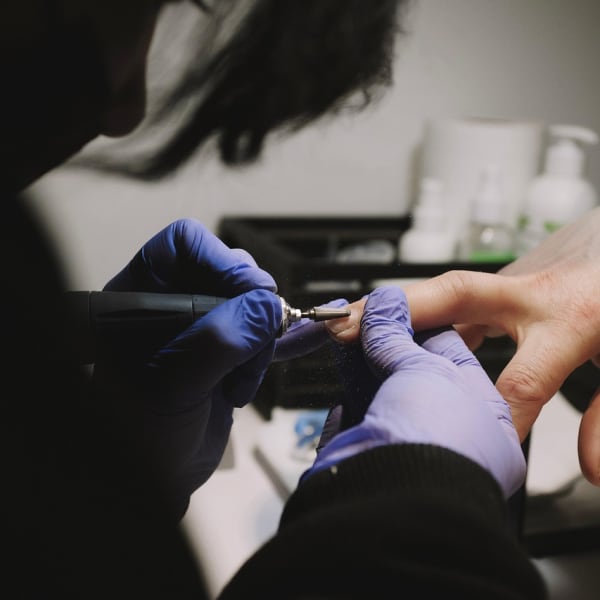
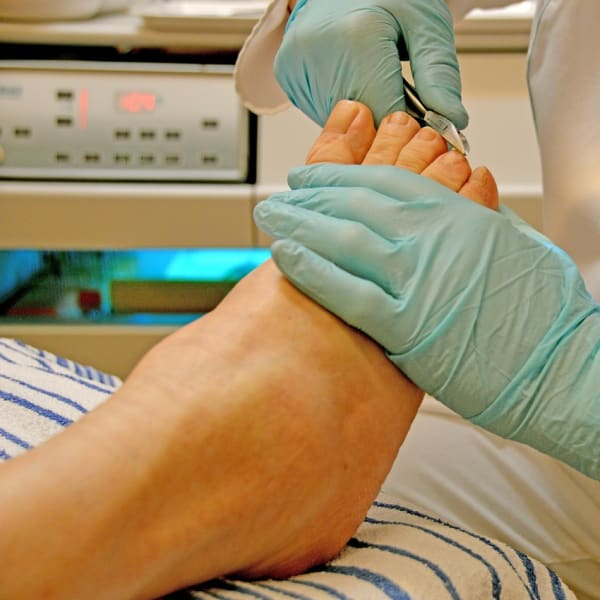
Using disposable gloves is a low-tech, relatively low-cost way to provide extra protection during services. Although nail professionals have been using gloves for years, Hodges notes that of late she’s noticed an uptick in the glove conversation. “It’s not new or sexy, but [glove use] is definitely more commonplace and one of the most important components of good infection control.”
For a few ideas on disposable service products, click here.
Tips for a Meticulous Salon
At the beginning of the day:
Ad Loading...
Prepare all towels for the warmer with freshly washed or gloved hands.
Before each service:
Wash your hands and ask your client to do the same.
After and between each service:
Wash all non-porous implements, surfaces, and pedicure bowls with soap and water.
Disinfect all reusable (non-porous) implements and pedicure bowls with EPA-registered disinfectants (EPA-registered disinfectants are bactericidal, virucidal, and fungicidal.) Make sure solution is properly mixed and that items are immersed for full contact time (generally 10 minutes) to ensure that all pathogens of concern have been killed.
Dispose of single-use (porous) items such as files, buffers, pumice stones, and orangewood sticks immediately after using on previous client.
Ad Loading...
At the end of the day:
Ensure that towel warmers are emptied, disinfected, and left open to dry.
Bleach Facts
Did You Know …
Non-chlorine (or oxygen) bleach does not have the same disinfection properties as chlorine bleach
Chlorine bleach is a corrosive; it can damage equipment if left to sit 6 hours or overnight
Bleach has a shelf life of six months, and will only actively disinfect within that time frame. Check the manufacture date, which should be stamped on the bottle.
Uncured gel polish and microscopic e-file dust contain active acrylates that penetrate the skin, triggering permanent contact dermatitis. Learn the chemistry behind these irritants and how to protect your clients and yourself.
The Good Patch is a leading wearable wellness patch brand, offering wellness and skincare patches that support everyday needs including energy, sleep, relaxation and more.
Orthopedic PT reveals three daily exercises plus ergonomic advice that can help salon professionals avoid the aches and injuries caused by standing, bending and repetitive overhead work.
From acrylic monomers to airborne bio-dust, the air inside a nail salon carries risks most professionals never see coming. Aerovex Systems reveals the source-capture and room-purification strategies that are setting a new standard for salon safety.
Working in beauty doesn’t have to hurt. Learn how Somatic Movement helps hairstylists, lash artists, and other beauty pros release tension, improve posture, and extend their careers.
As a spa or salon professional, your clients expect more than just beauty—they expect safety, hygiene, and peace of mind. Fungal infections like Athlete’s Foot and Nail Fungus are more common than you think, especially in environments where tools and footbaths are reused without proper sanitation. This blog covers how to stop these issues before they start, using proven infection prevention strategies for salons and spas.
A federal initiative aimed at studying chemical exposure in nail salons has ended due to staffing and budget changes. Here’s what the project set out to do—and what its conclusion means for salon professionals.
For many people, a pedicure is a relaxing beauty ritual. But what most don’t realize is that this simple service, if done without proper hygiene and sanitation, can cause serious infections and long-term health issues.
Onycholysis is the separation of the nail plate from the nail bed. While it may look painful, it typically isn’t—at least not at first. But without proper care, this common nail disorder can lead to infections, deformities, and long-term damage.
Mckenzie Kool, Psychologist, MC, RPsych provides us with guidance on what may or not be helpful in speaking with someone who has suffered a significant loss.
Clients come to you to feel their best—not leave with a viral souvenir. Warts and cold sores can spread fast in busy salons, but a few smart habits make all the difference. Let’s talk about what’s really lurking in your salon (and how to kick it to the curb).
As Earth Day approaches, The Green Beauty Community Foundation and the Green Spa Network invite beauty pros to step forward and embrace sustainability through the Green Pledge--a powerful initiative designed by and for beauty industry leaders.
Don’t cancel Valentine’s Day altogether, urges Jill Palmquist. Instead, think of it as a (frilly, flowery, Champagne-bubbly) wake-up call to fall deeply in love with your own life.
Life coach and Culture Ambassador of Sam Villa, Andrew Carruthers, outlines how to tell if your burnout is temporary - or if it's time to make a bigger career change.