A Day in the Life of a Nail Expert: Pseudomonas Nail Infections
In this month’s column, Dr. Stern discusses the different reasons pseudomonas infections (sometimes called "greenies") may develop on clients’ nails and what to do about it if they do.
by Dr. Dana Stern
April 5, 2016
Dr. Dana Stern
4 min to read
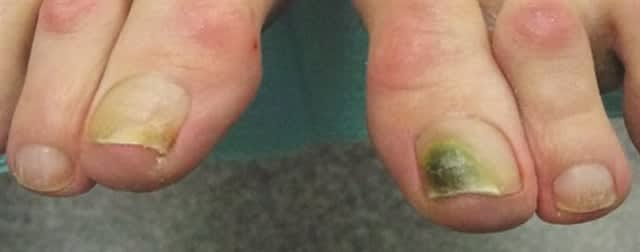
Pseudomonas aeruginosa is a rod-shaped bacteria that produces a green pigment. These bacteria tend to thrive in moist environments.
When we think about nail infections, fungus is probably what first comes to mind; however, we also need to be aware of bacterial infections of the nail. Pseudomonas, often referred to as “greenies” in nail salons, is a common bacteria that can cause infections that range from minor to life-threatening. In those patients who have a weakened immune system, such as burn victims or newborns, pseudomonas can be very serious. Less worrisome infections caused by pseudomonas include issues such as swimmer’s ear, hot tub rashes, and, of course, nail infections.
Pseudomonas aeruginosa is a rod-shaped bacteria that produces a green pigment, hence the term “greenies.” These bacteria tend to thrive in moist environments and this is why we sometimes see pseudomonas infections associated with artificial nails. Artificial nails can create gaps in the space between the natural nail plate and the artificial enhancement where moisture can build up and bacteria can flourish. Natural nails that are separated from the underlying nail bed (onycholysis) can also develop a pseudomonas infection when the bacteria takes residence in the warm, moist space between the natural nail plate and the nail bed.
Ad Loading...
Bacteria that is not completely removed from a nail plate prior to the application of an enhancement can cause pseudomonas to grow in the space between the nail plate and the enhancement.
Longer nails are also theoretically predisposed to a greater risk for bacteria becoming entrapped on the underside of the nail where typical hand washing is not always effective for removing debris on the underside of the nail. In fact, there have been reports of pseudomonas infection outbreaks in hospitals where the source was traced back to nurses with long, artificial nails. It is advisable for healthcare workers to wear their nails shorter for this reason. As a physician and surgeon, you will never catch me with long talons!
Who Is at Risk for Pseudomonas?
Most commonly, pseudomonas affects nails that are damaged in some way. For example, a nail that is separated or a nail where the cuticle has become compromised and the surrounding nail fold has become inflamed and swollen (paronychia) are scenarios where pseudomonas can enter the nail unit successfully. Bacteria that is not completely removed from a nail plate prior to the application of an enhancement can cause pseudomonas to grow in the space between the nail plate and the enhancement. Proper hand-washing by both client and nail techs before services as well as frequent cleaning throughout the service are essential for this reason. Although pseudomonas is not easily transmitted from person to person in a salon, manicuring equipment should always be properly disinfected and one-time-use items properly disposed of after each client.
Treatment of pseudomonas depends on the likely cause of the infection. If the cause seems to be artificial nail-related, remove the enhancement and lightly buff the dark area to remove the nail surface involvement. It is important to keep the nail clean and dry, and it would be ideal to leave product off of the nail to allow the nail to heal. Tell your client to soak the nail in clear vinegar (not balsamic!) several times daily for a couple of weeks. She should understand that it may take several months for the stain to grow out. If, after three weeks, the issue is not growing out or the green discoloration is spreading, urge your client to visit a doctor.
If Pain Is Present
Pseudomonas is not typically painful. However, if your client’s nail or surrounding skin is tender or there is pus, the infection is likely not exclusively from pseudomonas and a physician should see your client immediately. This scenario is called a mixed infection, meaning there are different types of bacteria involved and treatment will likely require draining and culturing the infection.
Ad Loading...
In contrast to enhancement-associated pseudomonas, if the nail is clearly damaged or lifted, then the nail needs to re-adhere or heal in order for the pseudomonas to be effectively treated and to prevent recurrence of the infection. For clients with nail separation, it is advisable to take a nail polish holiday in order to allow the nail to re-adhere. These clients should be following a strict irritant avoidance regimen, where they avoid exposure to polish remover and wear gloves with any wet work. If several nails are separated, your client may need to be evaluated by a physician for a prescription anti-yeast topical agent to use under the nail.
Dermatologists treat skin, hair, and nails. I am a board-certified dermatologist and I specialize in the treatment of nail disorders including inflammatory diseases of the nail, cosmetic issues related to the nail, cancers of the nail, sports-related nail injuries, and nail infections.
Uncured gel polish and microscopic e-file dust contain active acrylates that penetrate the skin, triggering permanent contact dermatitis. Learn the chemistry behind these irritants and how to protect your clients and yourself.
The Good Patch is a leading wearable wellness patch brand, offering wellness and skincare patches that support everyday needs including energy, sleep, relaxation and more.
Orthopedic PT reveals three daily exercises plus ergonomic advice that can help salon professionals avoid the aches and injuries caused by standing, bending and repetitive overhead work.
From acrylic monomers to airborne bio-dust, the air inside a nail salon carries risks most professionals never see coming. Aerovex Systems reveals the source-capture and room-purification strategies that are setting a new standard for salon safety.
Working in beauty doesn’t have to hurt. Learn how Somatic Movement helps hairstylists, lash artists, and other beauty pros release tension, improve posture, and extend their careers.
As a spa or salon professional, your clients expect more than just beauty—they expect safety, hygiene, and peace of mind. Fungal infections like Athlete’s Foot and Nail Fungus are more common than you think, especially in environments where tools and footbaths are reused without proper sanitation. This blog covers how to stop these issues before they start, using proven infection prevention strategies for salons and spas.
A federal initiative aimed at studying chemical exposure in nail salons has ended due to staffing and budget changes. Here’s what the project set out to do—and what its conclusion means for salon professionals.
For many people, a pedicure is a relaxing beauty ritual. But what most don’t realize is that this simple service, if done without proper hygiene and sanitation, can cause serious infections and long-term health issues.
Onycholysis is the separation of the nail plate from the nail bed. While it may look painful, it typically isn’t—at least not at first. But without proper care, this common nail disorder can lead to infections, deformities, and long-term damage.
Mckenzie Kool, Psychologist, MC, RPsych provides us with guidance on what may or not be helpful in speaking with someone who has suffered a significant loss.
Clients come to you to feel their best—not leave with a viral souvenir. Warts and cold sores can spread fast in busy salons, but a few smart habits make all the difference. Let’s talk about what’s really lurking in your salon (and how to kick it to the curb).
As Earth Day approaches, The Green Beauty Community Foundation and the Green Spa Network invite beauty pros to step forward and embrace sustainability through the Green Pledge--a powerful initiative designed by and for beauty industry leaders.
Don’t cancel Valentine’s Day altogether, urges Jill Palmquist. Instead, think of it as a (frilly, flowery, Champagne-bubbly) wake-up call to fall deeply in love with your own life.
Life coach and Culture Ambassador of Sam Villa, Andrew Carruthers, outlines how to tell if your burnout is temporary - or if it's time to make a bigger career change.