





The Beauty Pro Book Club: 4 Reads to Inspire Growth and Success
Four publications for beauty industry professionals to enhance their leadership skills, financial awareness, professional growth, and joy!
by Anne Moratto


 MENU
MENU SEARCH
With banks more reluctant than ever to lend to small businesses, salons must often look elsewhere for financing. There are several options available should your business fall outside the scope of traditional bank financing.


Hiring skilled nail technicians, investing in salon equipment, and purchasing new inventory are all ways to keep your nail salon moving forward. However, there are also those unexpected situations that arise — such as problems with plumbing or a broken pedicure chair — that bring your business to a halt. Having cash on hand is essential to growing your business.
However, small businesses nationwide — not just nail salons — are experiencing difficulty securing the necessary working capital they need, especially from traditional lenders. Much of the reason small businesses have trouble getting loans is because the business that is looking for $10,000 or $50,000 doesn’t offer a lot of upside for a bank. So instead of spending a significant amount of time and resources analyzing a business, they instead judge it based on the personal credit score of the owner. But the personal credit score doesn’t reflect the health of the business, and as a result millions of perfectly healthy small businesses are unable to access capital.
So where should a small business owner turn to secure financing? Fortunately, advancements in the lending arena are making capital more easily accessible to small businesses. Here are some options:
Credit card advances. Credit card advances involve a lump sum payment to a business in exchange for an agreed upon percentage of future credit card sales. This form of financing is common among businesses with strong credit card sales, but poor personal credit. Repayment is in the form of a percentage of the business’s daily credit card sales, directly from the processor that clears and settles the credit card payment. It’s important to note this is not considered a loan (and therefore does not build your business credit), because it is a sale of a portion of future credit card sales. This option can often be expensive and may require a business to change processors.
> You can find these services through a simple Internet search, although a commonly known one is AdvanceMe (www.advanceme.com).
Short-term business loan. The benefit of using real loans (not credit card advances) is that they enable you to extend payments over six to 18 months. These loans, typically between $5,000 and $150,000, are not just based on your personal credit but also take into account your business performance and readily available electronic records (merchant processing, online banking, etc). This method also utilizes a daily debit repayment method, which means you are repaying a set, fixed amount every business day directly from your business checking account. This helps to better manage cash flow issues. Furthermore, short-term business loans typically report back to the credit agencies, which helps strengthen your business credit. Short-term business loans are ideal for purchasing inventory, equipment, launching a marketing campaign, taking on an additional or seasonal employee, or general working capital. If you are looking to undertake a full end-to-end renovation, however, a short-term business loan typically won’t fit the bill.
> On Deck (www.ondeckcapital.com) is an example of this type of lender.
Using personal credit or assets. The benefit of using personal credit for your business is that applying is easy. However, if you’re like many business owners, you’ve already drawn on your personal credit for your business, which may have impacted your personal credit score. Furthermore, because your credit is based on your personal credit history and not your business credit history, the amounts will be lower. So, while your project may require $40,000, you might only get $4,000.
Obtaining this kind of financing can involve credit cards (personal and business), home equity, and social lending sites.
Social lending. Social lending connects borrowers with individuals or groups of people willing to lend at an agreed upon rate, without using traditional banking as an intermediary. Sites provide a forum for business owners to go online and apply for loans ranging from $1,000 to $35,000. Individuals or interested groups can then view your credit profile, learn how you plan to use the money and if they are interested, group together with others to fund your request. In other words, a $10,000 loan for your business could actually be funded by 100 individuals putting up $100 each.
> Examples of these organizations are Lending Club (www.lendingclub.com) and Prosper (www.prosper.com).
Matching services. These sites match business borrowers with lenders. You can register with these sites, and your profile and lending request will be shown to hundreds of lenders on their system who may be interested in funding your request. Borrowers can get in front of significant numbers of lenders very quickly, a key benefit when expediency is key.
> Some examples of matching services are Lendio (www.lendio.com) and Biz2Credit (www.biz2credit.com).
As many small business owners know, the world of financing can often be frustrating. However, the tools I’ve outlined above are changing the way small businesses are able to grow by leveling the lending playing field and increasing transparency. Going forward, always remember that when tackling your next opportunity or emergency, preparation is half the battle. Knowing exactly where you stand in terms of your credit, as well as what your financing options are, will help your business through its next transition.

Noah Breslow is the chief executive officer at On Deck. As the first employee of On Deck, Breslow has overseen operating, marketing, and product development divisions as the company has delivered close to a quarter billion dollars to more than 6,500 small businesses nationwide. For more information about On Deck, visit www.ondeckcapital.com.
Four publications for beauty industry professionals to enhance their leadership skills, financial awareness, professional growth, and joy!
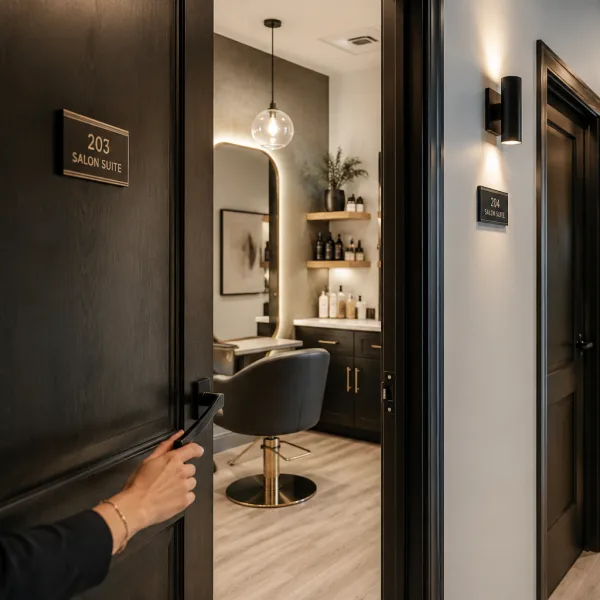
The most successful salon suites balance personality, function, and comfort. Megan Communale of My Salon Suite shares her best advice for designing a space that supports your business goals and leaves a lasting impression on every guest.

Square data shows that regular customers tip 11% higher and are shared across 32% of businesses in the same ZIP code, driving thousands of dollars in additional revenue per connection.

When Bowie Lau and Jeffrey Ching opened JBW Jeffrey Ching Salon in 2011, they weren’t just launching another luxury hair destination—they were building a business rooted in passion, artistry, and thoughtful growth.
Sponsored by Amex

Inside the Systems That Power an Elevated Salon Experience From seamless online booking to a team-first culture, J Gold Salon in Atlanta offers more than great hair—it delivers consistent, high-touch service with the help of partners like Boulevard and American Express.
Sponsored by Amex

Want to grow your career as a beauty professional? K18 Sales Manager Sabrina Sanborn shares advice on networking, mentorship, and self-advocacy—from attending hair shows to finding the right guidance to reach your goals.

A combination of clear policies, effective communication, and strong client relationships has helped me create a more reliable and efficient booking system.

Founded by Cleveland serial entrepreneur Shaura Rodgers, Nailtorious has grown to include a nail supply megastore, training facilities, and retail line for nail techs.

This period after the holidays can bring on a huge lull for hairstylists. We asked Cosmo Prof's team of professionals to offer their best advice on how to deal with the January-February slow period.

Key highlights include a push toward inclusive spaces for all abilities, an emphasis on maximizing livable square footage, and a continued love for modern farmhouse exteriors.

The busy holiday season is here, and with it comes jam-packed days, last-minute client requests and booming retail sales. For many salon owners, the highlight of the season is Small Business Saturday® (SBS). This year on Saturday, November 30, consumers can take their shopping into the small businesses in their communities.
Sponsored by Amex

Want to become savvy about your personal finances, but don't quite know where to start? Anna Manukyan identifies six important concepts for building a strong financial foundation.
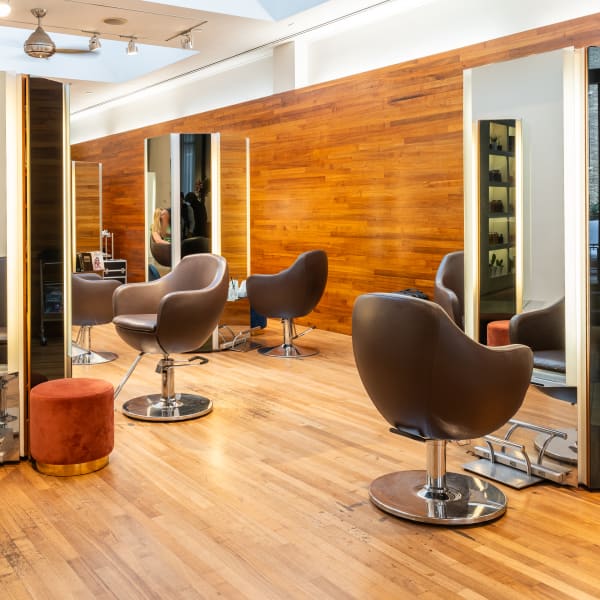
Salon owner Nuri Yurt had a dream of owning a salon on New York City’s Madison Avenue. "Through perseverance, hard work and stellar customer service, he and partner John Kaygisiz founded Toka Salon in 2007.
Sponsored by Amex

This guide is your one-stop shop for a plethora of technology tools, software and services created to keep your salon or spa thriving.

Anna Manukyan shares a breakdown of what different types of financial accounts should be used for.

Vagaro has consistently been at the forefront of salon software technology, helping businesses be more efficient, create more effective communication, and even improve company culture. Now, Connect by Vagaro, the platform’s two-way communication capability, and Vagaro’s new generative AI tools are giving owners new opportunities to grow and expand.
Sponsored by Vagaro

Young Nails' Greg, Habib, and Tracey discuss whether getting too close to clients can damage your business.