Despite the mutual benefits, it can be tough to cultivate a referral relationship with a local podiatrist or other medical professional. Podiatrist and nail industry educator Dennis Arnold tells NAILS’ readers how to approach a local practitioner and establish a working relationship that benefits everyone — especially your clients.
by Dr. Dennis Arnold
August 1, 2006
7 min to read
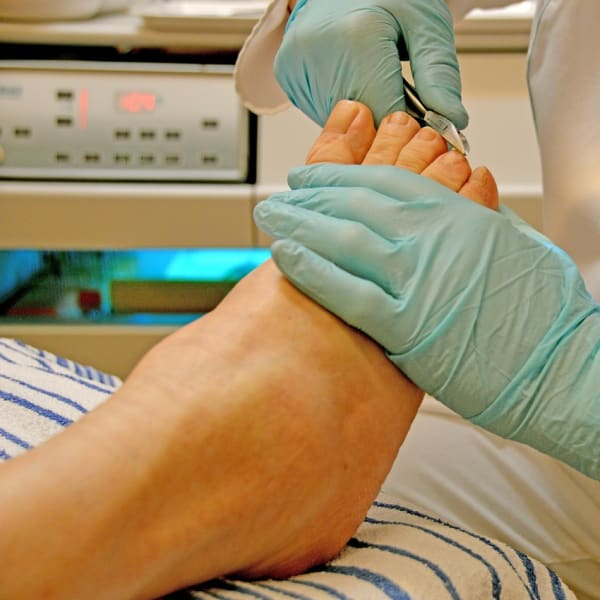
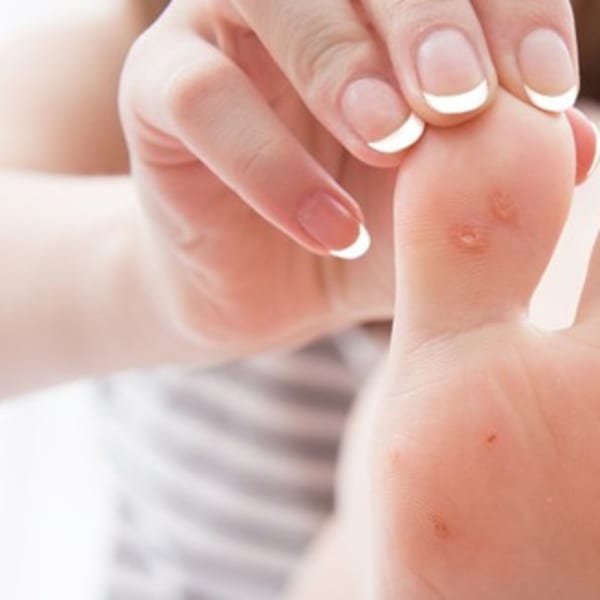
As a nail tech who does pedicures, you see lots of feet. It’s important for you to know what to do when you recognize there may be a medical condition that needs to be treated. You may see a problem that needs medical attention even before the client notices on her own, but as you are all aware, a pedicurist may not diagnose or treat a foot condition. However, it is imperative that you recognize unhealthy foot conditions by asking a few relevant health questions and by examining the feet to determine whether you can do a full pedicure or a partial pedicure or whether you should recommend that your client see a medical professional, such as a podiatrist.
It’s possible you have been wanting to make a connection with a local podiatrist. If so, you’re not alone. As a podiatrist and educator to the nail industry, I have heard this desire expressed across the country. And when this connection has been made, it’s been beneficial for all parties involved —the pedicurist, podiatrist, and most importantly the client. However, I have also heard that many times, it can be difficult to make this connection. You must remember that making a podiatrist connection requires professionalism, persistence, and time to educate the doctor and his staff on your dedication to providing top-quality services.
Ad Loading...
Finding a Podiatrist If you come across a pedicure client in need of medical attention and you haven’t yet established a relationship with a local podiatrist, there are a number of ways to proceed. First, you might want to ask the client if she has a podiatrist she already uses. If not, you may know of a qualified podiatrist from your own personal experience. You may also be able to recommend a podiatrist you know by reputation.
If you talk with your clients or you have a place on your client-information form for the name of your client’s podiatrist, you’ll probably find certain names keep coming up. I am sure after you have heard enough times that a particular podiatrist is liked and does good quality work (or maybe the opposite), you will know who to contact.
Making Initial Contact There are very few podiatrists who will initiate contact with you (although if they realized what a good referral source you are, there would be more). In most cases you will have to initiate contact. So, do you make a phone call, write a letter, e-mail, or fax? It may not be a bad idea to try different methods — or a combination of them — to see which works best.
One person you’ll have to deal with in a doctor’s office is the “watchdog” receptionist. Most receptionists are instructed to screen the calls to determine who will get through to the doctor.
Personally speaking, I know that we are bombarded with solicitors on the phone and are only able to respond to the most important ones. If you do phone, your opening line has to show the receptionist that yours is an important call.
Ad Loading...
If you send a letter, make sure that the address and return address are clearly legible (consider typing it or using stationery with your return address). Remember, first impressions are very important. The mailing should show that you are a professional. Postcards are also a good option. They do not have to be opened, and your message will be seen by just looking on the other side.
If you have the doctor’s e-mail address or fax number you might want to try those methods because e-mails and faxes can be read and answered at a more convenient time for the doctor.
What to Say Unfortunately, podiatrists (and I am sure the rest of the medical profession) really don’t know what training and qualifications a nail technician has to have in order to practice your profession. This means when you do get the doctor’s ear, you need to mention that you are a licensed nail technician and are looking for a podiatrist to refer your clients to. It is important to let them know that you are trying to establish this relationship because, as a nail technician, you would like to have a local podiatrist to refer clients with foot conditions to, and you’ve heard what a good reputation he or she has.
A progressive podiatrist will realize the benefit of establishing mutual referrals. He knows that a safe and quality pedicure is good maintenance for the feet and provides another set of eyes to recognize problems. However, some podiatrists are concerned that you will be trying to treat foot conditions that should be treated by them. It is important to let the podiatrist know you are not allowed to diagnose or treat conditions and that is why you are seeking this referral arrangement.
You may also ask him if his patients ever inquire about where to go for a safer, quality pedicure. I can assure you that on a daily basis podiatrists are being asked this question because of the recent media attention about problems with pedicures. You definitely want to tell them what precautions you take to make sure you have a safe facility.
Ad Loading...
If you have taken advanced training courses, read nail industry books and magazines, or belong to associations such as International Pedicure Association, you may want to let the podiatrist know you try to keep current to help recognize foot conditions that need referring. Once assured, the podiatrist may be more likely to send patients to you. For even more of an incentive to help establish a mutual referral relationship, you might invite the podiatrist and/or the staff for a complimentary pedicure to actually see your salon, pedicure process, and quality of work. Offering a discount card or coupon to his patients would also be beneficial.
Working the Relationship When you do establish a relationship, you will want to have his cards, or at least his contact information, to give to clients.
If you have sent a client to a specific podiatrist, you may want to send him a letter or call his office to ask if this particular patient was actually seen at his office. That way you will know if the client followed through and also if she was treated. You may even want to inquire when you can continue with her pedicures or ask the podiatrist for a clearance to do so, for your records. It is proper courtesy and professionalism to maintain a follow-up or acknowledge a referral, and when your client returns for her pedicure, you will have this information available.
The podiatric profession as a whole needs to be better educated that there are passionate pedicurists who do have the education, training, and concern to give their patients a place to go for safer and higher-quality pedicures. Make it your job to let them know. Linking the podiatry and pedicure professions for a mutual referral process is a way to help your clients receive safe pedicures and elevate the standards of the pedicure industry.
—Dr. Dennis Arnold has been a podiatrist in Ft. Worth, Texas, for 25 years. He is certified by the American Board of Podiatric Surgery and a member of the Texas and American Podiatric Medical Associations and the Council of Nail Disorders. Dr. Arnold founded and is the executive director of the International Pedicure Association.
Ad Loading...
The International Pedicure Association Can Help We are at a point in the pedicure industry where, because of many health concerns involving infectious and contagious diseases, we cannot continue the status quo. In addition to proper sanitation, disinfection, and even sterilization techniques, proper examination of the client and knowing when to refer her is just as important. The International Pedicure Association (IPA) was formed to help meet these needs. To make establishing and maintaining a referral process easier, IPA helps our members make the initial contact with a podiatrist, whether through a letter, a referral list, or “Meeting of the Minds” get-togethers with both podiatrists and nail techs. Other benefits include:
Access to a podiatrist to answer your questions
Website “members-only” section with educational information, a gallery of foot conditions, message board, and job listings
Discounts on continuing education, books, etc.
Newsletter
Ad Loading...
Member certificate and decal; use of IPA logo in your advertising
Listing on the IPA membership directory To learn more about IPA, visit www.pedicureassociation.org or call (817) 831-7800.
Uncured gel polish and microscopic e-file dust contain active acrylates that penetrate the skin, triggering permanent contact dermatitis. Learn the chemistry behind these irritants and how to protect your clients and yourself.
The Good Patch is a leading wearable wellness patch brand, offering wellness and skincare patches that support everyday needs including energy, sleep, relaxation and more.
Orthopedic PT reveals three daily exercises plus ergonomic advice that can help salon professionals avoid the aches and injuries caused by standing, bending and repetitive overhead work.
From acrylic monomers to airborne bio-dust, the air inside a nail salon carries risks most professionals never see coming. Aerovex Systems reveals the source-capture and room-purification strategies that are setting a new standard for salon safety.
Working in beauty doesn’t have to hurt. Learn how Somatic Movement helps hairstylists, lash artists, and other beauty pros release tension, improve posture, and extend their careers.
As a spa or salon professional, your clients expect more than just beauty—they expect safety, hygiene, and peace of mind. Fungal infections like Athlete’s Foot and Nail Fungus are more common than you think, especially in environments where tools and footbaths are reused without proper sanitation. This blog covers how to stop these issues before they start, using proven infection prevention strategies for salons and spas.
A federal initiative aimed at studying chemical exposure in nail salons has ended due to staffing and budget changes. Here’s what the project set out to do—and what its conclusion means for salon professionals.
For many people, a pedicure is a relaxing beauty ritual. But what most don’t realize is that this simple service, if done without proper hygiene and sanitation, can cause serious infections and long-term health issues.
Onycholysis is the separation of the nail plate from the nail bed. While it may look painful, it typically isn’t—at least not at first. But without proper care, this common nail disorder can lead to infections, deformities, and long-term damage.
Mckenzie Kool, Psychologist, MC, RPsych provides us with guidance on what may or not be helpful in speaking with someone who has suffered a significant loss.
Clients come to you to feel their best—not leave with a viral souvenir. Warts and cold sores can spread fast in busy salons, but a few smart habits make all the difference. Let’s talk about what’s really lurking in your salon (and how to kick it to the curb).
As Earth Day approaches, The Green Beauty Community Foundation and the Green Spa Network invite beauty pros to step forward and embrace sustainability through the Green Pledge--a powerful initiative designed by and for beauty industry leaders.
Don’t cancel Valentine’s Day altogether, urges Jill Palmquist. Instead, think of it as a (frilly, flowery, Champagne-bubbly) wake-up call to fall deeply in love with your own life.
Life coach and Culture Ambassador of Sam Villa, Andrew Carruthers, outlines how to tell if your burnout is temporary - or if it's time to make a bigger career change.