




The Beauty Pro Book Club: 4 Reads to Inspire Growth and Success
Four publications for beauty industry professionals to enhance their leadership skills, financial awareness, professional growth, and joy!
by Anne Moratto


 MENU
MENU SEARCH
Nearly 70 years of recorded patents illustrate the growth of a product.
Manicuring, as of late, has been likened to that mythical, elusive pot of gold at the end of the rainbow. Yet, considering the popularity of the trade and the growing profitability of manicurists and salon owners, that portrayal may not be too far off the mark.
With the advent of new materials, application techniques and accessory items, manicuring has grown to encompass a large share of the overall beauty market.
But the history of the product and field is varied and deep, reflecting at the very least, nearly 70 years of recorded invention and whimsy.
For example, a search of and through documents held by the U.S. Patent Office reveals that one of the earliest patents issued relating to manicure or fingernails was field in 1914 by Anna Kindred, North Dakota, for a fingernail “shield.”
“This invention,” she wrote in her petition, “relates to an improved shield or covering for the fingernails and has for its primary object to provide an article of this character which will be neat in appearance, which may be readily applied, and which will effectively protect the nails to prevent the discoloring thereof, the invention being particularly designed for used by persons working with chemicals or with such other liquids or substances as would cause injury to or a discoloration of the nails.”
Other patents were recorded beyond 1914 relating to shields, but then in the 1930s, patents were issued for artificial nail fingernails.
In 1934, as an example, a patent was granted Anna Hamburg, California, for an artificial nail that “may be suitably colored to suit the tastes of the user thereof and which may be secured on the natural fingernail in such a manner that it can be readily removed therefrom without injury to the natural nail.”
Then, in 1935, a device for fingernails was patented by Eugene Rohrbach, New Jersey, the principal object of which was to “provide a simply constructed device of this character that can be readily attached to the fingernail without the used of cementitious material and will firmly adhere to the fingernail during usage.” Rohrbach’s patent called for a “crescent-shaped covering section adapted to overlie the outer surface of the tip portion of the fingernail and a similarly shaped section adapted to be inserted under the tip of the fingernail…so that the outer edge portion of a fingernail will be wedged there between.”
It appears, judging from the patent records, that innovation of manicure implements developed at about this time. Numerous patents were issued for such products as a finishing stencil, designed for placement on top of the fingernail to insure a consistent coat of polish (1936, Stella O’Donnell, New York); for a method of repairing and lengthening fingernails through the use of tips (1937, Harriet Fligenbaum, Minnesota); and an applique for fingernail designs that involved a “novel decoration produced by novel process making use of appliqué pieces (1940, Frank Nolon, New York)
Other patents of interest issued in 1940 included manicure shields, cuticle guards and protective nail coverings.
One of the earliest recorded manicure shields was and intriguing device provided “a shield or screen to protect from heat the hand of the customer being manicured during the hair drying operation.” According to the patent, this shield was invented because “according to current practice the customer under the hair drying apparatus and being manicured exposes the hand to the radiated and hot air currents from the drying apparatus. Besides being very uncomfortable and unpleasant for the customer, this heat interferes materially with the work of the manicurist particularly in regard to the application of polish to the nails in even layers and to the proper drying of the polish.” The device was rather simple: A hinged, transparent cover small enough to insert a hand through was utilized: the hinging allowed the manicurists to lift the shield as high as she needed in order to complete the manicure.
Five years later, a different type of shield was patented, in 1945 by M.A. Kraft, in which a stand-up easel with a hoe cut in the bottom for the patron’s hand literally shielded the hand and manicurist from the effects of a hair dryer in use.
During the 1940s, patents were issued for a varied number of products including: methods and means for treating fingernails (1946, I. Aberbach, New York); a manicure apparatus designed to contain and support the instruments and suppliers used in manicuring (1948, Noreen Reho, Missouri); and a small compact apparatus for applying “colored film to fingernails” (1949, Anthony Gildone, Ohio).
By the 1950s, patents surfaced for nail coating blanks, and methods for manufacturing them; nail covers and a variety of tips and devices for extending nails.
An example of the direction taken at that point in the development of manicuring would be a patent issued to Thomas Slack in 1957. His invention related to the treatment of nails and more particularly to a device for improving the physical and esthetic characteristics of nail through the application of a “material to a human nail for extending it and to improve the strength and the appearance of the nail.” His device acted as a platform that fitted around the finger from which the nails could be consistently extended.
“The device.” he wrote, “is comprised of a portion extending forward beyond the nail to be treated, and another portion which extends backward on either side of the nail.”
By this point in time, a diverse variety of nail configurations, tips and shields were patented, all purporting to fulfill the demand for fashionable color without the “time consuming” task of polish application.
Throughout the 1960s, artificial nails continued to develop through the use of increasingly technical and complex manufacturing techniques and ingredients. Display devices and manicuring aids also began surfacing.
The 1970s saw patents issued for ornamental fingernails and toenails, for classifying false nails, methods, and a wide variety of nail care products and systems.
These products, both past and those currently on the market, reflect generations of work, inventiveness and enthusiasm that has substantiated and develop manicuring into the state of the art it is today. Manufacturers and suppliers continue to develop new products, to expand effectiveness and to provide the tools by which manicurists as a whole can pursuer that dream, that pot of gold at the end of the rainbow.
Four publications for beauty industry professionals to enhance their leadership skills, financial awareness, professional growth, and joy!
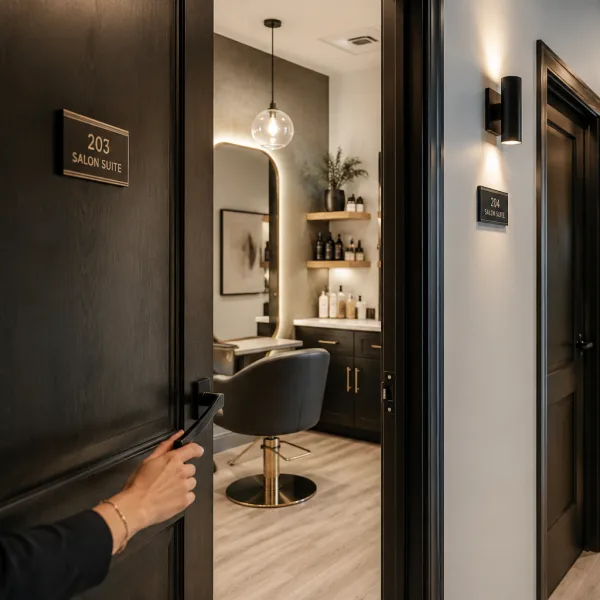
The most successful salon suites balance personality, function, and comfort. Megan Communale of My Salon Suite shares her best advice for designing a space that supports your business goals and leaves a lasting impression on every guest.
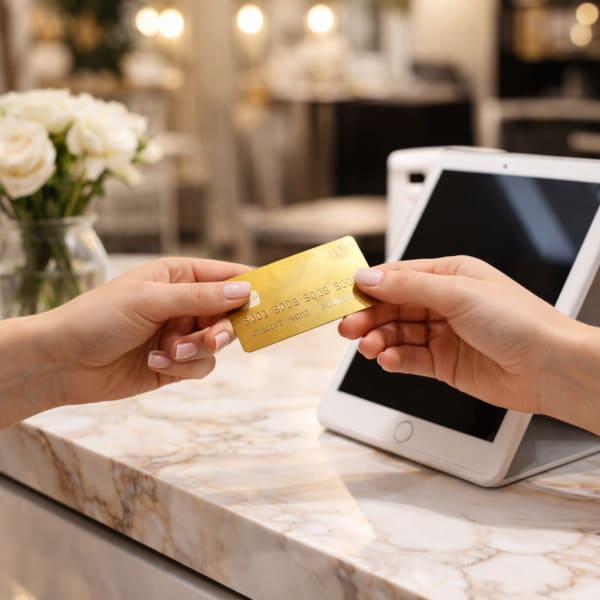
Square data shows that regular customers tip 11% higher and are shared across 32% of businesses in the same ZIP code, driving thousands of dollars in additional revenue per connection.
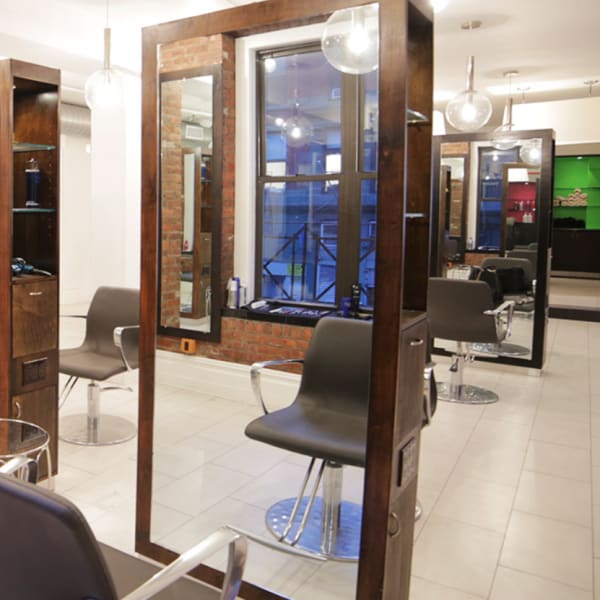
When Bowie Lau and Jeffrey Ching opened JBW Jeffrey Ching Salon in 2011, they weren’t just launching another luxury hair destination—they were building a business rooted in passion, artistry, and thoughtful growth.
Sponsored by Amex
Inside the Systems That Power an Elevated Salon Experience From seamless online booking to a team-first culture, J Gold Salon in Atlanta offers more than great hair—it delivers consistent, high-touch service with the help of partners like Boulevard and American Express.
Sponsored by Amex

Want to grow your career as a beauty professional? K18 Sales Manager Sabrina Sanborn shares advice on networking, mentorship, and self-advocacy—from attending hair shows to finding the right guidance to reach your goals.
A combination of clear policies, effective communication, and strong client relationships has helped me create a more reliable and efficient booking system.
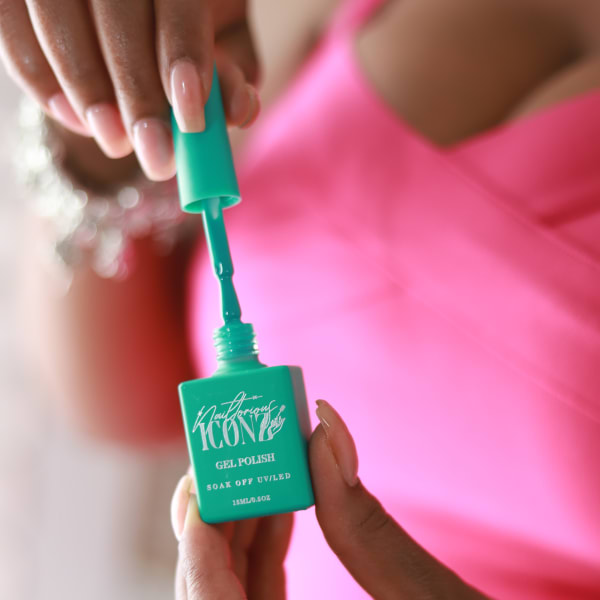
Founded by Cleveland serial entrepreneur Shaura Rodgers, Nailtorious has grown to include a nail supply megastore, training facilities, and retail line for nail techs.

This period after the holidays can bring on a huge lull for hairstylists. We asked Cosmo Prof's team of professionals to offer their best advice on how to deal with the January-February slow period.

Key highlights include a push toward inclusive spaces for all abilities, an emphasis on maximizing livable square footage, and a continued love for modern farmhouse exteriors.
The busy holiday season is here, and with it comes jam-packed days, last-minute client requests and booming retail sales. For many salon owners, the highlight of the season is Small Business Saturday® (SBS). This year on Saturday, November 30, consumers can take their shopping into the small businesses in their communities.
Sponsored by Amex

Want to become savvy about your personal finances, but don't quite know where to start? Anna Manukyan identifies six important concepts for building a strong financial foundation.
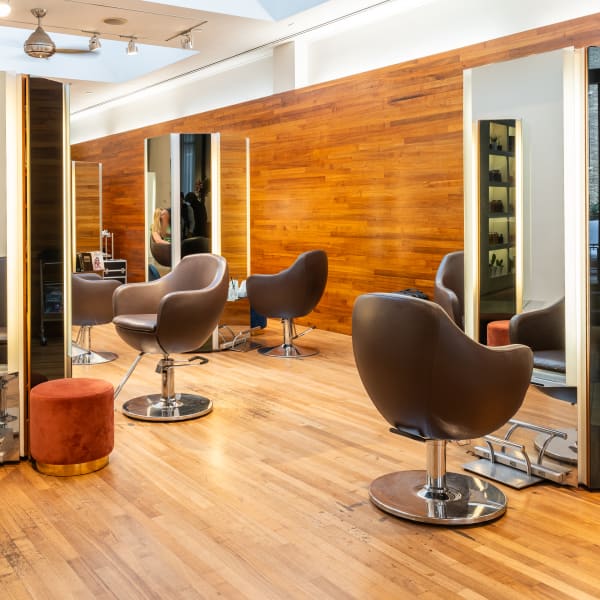
Salon owner Nuri Yurt had a dream of owning a salon on New York City’s Madison Avenue. "Through perseverance, hard work and stellar customer service, he and partner John Kaygisiz founded Toka Salon in 2007.
Sponsored by Amex

This guide is your one-stop shop for a plethora of technology tools, software and services created to keep your salon or spa thriving.
Anna Manukyan shares a breakdown of what different types of financial accounts should be used for.

Vagaro has consistently been at the forefront of salon software technology, helping businesses be more efficient, create more effective communication, and even improve company culture. Now, Connect by Vagaro, the platform’s two-way communication capability, and Vagaro’s new generative AI tools are giving owners new opportunities to grow and expand.
Sponsored by Vagaro
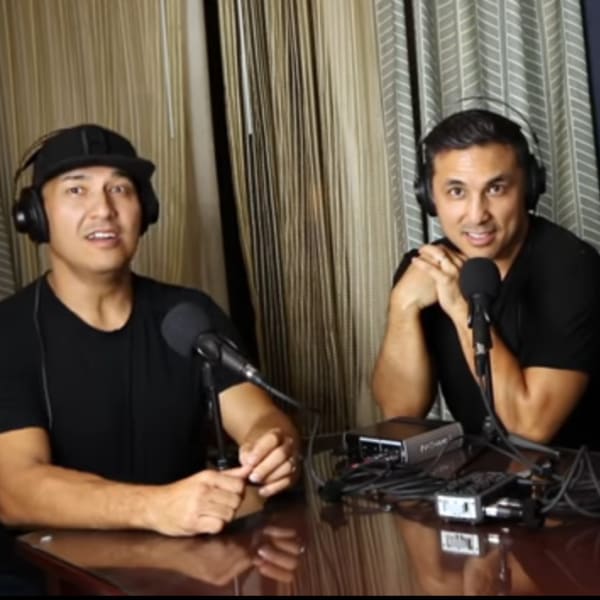
Young Nails' Greg, Habib, and Tracey discuss whether getting too close to clients can damage your business.