Nail techs play an important role in protecting clients. The three Cs — cuticles, colors, and contours — can be early indicators of larger health problems.
by Rashid M. Rashid (M.D. Ph.D.)
March 1, 2010
9 min to read
Usually by the time a patient schedules an appointment to see a doctor about her nails, the issue that brought her in is fairly advanced. Often, I wonder why it took so long for the patient to schedule an appointment. Many patients say they go to a salon regularly, and their nail technician has been monitoring the nail and caring for it for some time. This isn’t to say the nail tech has stepped over the legal boundaries of caring for or treating problem nails. To be fair, a perfunctory appraisal of the nail would indicate a fairly healthy digit; one would not necessarily classify it as a problem nail. It’s understandable why a nail tech would make a satisfactory assessment and proceed with the service. However, as a doctor, I understand that even slight changes to the nail can be a warning sign of larger health issues, so I want to point out three factors for techs to assess when they see any changes to the nail, regardless of how minor. If there are any changes to the “three Cs” — the cuticles, the color, or the contour of the nail — techs should err on the side of caution and refer to a doctor.
The difficulty with the three Cs is that the client will likely have absolutely no discomfort. The tech may notice, for example, that colored streaks appear under the nails, but when she asks the client about it, the client isn’t concerned, and says, “Just cover it up.” Because it’s not hurting or irritating the client, and because it could appear as nothing more than a harmless bruise, the tech continues with the service. I suggest a different approach. Techs should take this moment to remind clients that the body sends out health warnings through the nails, and then educate the client on the unlikely, but possible, larger issue and suggest a visit to the doctor.
Ad Loading...
Cuticles Changes to the soft skin surrounding the nail or cuticle are easy to dismiss. Particularly in winter months, skin irritation is often attributed to dry skin and blamed on the weather. However, dry, itchy, flaky skin can be an indication of more serious conditions such as contact dermatitis or eczema. Though on their own contact dermatitis and eczema are not considered dangerous, the compromised skin is at risk for infection. Even a small break in the skin could lead to complications. Techs should look for cracks around or under the nails, separation of the nail plate from the nail bed, and warmth or swelling around the nail. If any of these indicators are present, clean the area surrounding the nail, but resist the temptation to apply more product. Instead, shorten the nail and tell the client to observe it. Suggest she see a doctor if it doesn’t improve in a few days. If the client comes in at the next appointment and the area is still cracked, swollen, or warm, refer to a doctor.
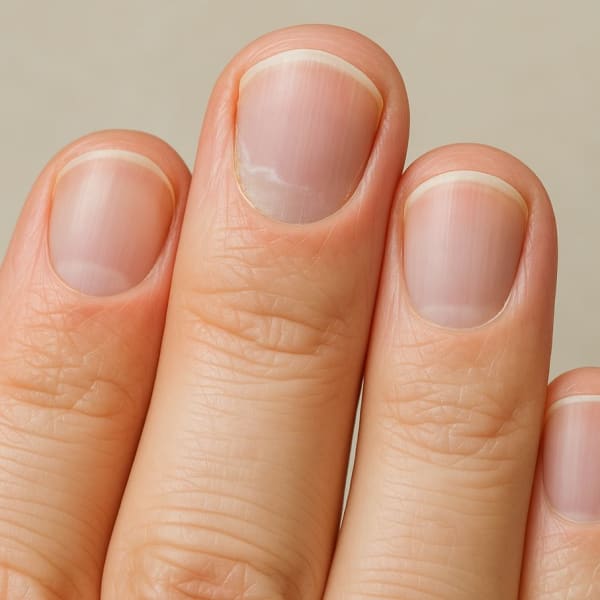
Color Black and brown streaks often appear under the nail plate. This condition is known as melanonychia, and it is more common in non-white people. Unified color streaks should not cause alarm to a tech. However, evaluate the streaks closely. If one of them appears to stand out more than the others — if one is darker and more visible, for example — the nails should be evaluated by a doctor. The doctor will likely need to biopsy the nails to determine the cause of the lines, or striations. It’s possible the lines are simply a bruise from trauma, but they could be an indication of a cancer below the nails. Red lines under the nails are often a sign of a condition called erythronychia, and the lines must be examined by a doctor and possibly biopsied. A simple rule of thumb for techs to follow in regard to lines on the nails is this: Refer a client to a doctor when you see any new streaks of color, or any growth or change in color under the nail.
Color changes to the nail could also be a result of bacteria. Here the nail’s color may change to black, brown, or yellow. If a client’s nail is discolored and doesn’t respond when you cleanse and buff the nail, refer the client to a doctor. The colors often precede an infection and can indicate bacteria has colonized on the nail.
Another color change to be on the lookout for are black spots that could signal melanoma. The color of the spots may appear uneven, with a deeper hue on one side of the spot than the other. Dark spots under the nail can easily be viewed as bruises, especially since clients can often explain the spot away by saying they bumped their nail. If a client refuses to have the spots evaluated by a doctor because she insists it’s from trauma, watch the area over the course of a couple of appointments, but urge her to seek a doctor’s opinion at each appointment. A bruise under the nail will move; it will show noticeable growth toward the free edge between appointments. If the area doesn’t grow out, or if you notice that in addition to discoloration, the nail bed is elevated or separated from the nail plate, insist that the client make an appointment with a doctor to determine the cause of the discoloration. No client is too young to overlook the chance of cancer. In fact, 20- to 35-year-olds are the common target age range for melanoma.
Techs should also be aware of changes in the color of the skin surrounding the nail. Sometimes color changes occur on the skin of the finger, but never actually on the nail bed. Those changes occur for a reason, and it’s best to consult a doctor as to the cause of the discoloration.
Ad Loading...
Contours After nail fungus, a change to the texture of the nail is the most common nail problem doctors see. Changes to the shape, contour, and texture of the nail plate can occur for many reasons. Sometimes, these changes are harmless; other times the changes can become so severe due to neglect that patients end up losing a finger.
Changes to the structure of the nail could be caused by heart or lung problems, or they could be the result of a prescription. Alert the client to the changes in the structure of the nail. Ask her if she has any known problems with her heart or lungs, especially if the change in texture is accompanied by a bluish/gray discoloration of her nail bed. If she is aware of heart or lung issues, and explains she is on a prescription for the problem, let her know she could be having adverse effects to the medication and suggest she show her nails to the doctor. Often a change in prescription will clear up the problem.
A vitamin deficiency can also affect the look of the nails, causing them to become ridged, yellow, or separated from the nail plate. Unfortunately, a nail tech won’t be able to determine what the client lacks from looking at her nails, so a visit to the doctor is in order. Changes to the contour of the nails can also be caused by something as seemingly benign as a wart. A wart is the body’s response to a virus. However, when warts grow under, over, or around the nail, they can cause the plate structure to warp. This condition needs to be under the supervision of a doctor, as the nail plate could separate from the nail bed, leaving the area vulnerable to bacteria or infection, or, in rare cases, the wart could become cancerous.
Other changes to note: longitudinal ridging, transverse ridging, pitting, indents, grooves, longitudinal splitting, clubbing, and separation from the nail bed. Basically any change to the structure of the nail plate should alert the tech to a larger problem in the body. A healthy body will produce nails that have a smooth, nicely rounded shape to them. When the shape of a client’s nail bed is compromised, or when the texture of her nail plate deteriorates, it indicates a problem, and a doctor needs to determine if the problem is localized to the nail or if there is a systemic cause. It may seem unnecessary to schedule a doctor’s visit since, again, there is often no pain or discomfort from the condition. However, your insistence on an early diagnosis could be what prevents a small condition from growing into a big concern.
Balance In my experience, clients wait too long to consult a doctor, and techs are in a position to influence clients to seek medical attention sooner. In the same way hospital social workers self-empower patients, techs can encourage self exams, at-home nail care, and earlier doctor’s visits. Often, a patient will visit a doctor about a growth on their scalp and say, “My stylist told me I should have that checked.” In the same way, it should be more common for doctors to hear, “My nail technician sent me.”
Ad Loading...
If you see a problem, draw the client’s attention to it, and make a note of it in your client file. Sometimes, everything will appear OK; there will be no obvious infection or damage to the nail and the client won’t complain of pain, but you will notice changes to the nail that continue to worsen. When this happens, refer the client to a doctor. Be sure to remove the nail enhancement so the doctor will have a clear, unobstructed look at the nail. The client may be impatient with the decision you made, but as a professional, you need the assurance that no underlying problems are being covered up by enhancements. Nail techs and doctors need to work in tandem to protect the patient. Nail techs are on the front lines to noticing subtle changes that are often overlooked by clients who are unaware that their body is signaling an internal problem.
Which Doctor?
When referring a client to a doctor it may be helpful to remember that while a family practitioner may be able to recognize early nail changes as warning signs of larger health issues, a dermatologist is likely to be in a better position to make an accurate assessment. This has less to do with the education required for each field and more to do with experience gained after years of dealing with such a specialized field. Often, in larger cities, techs may be able to make an even more specific recommendation and refer clients to a dermatologist who specialize in conditions on the nails, hands, and feet. Dermatology departments at universities are also excellent resources.
Dr. Rashid M. Rashid is a house staff dermatologist at the University of Texas MD Anderson Cancer Center and director of the nail, hair, and skin disease division of the Morzak Center.
This article should not be considered medical advice and should not substitute or alter the advice you receive from a physician. Any concern should be addressed by a physician immediately. This piece was written for informative purpose only and advice should always be sought from a physician directly.
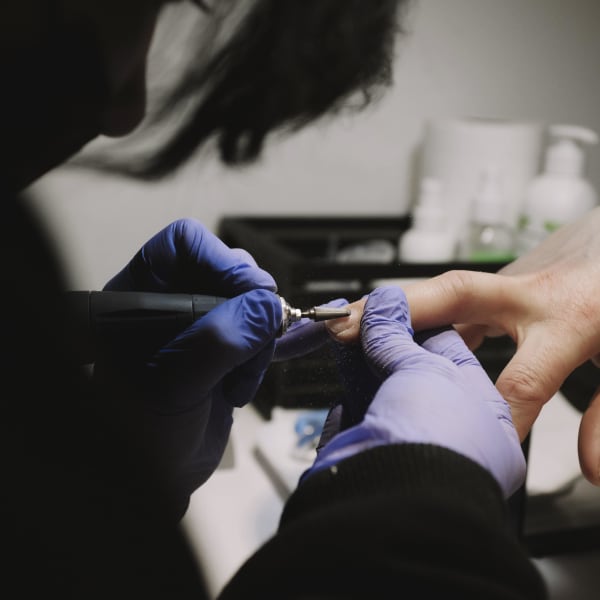
Uncured gel polish and microscopic e-file dust contain active acrylates that penetrate the skin, triggering permanent contact dermatitis. Learn the chemistry behind these irritants and how to protect your clients and yourself.
The Good Patch is a leading wearable wellness patch brand, offering wellness and skincare patches that support everyday needs including energy, sleep, relaxation and more.
Orthopedic PT reveals three daily exercises plus ergonomic advice that can help salon professionals avoid the aches and injuries caused by standing, bending and repetitive overhead work.
From acrylic monomers to airborne bio-dust, the air inside a nail salon carries risks most professionals never see coming. Aerovex Systems reveals the source-capture and room-purification strategies that are setting a new standard for salon safety.
Working in beauty doesn’t have to hurt. Learn how Somatic Movement helps hairstylists, lash artists, and other beauty pros release tension, improve posture, and extend their careers.
As a spa or salon professional, your clients expect more than just beauty—they expect safety, hygiene, and peace of mind. Fungal infections like Athlete’s Foot and Nail Fungus are more common than you think, especially in environments where tools and footbaths are reused without proper sanitation. This blog covers how to stop these issues before they start, using proven infection prevention strategies for salons and spas.
A federal initiative aimed at studying chemical exposure in nail salons has ended due to staffing and budget changes. Here’s what the project set out to do—and what its conclusion means for salon professionals.
For many people, a pedicure is a relaxing beauty ritual. But what most don’t realize is that this simple service, if done without proper hygiene and sanitation, can cause serious infections and long-term health issues.
Onycholysis is the separation of the nail plate from the nail bed. While it may look painful, it typically isn’t—at least not at first. But without proper care, this common nail disorder can lead to infections, deformities, and long-term damage.
Mckenzie Kool, Psychologist, MC, RPsych provides us with guidance on what may or not be helpful in speaking with someone who has suffered a significant loss.
Clients come to you to feel their best—not leave with a viral souvenir. Warts and cold sores can spread fast in busy salons, but a few smart habits make all the difference. Let’s talk about what’s really lurking in your salon (and how to kick it to the curb).
As Earth Day approaches, The Green Beauty Community Foundation and the Green Spa Network invite beauty pros to step forward and embrace sustainability through the Green Pledge--a powerful initiative designed by and for beauty industry leaders.
Don’t cancel Valentine’s Day altogether, urges Jill Palmquist. Instead, think of it as a (frilly, flowery, Champagne-bubbly) wake-up call to fall deeply in love with your own life.
Life coach and Culture Ambassador of Sam Villa, Andrew Carruthers, outlines how to tell if your burnout is temporary - or if it's time to make a bigger career change.