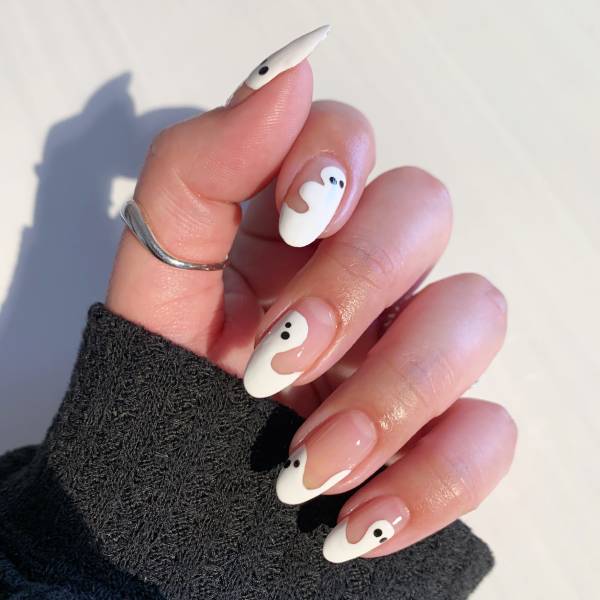
Nuñez’s “ghostie” nail design was a viral sensation — in fact, she has an entire Instagram Story Highlight where she’s saved all of the ghosties created by people across the world.
5 min to read
*EDITOR'S NOTE: This article was originally published in 2021 and artists report that the problem continues.
When nail artist Sigourney Nuñez (@nailartbysig) saw a direct message from an Instagram follower letting her know that a huge fast fashion brand had ripped her off, she was confused. Nuñez read the message, which said that the follower saw a picture on the company’s website of Nuñez’s “ghostie” nail art, and they were using it to sell decals — which look almost identical to the design Nuñez created — for $2.00 a package.
Ad Loading...
Nuñez created her ghostie look back in 2019 and it went viral, inspiring hordes of other nail artists and at-home nail enthusiasts to try this Halloween-inspired look. And after learning that her design had been copied, Nuñez was thankful for her follower’s support, but filled with shock and disappointment at the same time.
“I felt pretty vulnerable and wasn’t sure what actionable steps to take next,” Nuñez says.
Unfortunately, this situation isn’t new. With the prominence of social media platforms and online marketplaces like Etsy, individual content creators can market or sell their products to the world — a definite plus — but unfortunately, this visibility also comes with potential risks, like their work being stolen.
Pride and Frustration
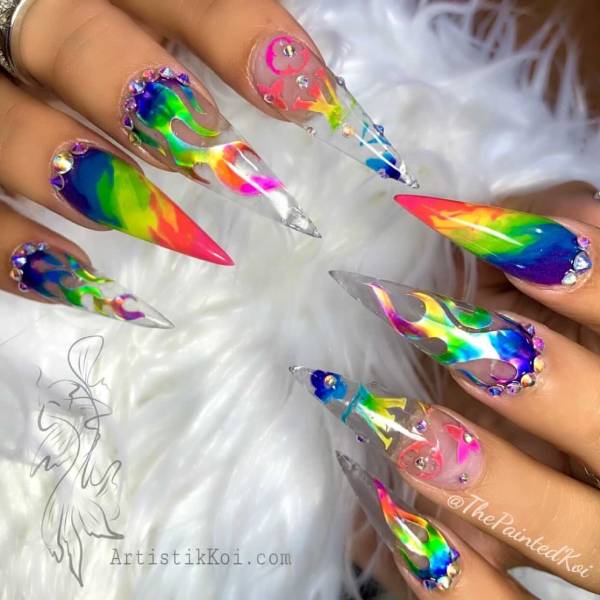
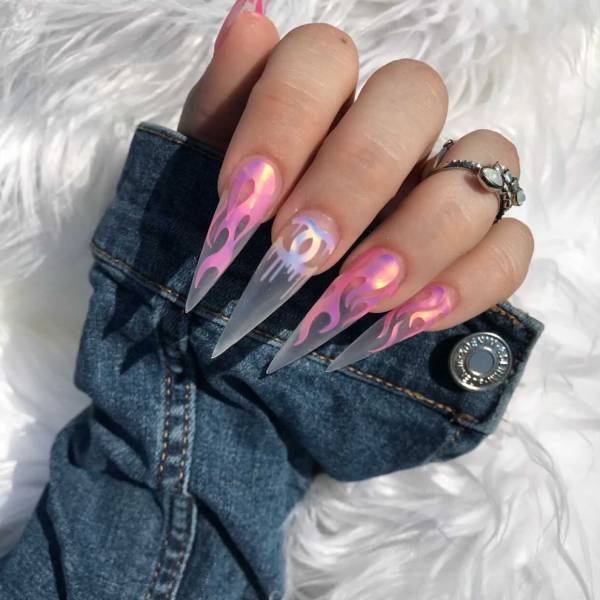
Mounixay created these holographic flame nail stickers by hand, selling them online, and they gained quite the following. Missy Elliott even donned the stickers at a performance during Essence Fest in 2019.
Another nail artist, Alecia Mounixay (@thepaintedkoi), also knows too well the distress that stems from intellectual property theft.
In 2019, she created holographic flame nail stickers that went viral on social media — celebrities were even spotted wearing them. The large ecommerce company who knocked off her stickers didn’t steal the idea via an image from Mounixay’s social media page though; they purchased the stickers directly from her online, which she tried to stop several times to no avail.
Ad Loading...
Once the company got its hands on the stickers and mass produced them, Mounixay says suppliers that were originally purchasing the product from her then started buying the knock-offs instead. She did have a copyright on the design, but her lawyer advised her that she couldn’t stop the knock-offs from being made, but only try to stop the suppliers from reselling them.
“It may seem simple, but I was just so proud I made something that was worn by famous people,” Mounixay says. “Something that people got excited over. It took four hours for me to make just 12 stickers. I would stay up all night. Then to see other people paying 15 cents for the knock-offs, opening the bag, sticking them in another bag and making a sky-high profit was just devastating.”
When trying to fight this theft, Mounixay says she was treated poorly, receiving mean and harassing comments on social media. “I finally gave up and shut down my efforts,” she says. “I was hurt because I didn’t do anything wrong, I just tried to stand up for what was right. They don’t care though — they’re untouchable.”
When Mounixay found out that a company was knocking off her holographic flame stickers, she sent posts of the originals — like this photo— plus screenshots of their shop page to the shop owners, who apologized and said they'd take it down. But, as of press time, the photos are still being used illegally.
Protecting What’s Yours
For independent artists, this may seem like a losing battle when big corporations can so blatantly steal their work and seemingly get away with it. But what can these creators do to turn this into a David versus Goliath-style battle?
To start, use watermarks on the social media photos you post of your work. For nail artists, this could look like editing their images to include their brand name or logo, positioned following the curve of the nail bed. It’s small, so it doesn’t detract too much from the photo itself, but it cannot be edited out easily, either. And while this won’t prevent very determined thieves from doing what they want, seeing this watermark could deter some wrong-doers.
Ad Loading...
Next, many lawyers would suggest obtaining a copyright, which protects your content.
“Copyrights are original works that are protectable as soon as they are put in tangible form,” explains Michelle Murphy, Esq., an intellectual property attorney who has worked with clients in the beauty industry. Pictures of nails are protectable as well, but only if the nail design is “originally sufficient,” meaning it showcases some kind of unique graphic or drawing.
Murphy says if an artist frequently takes pictures of their designs on a client's nails, the person can bulk register them, which costs just $55 for up to 750 photos.
Another intellectual property attorney, Radiance W. Harris, Esq., Founder and Managing Attorney of Radiance IP Law, suggests that a cost-effective approach may be to copyright a primary set of signature or popular nail designs that an artist routinely offers.
If a copyright is registered on a design and an artist discovers that their work has been stolen, a good next step is to send a cease-and-desist letter to the violating party, demanding that they remove the content and fix the situation.
Ad Loading...
If that doesn’t work, the next line of action is filing a lawsuit, which can be very costly due to legal fees. If an artist doesn’t have the money to pursue litigation in court, then even with a copyright, they’re out of luck.
Close to the Chest
Mounixay says that after the theft of her designs, she changed her approach on social media, only revealing half of each sticker she painstakingly created. But sure enough, the big brand just made a copy using only what she had revealed publicly. After this, she finally decided that she’d had enough — she was done designing nail stickers.
“I couldn’t spend hours or days drawing something and then see them spend one second taking it from me,” she says.
And while she hasn’t written off getting back into the sticker business again, she now only does nails. “Nails are my happy place. I don’t need to take days to design a set. I do it on the spot.”
As a new full-time content creator, Nuñez says that moving forward, she’ll be doing more research on what she can do to protect her work so that she feels empowered to share her art.
Ad Loading...
And to other artists, she offers some words of encouragement: “If this happens to you, don't be afraid to speak up and hold brands accountable for their unethical practices. As scary and intimidating it can be, you come to realize there’s a community of artists and people who will be ready to support you and create awareness.”
Uncured gel polish and microscopic e-file dust contain active acrylates that penetrate the skin, triggering permanent contact dermatitis. Learn the chemistry behind these irritants and how to protect your clients and yourself.
The Good Patch is a leading wearable wellness patch brand, offering wellness and skincare patches that support everyday needs including energy, sleep, relaxation and more.
Orthopedic PT reveals three daily exercises plus ergonomic advice that can help salon professionals avoid the aches and injuries caused by standing, bending and repetitive overhead work.
From acrylic monomers to airborne bio-dust, the air inside a nail salon carries risks most professionals never see coming. Aerovex Systems reveals the source-capture and room-purification strategies that are setting a new standard for salon safety.
Working in beauty doesn’t have to hurt. Learn how Somatic Movement helps hairstylists, lash artists, and other beauty pros release tension, improve posture, and extend their careers.
As a spa or salon professional, your clients expect more than just beauty—they expect safety, hygiene, and peace of mind. Fungal infections like Athlete’s Foot and Nail Fungus are more common than you think, especially in environments where tools and footbaths are reused without proper sanitation. This blog covers how to stop these issues before they start, using proven infection prevention strategies for salons and spas.
A federal initiative aimed at studying chemical exposure in nail salons has ended due to staffing and budget changes. Here’s what the project set out to do—and what its conclusion means for salon professionals.
For many people, a pedicure is a relaxing beauty ritual. But what most don’t realize is that this simple service, if done without proper hygiene and sanitation, can cause serious infections and long-term health issues.
Onycholysis is the separation of the nail plate from the nail bed. While it may look painful, it typically isn’t—at least not at first. But without proper care, this common nail disorder can lead to infections, deformities, and long-term damage.
Mckenzie Kool, Psychologist, MC, RPsych provides us with guidance on what may or not be helpful in speaking with someone who has suffered a significant loss.
Clients come to you to feel their best—not leave with a viral souvenir. Warts and cold sores can spread fast in busy salons, but a few smart habits make all the difference. Let’s talk about what’s really lurking in your salon (and how to kick it to the curb).
As Earth Day approaches, The Green Beauty Community Foundation and the Green Spa Network invite beauty pros to step forward and embrace sustainability through the Green Pledge--a powerful initiative designed by and for beauty industry leaders.
Don’t cancel Valentine’s Day altogether, urges Jill Palmquist. Instead, think of it as a (frilly, flowery, Champagne-bubbly) wake-up call to fall deeply in love with your own life.
Life coach and Culture Ambassador of Sam Villa, Andrew Carruthers, outlines how to tell if your burnout is temporary - or if it's time to make a bigger career change.