





The Beauty Pro Book Club: 4 Reads to Inspire Growth and Success
Four publications for beauty industry professionals to enhance their leadership skills, financial awareness, professional growth, and joy!
by Anne Moratto


 MENU
MENU SEARCH
Overcome your disdain for sales by understanding how it works.


Most of us think of salespeople as fast-talking con artists who make their living convincing others to buy products they don’t need and don’t want for prices they can’t afford. The stereotypical salesman wears a polyester suit and greases his hair. The entire field has such a bad rap that, according to a recent survey in Working Woman magazine, 51 percent of 1,400 people polled listed sales as one of the three careers in which they think unethical behavior most frequently occurs.
While there will always be a few sleazy salespeople lurking about, the majority of today’s professionals are specialists in their field. Like nail technicians, they perform the important role of providing others with the information they need to make educated choices. Instead of using devious tactics to make a sale, they employ a simple formula: if you can discover and fulfill customers’ wants and needs, they will be happy to purchase your product or service. Many nail care professionals fail to realize the number of sales techniques they already use every day. Every time you service a new customer you’re selling your personality and technical skills in the hopes of gaining a steady client. Every time you suggest that someone buy a particular hand cream or advise them to purchase a maintenance kit or a new shade of nail polish, you’re selling them a product. Acknowledging your role as a salesperson understanding the selling process, and learning to hone basic selling techniques can lead to fatter paychecks and an increased clientele. With a growing number of shops expanding their retail departments, some salon owners are beginning to expect 20 percent of a technician’s income to come from retail sales. Many salons offer commissions, bonuses, and other incentives to encourage technicians in this direction.
Other shops are expanding their services, expecting technicians to advise clients on products, colors, and techniques. In today’s fast-changing, competitive market, a knowledge of selling basics can go a long way toward building a successful career.
ANATOMY OF A SALE
A sale is composed of several or all of the following: opening the sale, gathering and exchanging information, meeting objections/fulfilling needs, negotiating, and closing the sale. Many of these steps occur naturally in the building of a client/technician relationship.
Opening the sale. Every time you meet and greet a client you begin the selling process, whether you’re seeing her for the first time or at a regular maintenance appointment.
One of the most important points of opening a sale is making a good impression. A professionally dressed technician with well-groomed hair and nails working at a spotless station is going to elicit a client’s trust and confidence. A salon with an attractive décor and well-displayed retail items also leaves clients with a favorable impression.
Besides a technician’s outward appearance, her personality and technical skills also add to a client’s decision to schedule another appointment. During every session, you’re selling yourself, and it’s up to you to pass or fail the test.
Know your products and services.
Successful salespeople know everything about the products and services they sell. Clients look to nail technicians to provide them with information about nail care and the latest products and industry trends. The more knowledge you share with clients, the more comfortable and confident they’ll be.
This also means being able to perform a variety of services, as well as knowing what inventory your salon carries and what items are in stock at all times. If a client mentions in passing that she’s been looking for a particular shade of pink to wear with a certain outfit, you should be able to search your mental files and present her with a few colors that might match by the end of her appointment.
Some technicians are reluctant to educate clients about nail care or sell clients home-care products because they’re afraid it will encourage clients to stop coming to the salon. But in the majority of cases, the opposite is true. Clients rely on your expertise as a professional. Teaching them how to maintain their nails between visits can also make your work easier, and result in your client having great-looking nails.
LAYING THE GROUNDWORK
Gathering and exchange information. Once a client is in your chair and you’ve began working on her nails, you can begin to gather and exchange information. Whether this is your client’s first or 50th visit, each conversation tells you a little bit about her likes, dislikes, wants, and needs. If you open your ears and really listen, a whole list of sales opportunities will be revealed.
Sharpen your listening and observation skills. Do you truly listen and observe what your clients say and do? When you learn something about a client’s likes or dislikes, do you take the time to jot it down in her file?
Nail technicians have an advantage over most salespeople because they have constant access to their clients. While chatting amiably with a client, for example, you can learn a lot about what and how to sell her. If a woman mentions that her daughter just announced plans to marry, make a mental note to let this client know about wedding specials the salon offers. If a client mentions her nails are always breaking, find out if she’s wearing them too long. If the product is wrong for her, or if you need to show her what to do until she can get to the salon. A variety of quick sales can be made when you seize an opportunity. Watch for comments like:
Client: “I can’t seem to find a polish that says on my nails!” Technician: “I have one that will. Let me show it to you.”
…… or
Client: “I’m going on vacation and I don’t know how I’m going to keep my nails looking this good.” Technician: “We self a great maintenance kit, and I’ll show you how to use it.”
….. or
Client: “I’d love to try a pedicure. But I never seem to remember to make an appointment.”
Technician: “We’re offering a special on pedicures right now. We can schedule one as soon as we’re done.”
Clients are always telling you what to sell them you just need to take the time to listen.
Keep a positive attitude. In order to take the initiative when a client states her wants and needs, you have to have a positive attitude about selling and confidence in the products to sell.
If you hear a client say she needs a certain color nail polish or maintenance kit but you think, “If I tell her about our polish or kit, she’ll think I’m being pushy,” or, “She knows we sell nail files, so they’re probably not what she wants,” you are sabotaging the sale with your own negative thoughts and conjectures. Suggesting a product is not being helpful. Clients often don’t know what you do or don’t sell.
In addition, it’s hard to sell products or services you don’t believe in. So if your salon sells something you feel is interior, discuss it with the owner.
Try to focus on the positive aspects of selling. Remember, selling is not bad. A salesperson is actually filling a client’s need and making her life easier.
BUILDING THE SALE
For technicians, the easiest and most natural selling technique is suggestive selling. This technique is used when a client has already committed to purchase something and you suggest something else. For example, if a client purchase something and you suggest something else. For example, if a client purchases nail polish you should ask if she also needs polish remover. The key to effective suggestive selling is to suggest an item that is complementary to her purchase. You’ve probably experienced suggestive selling yourself-at most fast food restaurants if you order a sandwich and French fries and no soda, they will as if you’d like a soda.
Go that extra mile in customer service. A big part of selling is being willing to go that extra step. If a client wants a certain color and you don’t carry it, call the manufacturer and try to get it for her. It may take extra time, but it’s worth the effort to gain a satisfied customer who will tell her friends about her very accommodating technician.
Timing. In selling, timing is often the difference between as yes and a no. If a client has spent the past hour telling you about all the money she’s been spending on her daughter’s wedding, it is probably the wrong to talk to her about your salon’s bridal party package.
CLOSING THE SALE
Dealing with objections. Many technicians avoid asking, “Shall I add this polish to the bill?” because they’re afraid to hear no. but if a client fails to make a purchase you suggest-so what? Instead of taking a negative response as a personal rejection, ask why she isn’t interested.
Perhaps she feels the price is too high or she’s not sure about the color. Learning to deal with objections is an essential part of any sale, and for the technician it can only lead to more knowledge of what and how to sell a client better the next time.
For example, If a client says she would like to buy a product or service, but at a lower price, jot this information down in her file. She’‘ll be the perfect person to contact if you have a special or sale on that particular item or service.
Cash or change? If a customer says yes to a particular product or service, don’t forget to complete the sale, often, clients get distracted and won’t take out their wallet or pick up the bottle of polish until you remind them.
Don’t be afraid to say, “Will you be paying cash for this today?” or “Did you decide to try the nail file?” These simple words are often all that is needed to clinch the sale.
Once you break down the components of sale. It’s easy to see why nail technicians need to slip in and out of a salesperson’s skin in order to be successful. But selling is as easy as mastering this simple formula. Match your salon’s products and services with the wants and needs of each client. When you do, you’ll have happy satisfied customers and the building blocks of a successful career.
Four publications for beauty industry professionals to enhance their leadership skills, financial awareness, professional growth, and joy!

The most successful salon suites balance personality, function, and comfort. Megan Communale of My Salon Suite shares her best advice for designing a space that supports your business goals and leaves a lasting impression on every guest.

Square data shows that regular customers tip 11% higher and are shared across 32% of businesses in the same ZIP code, driving thousands of dollars in additional revenue per connection.

When Bowie Lau and Jeffrey Ching opened JBW Jeffrey Ching Salon in 2011, they weren’t just launching another luxury hair destination—they were building a business rooted in passion, artistry, and thoughtful growth.
Sponsored by Amex

Inside the Systems That Power an Elevated Salon Experience From seamless online booking to a team-first culture, J Gold Salon in Atlanta offers more than great hair—it delivers consistent, high-touch service with the help of partners like Boulevard and American Express.
Sponsored by Amex

Want to grow your career as a beauty professional? K18 Sales Manager Sabrina Sanborn shares advice on networking, mentorship, and self-advocacy—from attending hair shows to finding the right guidance to reach your goals.

A combination of clear policies, effective communication, and strong client relationships has helped me create a more reliable and efficient booking system.
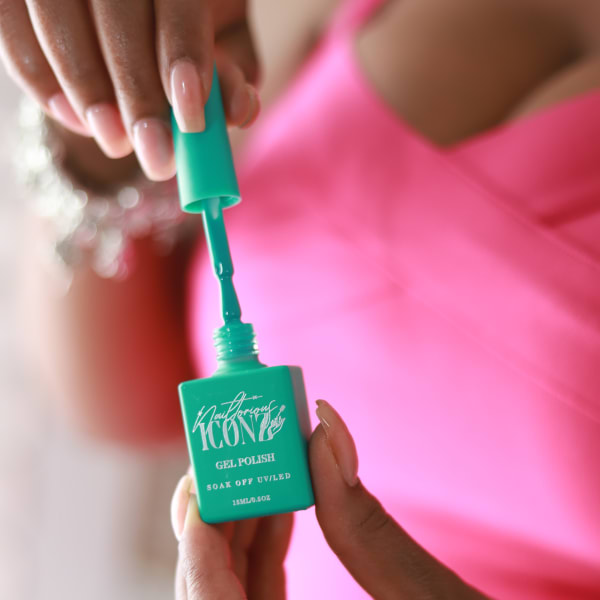
Founded by Cleveland serial entrepreneur Shaura Rodgers, Nailtorious has grown to include a nail supply megastore, training facilities, and retail line for nail techs.

This period after the holidays can bring on a huge lull for hairstylists. We asked Cosmo Prof's team of professionals to offer their best advice on how to deal with the January-February slow period.

Key highlights include a push toward inclusive spaces for all abilities, an emphasis on maximizing livable square footage, and a continued love for modern farmhouse exteriors.

The busy holiday season is here, and with it comes jam-packed days, last-minute client requests and booming retail sales. For many salon owners, the highlight of the season is Small Business Saturday® (SBS). This year on Saturday, November 30, consumers can take their shopping into the small businesses in their communities.
Sponsored by Amex

Want to become savvy about your personal finances, but don't quite know where to start? Anna Manukyan identifies six important concepts for building a strong financial foundation.
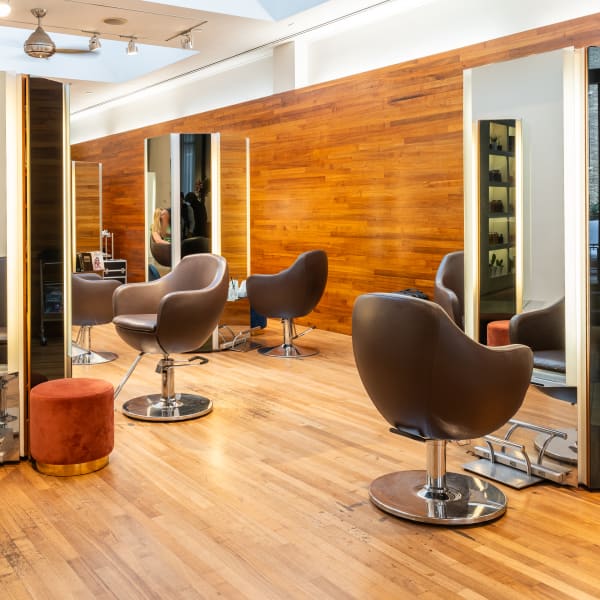
Salon owner Nuri Yurt had a dream of owning a salon on New York City’s Madison Avenue. "Through perseverance, hard work and stellar customer service, he and partner John Kaygisiz founded Toka Salon in 2007.
Sponsored by Amex

This guide is your one-stop shop for a plethora of technology tools, software and services created to keep your salon or spa thriving.

Anna Manukyan shares a breakdown of what different types of financial accounts should be used for.

Vagaro has consistently been at the forefront of salon software technology, helping businesses be more efficient, create more effective communication, and even improve company culture. Now, Connect by Vagaro, the platform’s two-way communication capability, and Vagaro’s new generative AI tools are giving owners new opportunities to grow and expand.
Sponsored by Vagaro

Young Nails' Greg, Habib, and Tracey discuss whether getting too close to clients can damage your business.